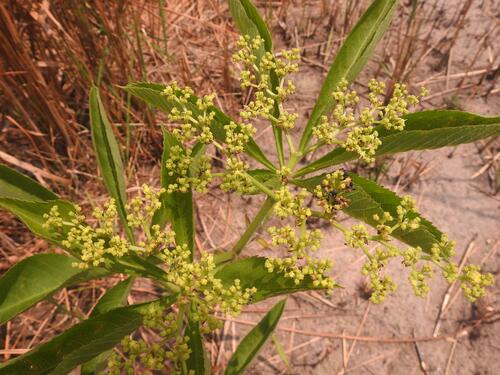
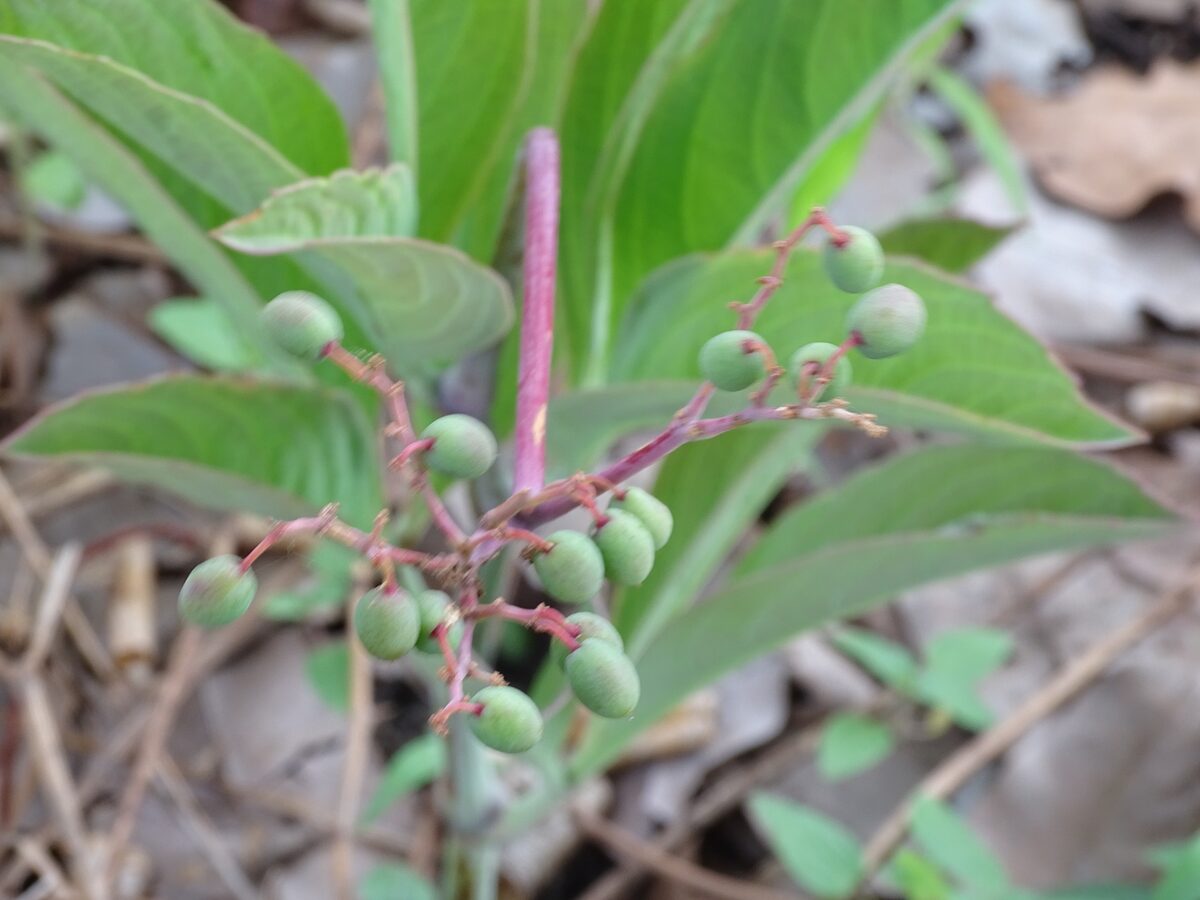
Ampelocissus bombycina
(Baker) Planch.
iNaturalist· cc-by-nc-sa
(c) Rob Palmer, some rights reserved (CC BY-NC-SA), uploaded by Rob Palmer
iNaturalist· cc-by-nc-sa
(c) Rob Palmer, some rights reserved (CC BY-NC-SA)
Description
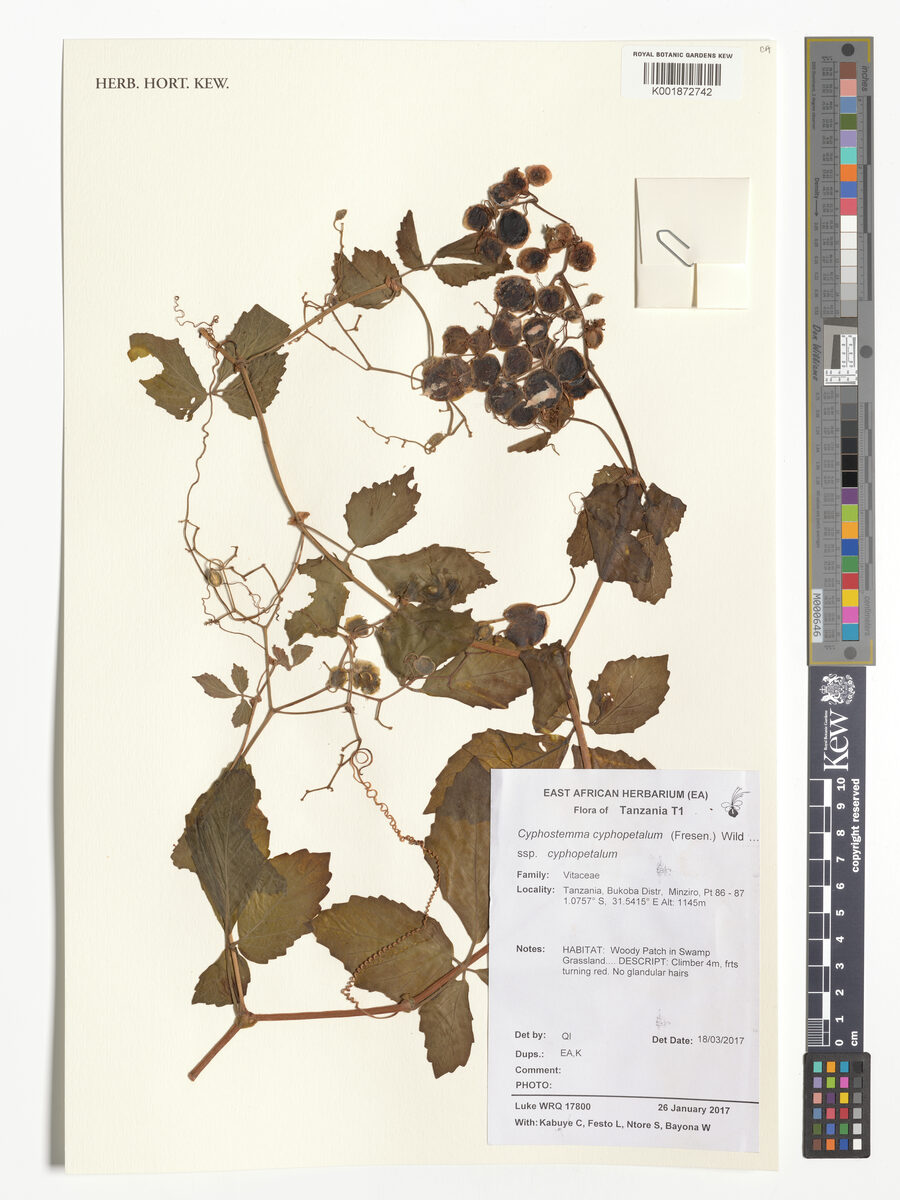
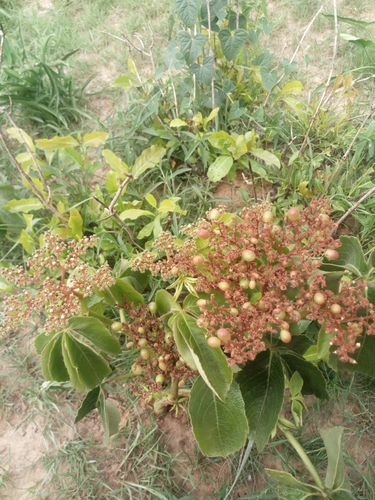
A softly woody climber. It can be a trailing herb. It has a slight grey covering. The leaves are rounded or heart shaped. They have 1-5 lobes. There are fine teeth along the edge. The flowers are in compound flat topped groups. The petals are bright purple. The ovary is 5 sided. The fruit are small, smooth berries.
Edible Uses
The fruit are eaten.
Distribution
A tropical plant. It grows in the savannah. It grows in woodland and palm groves.
Where It Grows
Africa, Cameroon, Central Africa, East Africa, Eritrea, Ethiopia, Guinea, Guinée, Guinea-Bissau, Senegal, West Africa,
Notes
There are about 95 Ampelocissus species.
Synonyms
Also Known As
Astigena
References (8)
- Bircher, A. G. & Bircher, W. H., 2000, Encyclopedia of Fruit Trees and Edible Flowering Plants in Egypt and the Subtropics. AUC Press. p 24
- Burkill, H. M., 1985, The useful plants of west tropical Africa, Vol. 5. Kew.
- Busson, 1965,
- Dalziel, J. M., 1937, The Useful plants of west tropical Africa. Crown Agents for the Colonies London.
- Jardin, C., 1970, List of Foods Used In Africa, FAO Nutrition Information Document Series No 2.p 119
Show all 8 references Hide references
- Lulekal, E., et al, 2011, Wild edible plants in Ethiopia: a review on their potential to combat food insecurity. Afrika Focus - Vol. 24, No 2. pp 71-121
- Peters, C. R., O'Brien, E. M., and Drummond, R.B., 1992, Edible Wild plants of Sub-saharan Africa. Kew. p 200
- World Checklist of Useful Plant Species 2020. Royal Botanic Gardens, Kew