Pandanus spiralis
R. Br.
Spring Pandanus, Screw Palm, Lidool
iNaturalist· cc-by-nc
(c) Loxley Fedec, some rights reserved (CC BY-NC), uploaded by Loxley Fedec
iNaturalist· cc-by-nc
(c) Anthony Kurek EntSocVic, some rights reserved (CC BY-NC), uploaded by Anthony Kurek EntSocVic
iNaturalist· cc-by-nc-nd
(c) Zig Madycki, some rights reserved (CC BY-NC-ND), uploaded by Zig Madycki
Summary
Source: WikipediaPandanus spiralis is a small tree in the family Pandanaceae native to northern Australia. It is commonly called pandanus, spring pandanus, screw palm or screw pine, although it is neither a palm nor a pine.
Description
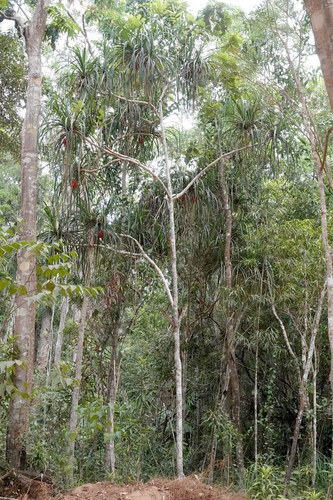
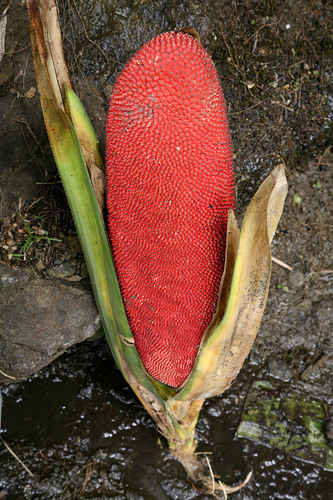
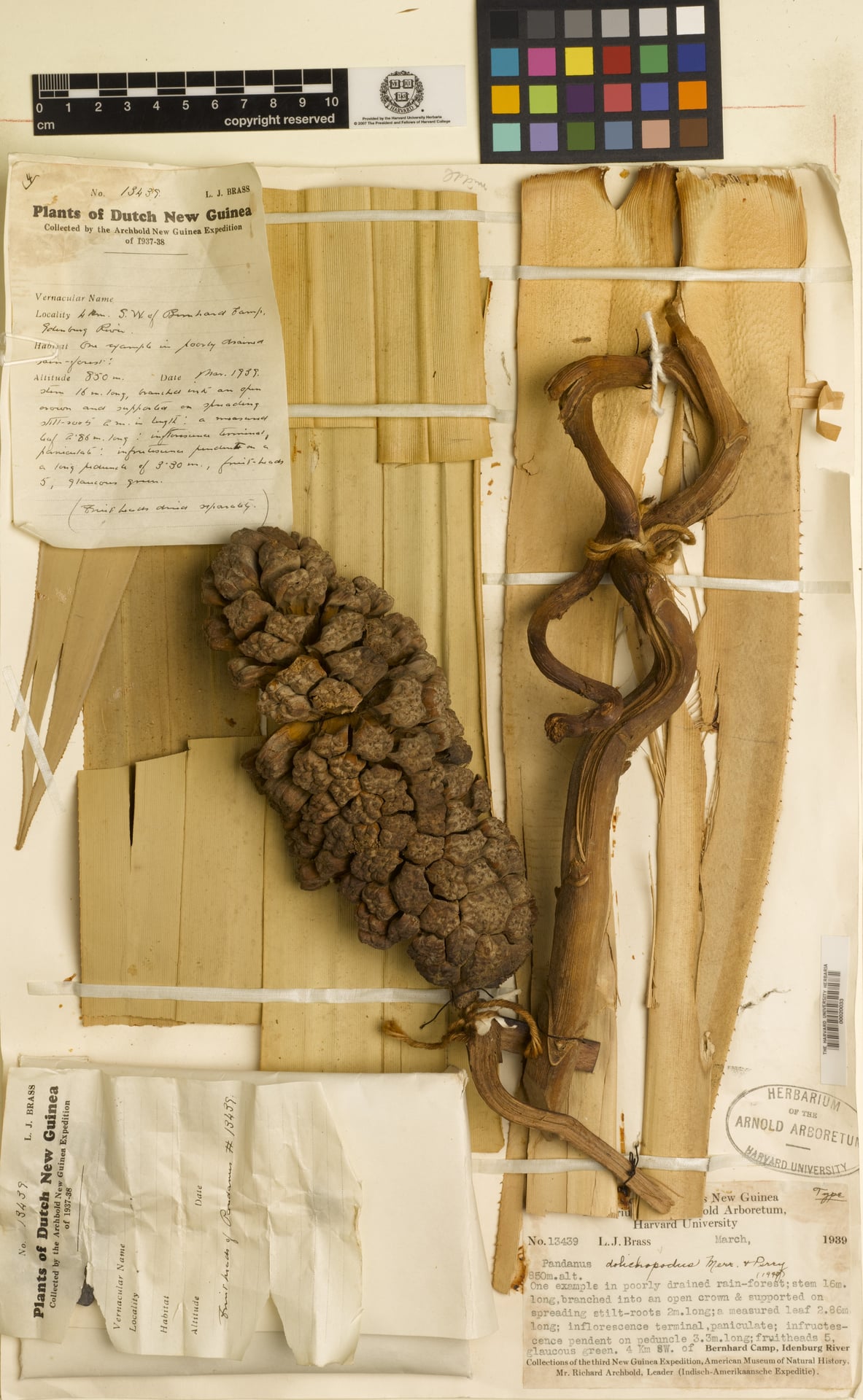
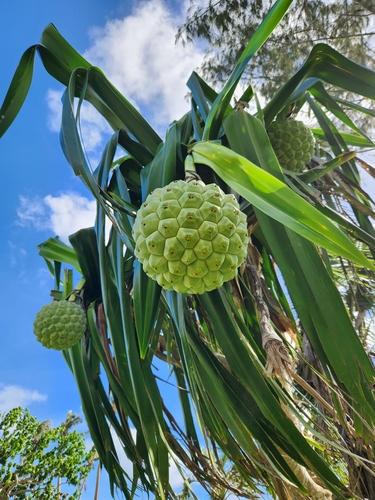
A tree which grows to 10 m high. It has prickly leaves. The trunk is marked with leaf scars. It does not have prop roots. Trees are separately male and female. The leaves are crowded towards the ends of branches. They are arranged in spirals. They are stiff, leathery and V shaped. They are widest at the base and taper to the tip. Leaves are 1.5-2 m long by 4-7 cm wide. They are often bent downwards from about one third of their length. There are small thorns along the edge. The flowers occur as male and female flowers on separate plants. The flowers are small and white. They occur in dense spikes near the ends of branches. These spikes are 3-7 cm long and enclosed with bracts. The fruit are wedge shaped. They are woody. Fruit are 5-7 cm long by 5-8 cm wide and occur in clusters of 8-25. These heads are 15-20 cm across. They hang below the crown and are orange red when ripe. There are several varieties.
Edible Uses
The fruit kernels are eaten raw or roasted. The ends of fresh fruit are sucked or chewed for juice. A preparation from the core of the stem is consumed. A drink is made from crushed fruit. Leaf bases are also edible.
Traditional Uses
The fruit kernels are eaten raw but preferably roasted. The ends of the fresh fruit are sucked or chewed for juice. A preparation from the core of the stem is eaten. This may be as medicine. A drink is made from the crushed fruit.
Medicinal Uses
The leaves of this tree are used to weave various products such as neckbands, armbands, baskets, mats, fish traps and shelters, and the fibre can be stripped out to make string for dillybags and other uses. The trunks are used to build rafts. The plant has a number of medicinal uses including as an antiseptic, analgesic, and to treat dysentery and diarrhoea.. The white stem part of the leaf is pounded to make an anaesthetic for tooth pain. The leaf bases are eaten and the seeds can be eaten raw or roasted, and may be ground to make flour. The fully ripe fruit are used ceremonially because of their scent.
Distribution
A tropical plant. It grows in tropical and subtropical places. It grows in a range of different sites. Often they are near the edges of swamps and ponds or along streams. It can grow in sun or light shade. It can tolerate salty locations. It does well in a humid climate. They are sensitive to frost. They can tolerate a wide range of pH values. In Townsville palmetum.
Where It Grows
Asia, Australia*, Indonesia, SE Asia, Torres Strait,
Cultivation
Plants can be grown from fresh seed. They grow best if removed from the woody shells and soaked for 24 hours. Plants can be grown by removing suckers.
Propagation
Seed - best pre-soaked for 24 hours prior to sowing.
Other Uses
The tough, fibrous leaves are used for weaving bags, cloaks etc. The leaves, which are usually tough and fibrous, are long, narrow and sword-shaped and can easily be split into strips for weaving. The soft trunks have been lashed together to make rafts.
Production
There are about 15 seeds per fruit and there can be 30 fruit in a head.
Notes
There are about 600 Pandanus species. They grow in the tropics.
Nutrition
| Part | Moisture | kJ | kcal | Protein | Vit A | Vit C | Iron | Zinc |
|---|---|---|---|---|---|---|---|---|
| Kernel | 3 | 2403 | 575 | 25.9 | — | — | 6.6 | 0.8 |
Also Known As
Arbaal, Bomer, Gunga, Habal, Idul, Jangawa, Makunguk, Manhara, Miyaringa, Pandan spiral
References (35)
- Bindon, P., 1996, Useful Bush Plants. Western Australian Museum. p 191
- Bodkin, F., 1991, Encyclopedia Botanica. Cornstalk publishing, p 758
- Brock, J., 1993, Native Plants of Northern Australia, Reed. p 276
- Cherikoff V. & Isaacs, J., The Bush Food Handbook. How to gather, grow, process and cook Australian Wild Foods. Ti Tree Press, Australia p 200
- Cronin, L., 1989, The Concise Australian Flora. Reed. p 253
Show all 35 references Hide references
- Elliot, W.R., & Jones, D.L., 1997, Encyclopedia of Australian Plants suitable for cultivation. Vol 7. Lothian. p 156 (Photo)
- Fell, D.G. & Stanton, D.J., 2015: The vegetation and flora of Mabuyag, Torres Strait, Queensland. Memoirs of the Queensland Museum – Culture 8(1):1-33. Brisbane. ISSN 1440-4788.
- Habitat Management Profile – Saibai Island. Appendix C. Preliminary List of Useful Plants for Saibai Island. p 117
- Hardwick, G., 2001, Economically Useful Plants for Northern Australia: Master Species List. Crusader eBooks.
- Hearne, D.A., & Rance, S.J., 1975, Trees for Darwin and Northern Australia. AGPS, Canberra p 92, Pl 26
- Hibbert, M., 2002, The Aussie Plant Finder 2002, Florilegium. p 218
- Holliday, I., 1989, A Field Guide to Australian Trees. Hamlyn. p 278
- Kenneally, K.E., Edinger, D. C., and Willing T., 1996, Broome and Beyond, Plants and People of the Dampier Peninsula, Kimberley, Western Australia. Department of Conservation and Land Management. p 214
- Lands, M., 1987, Mayi: Some Bush fruits of Dampierland. Magabala Books, Broome West Australia. p 55
- Lazarides, M. & Hince, B., 1993, Handbook of Economic Plants of Australia, CSIRO. p 179
- Low, T., 1991, Wild Food Plants of Australia. Australian Nature FieldGuide, Angus & Robertson. p 42
- Morley, B.D., & Toelken, H.R., (Eds), 1983, Flowering Plants in Australia. Rigby. p 400
- Mua Bioversity Profile, 2013, Profile for Management of the Habitats and Related Ecological and Cultural Resources of Mua Island. Torres Strait Regional Authority Land & Sea Management Unit. p 32
- Paczkowska, G. & Chapman, A.R., 2000, The Western Australian Flora. A Descriptive Catalogue. Western Australian Herbarium. p 92
- Petheram, R.J. and Kok, B., 2003, Plants of the Kimberley Region of Western Australia. UWA Press p 509
- Prodr. Fl. Nov. Holl. 341, 1810
- Smith, M & Kalotas, A. C., 1985, Bardi Plants: An Annotated List of Plants and Their Use by the Bardi Aborigines of Dampierland, in North-western Australia. Rec. West Aust. Mus. 1985, 12(3): 317-359
- Smith, N and Wightman, G.M., 1990, Ethnobotanical Notes from Belyuen Northern Territory Australia. Northern Territory Botanical Bulletin No 10. Parks and Wildlife Commission of the Northern Territory. p 19, 20
- Smith, N. M., 1991, Ethnobotanical Field Notes from the Northern Territory, Australia, J. Adelaide Bot. Gard. 14(1): 1-65
- Sukarya, D. G., (Ed.) 2013, 3,500 Plant Species of the Botanic Gardens of Indonesia. LIPI p 744
- Tiwi Plants and Animals. 2001, Aboriginal flora and fauna knowledge from Bathurst and Melville Islands, northern Australia. Northern Territory Botanical Bulletin; No. 24 p 70
- Townsend, K., 1994, Across the Top. Gardening with Australian Plants in the tropics. Society for Growing Australian Plants, Townsville Branch Inc. p 308
- Vigilante, T., et al, 2013, Island country: Aboriginal connections, values and knowledge of the Western Kimberley islands in the context of an island biological survey. Records of the Western Australian Museum Supplement 81: 145-182
- Wheeler, J.R.(ed.), 1992, Flora of the Kimberley Region. CALM, Western Australian Herbarium, p 1254
- Wightman, Glenn et al. 1991.Alawa Ethnobotany: Aboriginal Plant Use from Minyerri, Northern Australia. Northern Territory Botanical Bulletin No 11. Parks and Wildlife Commission of the Northern Territory. p 22, 23
- Wightman, G. & Andrews, M., 1991, Bush Tucker Identikit. Common Native Food Plants of Australia’s top end. Conservation Commission Northern Territory. p 18
- Wightman, Glenn et al. 1992, Mangarrayi Ethnobotany: Aboriginal Plant Use from the Elsey Area Northern Australia. Northern Territory Botanical Bulletin No 15. Parks and Wildlife Commission of the Northern Territory. p 38, 37
- Wightman, Glenn et al. 1994, Gurindji Ethnobotany: Aboriginal Plant Use from Daguragu Northern Australia. Northern Territory Botanical Bulletin No 18. Parks and Wildlife Commission of the Northern Territory. p 40, 41
- Wightman, G. & Brown, J., 1994, Jawoyn Plant Identikit, Common Useful Plants in the Katherine Area of Northern Australia. Conservation Commission Northern Territory. p 32
- Yunupinu Banjgul, Laklak Yunupinu-Marika, et al. 1995, Rirratjinu Ethnobotany: Aboriginal Plant Use from Yirrkala, Arnhem Land, Australia. Northern Territory Botanical Bulletin No 21. Parks and Wildlife Commission of the Northern Territory. p 61