Paeonia officinalis
L.
Peony, Common peony
iNaturalist· cc-by-nc-sa
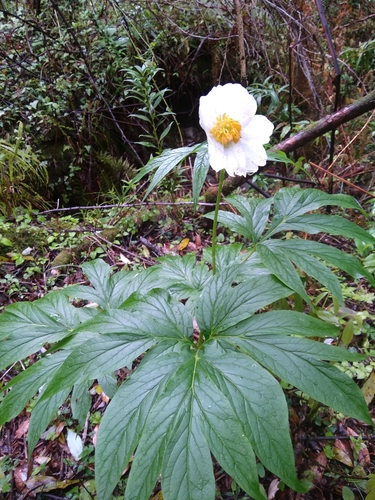
(c) Xavier Béjar, some rights reserved (CC BY-NC-SA)
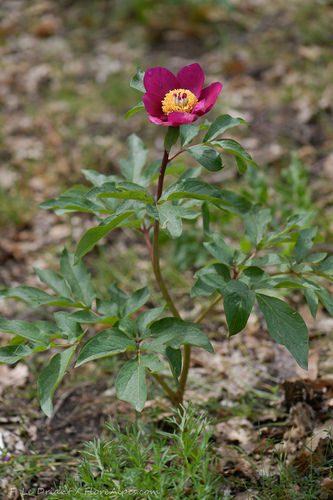
iNaturalist· cc-by-nc-sa
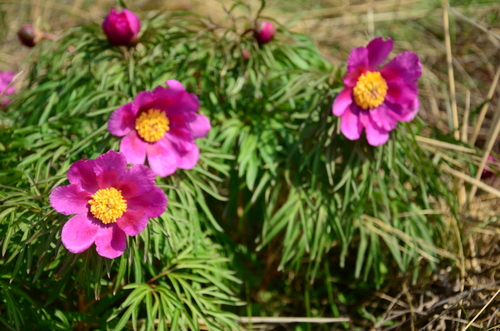
(c) Sarah Gregg, some rights reserved (CC BY-NC-SA)
iNaturalist· cc-by-nc
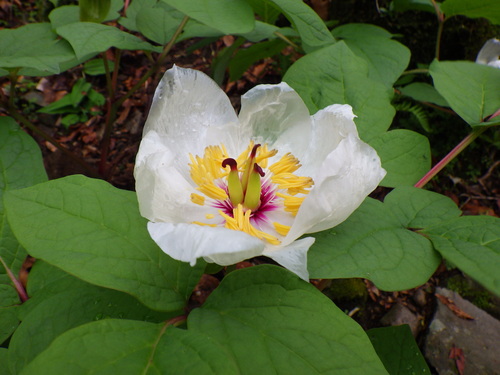
(c) vallespir, some rights reserved (CC BY-NC)
Description
Paeonia officinalis is a PERENNIAL growing to 0.6 m (2ft) by 0.6 m (2ft in) at a medium rate. See above for USDA hardiness. It is hardy to UK zone 8. It is in flower in May, and the seeds ripen in July. The species is hermaphrodite (has both male and female organs) and is pollinated by Insects. The plant is self-fertile. Suitable for: light (sandy), medium (loamy) and heavy (clay) soils and can grow in heavy clay soil. Suitable pH: mildly acid, neutral and basic (mildly alkaline) soils. It can grow in semi-shade (light woodland) or no shade. It prefers moist soil.
Edible Uses
Condiment. Flowers - cooked. They can be used as a vegetable or to scent tea. The hot seeds are ground into a powder and used as a spice in ale or in the food that accompanies it. (Does this mean that the seed is heated before grinding, or that it has a hot flavour?)
Medicinal Uses
Anticonvulsant Antirheumatic Antispasmodic Diuretic Epilepsy Sedative Tonic. Peony root has been used medicinally for over 2,000 years and it gained a reputation as a treatment for epilepsy and to promote menstruation. This species was very popular up to the 16th century, but is little used in contemporary European herbalism, though it is sometimes employed where an antispasmodic and sedative are required. The root is antispasmodic, diuretic, sedative and tonic. The root is harvested in the autumn from plants that are at least two years old and is dried for later use. It has been successfully employed in the treatment of convulsions and spasmodic nervous affections such as epilepsy. It has also been used in the treatment of whooping cough whilst suppositories are sometimes made of the root to relieve anal and intestinal spasms. This remedy should be used with caution and not at all by pregnant women. Large doses can be toxic. A tea made from the dried crushed petals of various peony species has been used as a cough remedy, and as a treatment for haemorrhoids and varicose veins.
Known Hazards
The entire plant is poisonous if taken in large doses.
Distribution
Europe - France to Albania.
Where It Grows
EUROPE: Switzerland (south), Hungary (south), Albania, Bosnia and Herzegovina, Italy, Montenegro, Romania (west), Serbia, Spain, France (south), Portugal (north)
Cultivation
Requires a deep rich soil, preferably neutral or slightly alkaline, doing quite well in sun or light shade. Plants are tolerant of a wide range of soil conditions, but will not survive if the soil becomes waterlogged or is too dry. This species is lime tolerant. Plants grown on sandy soils tend to produce more leaves and less flowers, whilst those growing on clay take longer to become established but produce better blooms. Plants can be naturalised in grass so long as the soil is good. Hardy to about -25°c. A very variable plant, there are at least 4 sub-species. There are a number of named forms, selected for their ornamental value. A long-lived plant, living for 50 years or more in gardens. Members of this genus are rarely if ever troubled by browsing deer or rabbits. A very greedy plant inhibiting the growth of nearby plants, especially legumes. This species can spread fairly freely by means of its tuberous rootstock. Strongly resents root disturbance, taking some time to recover after being divided. Peony species are usually self-fertile, though they will also hybridise with other species if these flower nearby at the same time. Plants take 4 - 5 years to flower from seed. They generally breed true from seed.
Propagation
Seed - best sown as soon as it is ripe in a cold frame. When sown fresh, the seed produces a root about 6 weeks after sowing with shoots formed in the spring. Stored seed is much slower, it should be sown as soon as possible in a cold frame but may take 18 months or more to germinate. The roots are very sensitive to disturbance, so many growers allow the seedlings to remain in their pots for 2 growing seasons before potting them up. This allows a better root system to develop that is more resilient to disturbance. If following this practice, make sure you sow the seed thinly, and give regular liquid feeds in the growing season to ensure the plants are well fed. We usually prick out the seedlings into individual pots as soon as they are large enough to handle, and then grow them on in a cold frame for at least two growing seasons before planting them out when they are in growth in the spring. Division with great care in spring or autumn. Each portion must have a leaf bud. If the lifted root is stood in shade for several hours it becomes less brittle and easier to divide. Divisions that have several buds will usually flower in the second year, but those that only have one or two buds will take a number of years before they have grown sufficiently to flower.