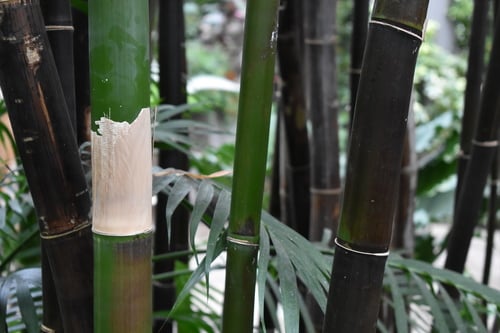
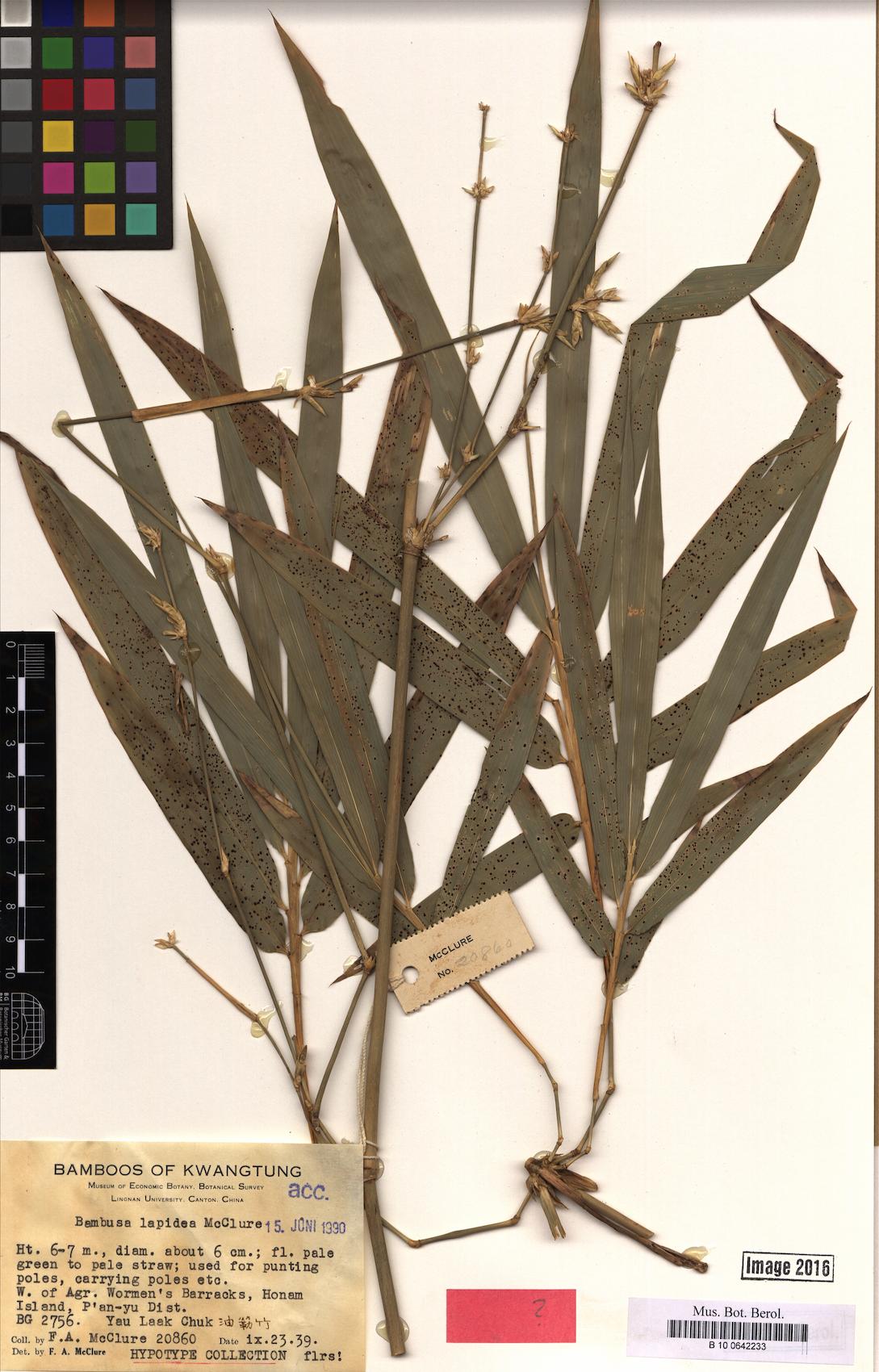
Oxytenanthera abyssinica
(A. Rich.) Munro
Lowland bamboo, Savannah bamboo, Wine bamboo
iNaturalist· cc-by-nc
(c) ONG OeBenin,保留部分权利(CC BY-NC), 由 ONG OeBenin 上传
iNaturalist· cc-by
(c) timharris,保留部分权利(CC BY), 由 timharris 上传
Description
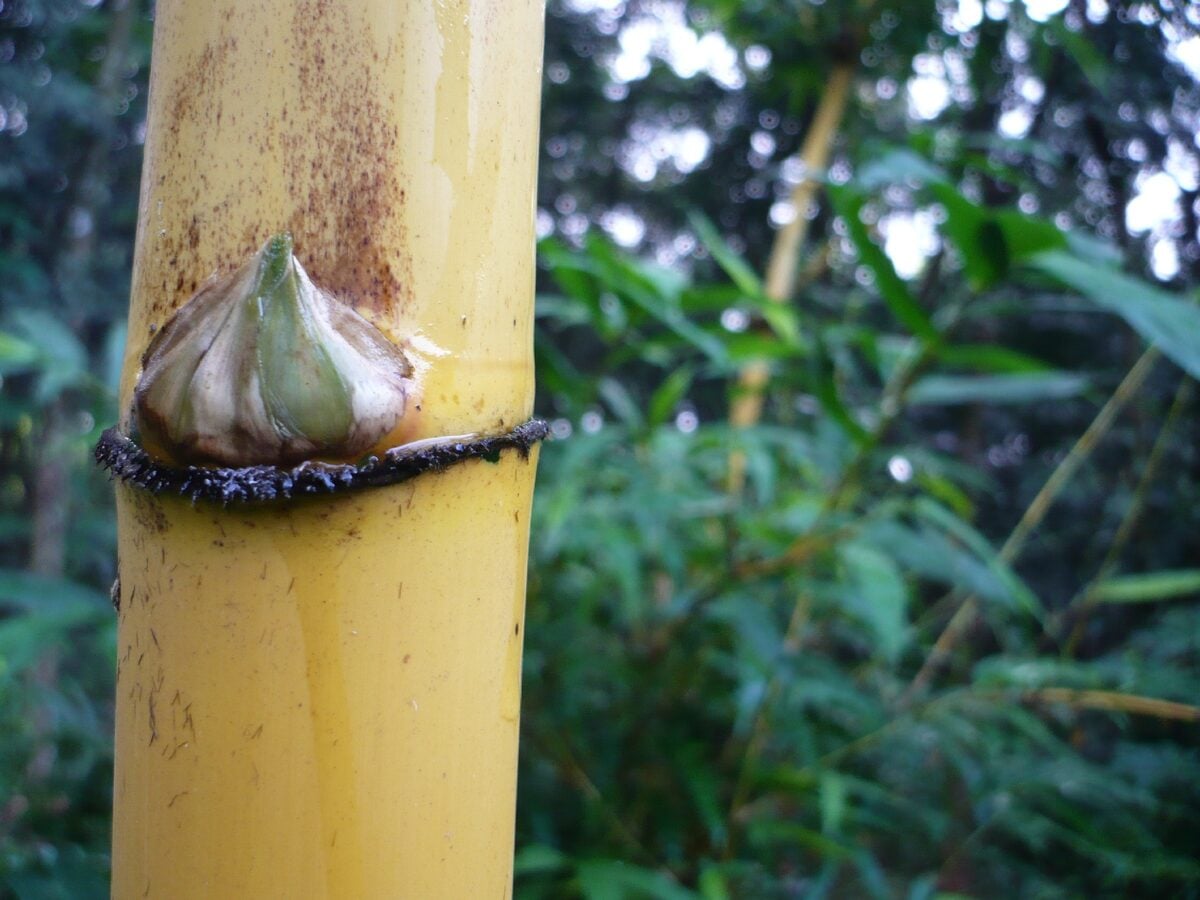
A bamboo or grass. It grows 10-15 m high. It grows in dense clumps. The stem is solid. It is 8-10 cm wide at the base. It arches slightly at the tips. The sheaths are covered with short dark brown bristly hairs. These can be rubbed off. (They irritate the hands). The leaves are bluish green and narrowly sword shaped. They are 5-25 cm long by 1-3 cm wide. They taper to a spine tipped point. The flowers occur in 1-4 flowered spikes. The upper flowers are of both sexes. The lower flowers are sterile. The grains narrowly taper to both ends. After flowering the clump dies back to re-shoot from the base.
Edible Uses
Traditional uses of Oxytenanthera abyssinica include weaving for basketry, as a building material for local construction, houses and furniture, and in the Southern Highlands of Tanzania in Iringa, Mbeya and Ruvuma Regions it is tapped for its juice, and fermented for the production of a local alcoholic beverage. However more recently the species has come under commercial production by EcoPlanet Bamboo. Using seed from the most recent flowering event this entity has used Oxytenanthera abyssinica for the regeneration of degraded agricultural lands in South Africa's Eastern Cape. Through EcoPlanet Bamboo's extensive R&D around this species and trials carried out to showcase its ability to restore degraded landscapes Oxytenanthera abyssinica has recently been touted by international institutions including the World Resources Institute as having a high potential for industrial production. Kenyan entity Kitil Farm has developed a resource base of Oxytenanthera abyssinica seedlings in Isinya.
Traditional Uses
The seeds are used as a rice substitute. The young shoots are eaten. They can be boiled, steamed, smoked, dried, or salted. The shoots can be burnt and the ash used as a vegetable salt. Sap from the stem can be drunk. It is also used to produce a fermented wine.
Medicinal Uses
A leaf-decoction is valued in the treatment of urinary problems, being prescribed for a lack of urine, as well as for too much urine, particularly in cases of diabetes. The decoction is also administered for generalised oedemas and albuminurea. The leaf and culm are reported to contain an (unnamed) alkaloid. The hairs on the culm sheaths are rubbed off and used as a wound-dressing. This is mixed with the rhizome pith, which has been cooked to a mash, and the whole thing is bandaged on the affected area. The rhizome is used in the treatment of dysentery. The seed is ground into a meal, together with other grain, and used as a tonic for small children.
Known Hazards
On ripening, the spiky seed heads may cause wounds which are unresponsive to treatment.
Distribution
A tropical plant. It grows in dense clumps on dry hillsides in Africa. It will re-grow after fires. It usually grows in high rainfall areas at low altitudes. In Zimbabwe it grows up to 1,160 m above sea level. It grows below 2,100 m above sea level. It is cultivated between 1,500 to 2,400 m above sea level. It can grow in arid places.
Where It Grows
Africa, Angola, Benin, Burkina Faso, Cameroon, Central Africa, Central African Republic, CAR, Chad, Congo, Côte d'Ivoire, East Africa, Ethiopia, Gambia, Ghana, Guinea, Guinée, Guinea-Bissau, India, Ivory Coast, Japan, Kenya, Liberia, Malawi, Mali, Mozambique, Nigeria, Senegal, Sierra Leone, Southern Africa, Sudan, Tanzania, Togo, Uganda, West Africa, Zambia, Zimbabwe,
Cultivation
It can be grown by division of the roots. It can be cut back and will re-grow.
Propagation
Seed - it remains viable for 6 - 18 months if stored at ambient temperatures under dry and pest-proof conditions, and is said to germinate better if first stored for a few months. Seed can be sown in light shade in a nursery seedbed or in containers. Germination rates vary from 30 - 80%, with the seed sprouting within 11 days in warm moist conditions but up to 4 months in cool dry conditions. Plants are grown on in the nursery for 8 - 24 months, being planted out into their permanent positions in the early part of the rainy season when they have at least two shoots, the larger of which is 30cm or more long. Division of the rootstock is an easy method of propagation. Early in the rainy season, rhizome sections 12 - 30cm long bearing healthy buds, or the lowest 45cm of a stem, are excavated and transplanted without delay. Stem cuttings.
Other Uses
The leaves, rubbed(?) on house-walls, are said to keep away lice. The strong woody culms are the most valued part of the plant, used as building material for huts, for making furniture and fencing, for splitting to weave into baskets and panniers, for spears, bows and arrows, musical instruments, xylophones, and tambourines, etc. Walking-sticks are commonly made by cutting suitably-sized culms with a piece of the basal rhizome. The dried canes are used as a fuel and are also made into charcoal. The plant is grown as a component of shelterbelts and windbreaks. It is used as a complementary crop in plantations of Cordia africana, Eucalyptus microtheca and Khaya senegalensis. The plants extensive root system makes it suitable for used in erosion control programmes in land rehabilitation. Clumps for sap (‘wine’) production are typically established within areas cropped for maize, potatoes, pyrethrum or wheat.
Production
It grows quickly.
Other Information
It is cultivated in the highlands of Tanzania.
Notes
Presumably Oxytenathera braunii now Oxytenanthera abyssinica.
Synonyms
Also Known As
Bambor, Bambu, Bindura bamboo, Budjama, Cana-bambu, Canguera, Djama, Djambarlam-o, Djambarlam, E-ot, Ecula, Edjo, Enta, Kamalea, Kitindi, Liulawe, Lulasi, Malea, Mlazi, Mulanzi, Musyombe, N'djama, Najane, Nsungwi, Quebe, Quene, Soha, Sorgue, Sua, Teman, Udjame, West African bamboo, Woody bamboo-grass
References (28)
- Abbiw, D.K., 1990, Useful Plants of Ghana. West African uses of wild and cultivated plants. Intermediate Technology Publications and the Royal Botanic Gardens, Kew. p 26, 41
- Asfaw, Z. and Tadesse, M., 2001, Prospects for Sustainable Use and Development of Wild Food Plants in Ethiopia. Economic Botany, Vol. 55, No. 1, pp. 47-62
- Bekele-Tesemma A., Birnie, A., & Tengnas, B., 1993, Useful Trees and Shrubs for Ethiopia. Regional Soil Conservation Unit. Technical Handbook No 5. p 340
- Berihun, T. & Molla, E., 2017, Study on the Diversity and Use of Wild Edible Plants in Bullen District Northwest Ethiopia. Hindawi Journal of Botany. Article ID 8383468
- Bonou, A., et al, 2013, Valeur economique des Produits Forestiers Non Ligneux (PFNL) au Benin. Editions Universitaires Europeennes p 88
Show all 28 references Hide references
- Burkill, H. M., 1985, The useful plants of west tropical Africa, Vol. 2. Kew.
- Chapman, J. D. & Chapman, H. M., 2001, The Forest Flora of Taraba and Andamawa States, Nigeria. WWF & University of Canterbury. p 212
- Facciola, S., 1998, Cornucopia 2: a Source Book of Edible Plants. Kampong Publications, p 46
- Fowler, D. G., 2007, Zambian Plants: Their Vernacular Names and Uses. Kew. p 71
- Goode, P., 1989, Edible Plants of Uganda. FAO p 30
- Grivetti, L. E., 1980, Agricultural development: present and potential role of edible wild plants. Part 2: Sub-Saharan Africa, Report to the Department of State Agency for International Development. p 42
- Grubben, G. J. H. and Denton, O. A. (eds), 2004, Plant Resources of Tropical Africa 2. Vegetables. PROTA, Wageningen, Netherlands. p 563
- Jardin, C., 1970, List of Foods Used In Africa, FAO Nutrition Information Document Series No 2.p 5, 92
- Kakeya, 1976,
- Kew, Plants of the World on Line
- Le Houerou, H. N., (Ed.), 1980, Browse in Africa. The current state of knowledge. International Livestock Centre for Africa, Ethiopia. p 162
- Lulekal, E., et al, 2011, Wild edible plants in Ethiopia: a review on their potential to combat food insecurity. Afrika Focus - Vol. 24, No 2. pp 71-121
- Martin, F.W. & Ruberte, R.M., 1979, Edible Leaves of the Tropics. Antillian College Press, Mayaguez, Puerto Rico. p 194
- Mbuya, L.P., Msanga, H.P., Ruffo, C.K., Birnie, A & Tengnas, B., 1994, Useful Trees and Shrubs for Tanzania. Regional Soil Conservation Unit. Technical Handbook No 6. p 372
- Ojelel, S., et al, 2019, Wild edible plants used by communities in and around selected forest reserves of Teso-Karamoja region, Uganda. Journal of Ethnobiology and Ethnomedicine (2019) 15:3
- Palgrave, K.C., 1996, Trees of Southern Africa. Struik Publishers. p 64
- Peters, C. R., O'Brien, E. M., and Drummond, R.B., 1992, Edible Wild plants of Sub-saharan Africa. Kew. p 24
- Purseglove, J.W., 1972, Tropical Crops. Monocotyledons. Longmans p 133
- Reis, S. V. and Lipp, F. L., 1982, New Plant Sources for Drugs and Foods from the New York Botanical Garden herbarium. Harvard. p 13 (As Oxytenanthera brownii)
- Royal Botanic Gardens, Kew (1999). Survey of Economic Plants for Arid and Semi-Arid Lands (SEPASAL) database. Published on the Internet; http://www.rbgkew.org.uk/ceb/sepasal/internet [Accessed 3rd June 2011]
- Trans. Linn. Soc. London 26:127. 1868
- Williamson, J., 2005, Useful Plants of Malawi. 3rd. Edition. Mdadzi Book Trust. p 184
- World Checklist of Useful Plant Species 2020. Royal Botanic Gardens, Kew