Oxalis pes-caprae
L.
Bermuda buttercup, Soursob, Cape sorrel
iNaturalist· cc-by
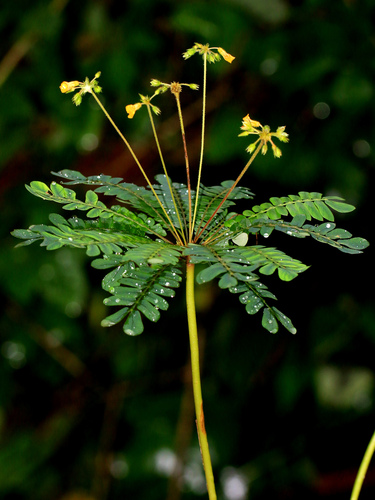
(c) portioid, some rights reserved (CC BY), uploaded by portioid
iNaturalist· cc-by-nc
(c) mary-nguyen, some rights reserved (CC BY-NC), uploaded by mary-nguyen
iNaturalist· cc-by-nc
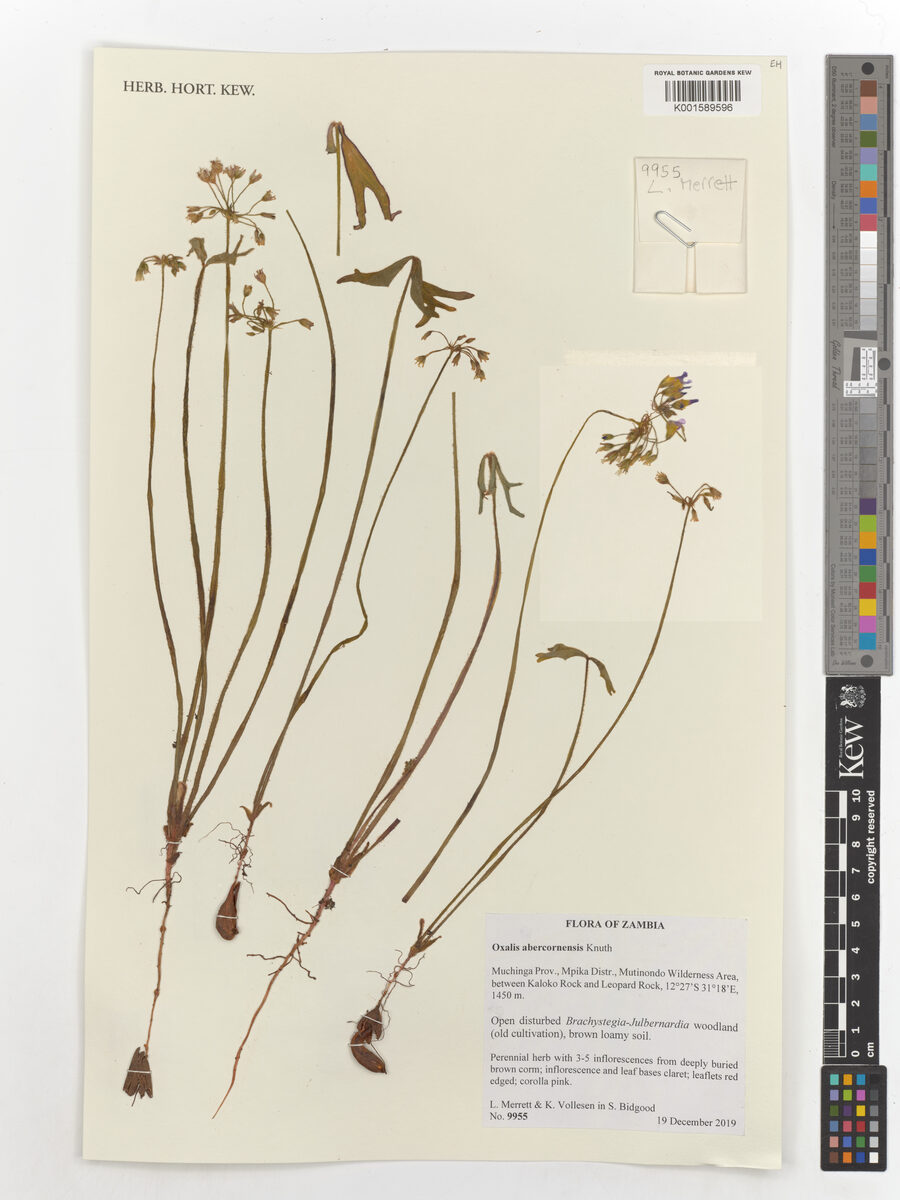
(c) James Bailey, some rights reserved (CC BY-NC), uploaded by James Bailey
Summary
Source: WikipediaOxalis pes-caprae is a species of tristylous yellow-flowering plant in the wood sorrel family Oxalidaceae. Oxalis cernua is a less common synonym for this species. It is commonly known as African wood-sorrel, Bermuda buttercup, Bermuda sorrel, buttercup oxalis, Cape sorrel, English weed, goat's-foot, sourgrass, soursob or soursop; Afrikaans: suring; Arabic: hommayda (حميضة). Some of the most common names for the plant reference its sour taste owing to oxalic acid present in its tissues. Indigenous to South Africa, the plant has become a pest plant in different parts of the world that is difficult to eradicate because of how it propagates through underground bulbs.
Description
A herb which keeps growing from year to year. It has an underground stem which produces many bulbs. The leaves have 3 leaflets are are arranged in a ring near the base. The leaflets have 2 lobes. They are on long leaf stalks. The leaflets have a few stiff hairs underneath. The flower stalks arise from the base and are longer than the leaves. There can be 3-16 flowers in a cluster. The flowers are large and yellow. The petals are 2-2.5 cm long.
Edible Uses
The leaves are edible raw or cooked with a pleasant acid flavour, making a welcome addition to mixed salads — children are particularly fond of eating them on their own. Use in moderation. The flowers are also edible raw, with the same pleasant acid flavour and an attractive appearance in the salad bowl. The root can be eaten cooked.
Traditional Uses
CAUTION: The leaves contain oxalates and can affect calcium absorption. They probably damage kidneys. They should not be eaten in large amounts. They are best eaten with a readily available source of calcium such as cream or coconut milk. They are eaten raw in salads. They are also added to soups and stews. The flower stalks are eaten. The bulbs are eaten grilled.
Medicinal Uses
None known
Known Hazards
The leaves or roots are used in some parts of the world as a food, although the high levels of calcium oxalate in the plant may bear some risks. Such risks can be reduced if the plant parts are boiled first. Oxalic acid is toxic in large quantities, a concern in regions such as southern Australia where Oxalis pes-caprae grows invasively in enormous quantities and in high densities. Various sources suggest that oxalis ingestion causes calcium oxalate kidney stones, but clinical experience and physiological considerations make it unlikely that any realistic intake of Oxalis would affect human liability to kidney stones. Accordingly, some Australian references to the hazards of oxalis to livestock tend to be dismissive of this risk. However, in spite of its comparatively benign nature, where it has become dominant in pastures, as sometimes happens outside South Africa, Oxalis pes-caprae certainly can cause dramatic stock losses. For example, when hungry stock, such as sheep released just after being shorn, are let out to graze in a lush growth of Oxalis pes-caprae, they may gorge on the plant, with fatal results, as has been found in South Australia at least. Such stock fatalities patently have little logical connection with the presence or absence of oxalate kidney stones. For one thing, the fatal effects on sheep are far too rapid to result from the growth of bulk kidney stones. The plant has been found to be nutritious, but too acidic to be good fodder, largely being left untouched by grazing stock. When stock do consume large quantities, the effects typically involve death in several weeks with symptoms suggesting chronic oxalate poisoning, including tetany, or sudden death with extensive renal damage. Such damage suggests the twofold effect of calcium immobilisation (the tetany) and the formation of Calcium Oxalate Monohydrate raphides in the kidney tissue. The histotoxic effects of the raphides in kidney have by now been investigated. Oxalis poisoning of stock is not a serious forage concern in South African pastures, unless exceptionally favoured by overgrazing.
Distribution
It grows in warm temperate and Mediterranean climate areas. It grows in dry areas. It is native to South Africa. It can grow in hot arid areas with a marked dry season. The dry season can be 6-11 months. It grows in coastal regions and between 50-500 m above sea level. It can tolerate shade. It can grow in arid places. Tasmania Herbarium.
Where It Grows
Afghanistan, Africa, Argentina, Asia, Australia, Bermuda, Brazil, Britain, Canary Islands, Chile, China, Cyprus, East Africa, Egypt, Ethiopia, Europe, France, Greece, India, Indonesia, Iran, Iraq, Israel, Italy, Kenya, Libya, Mediterranean, Middle East, Morocco, Namibia, New Zealand, North Africa, North America, Pakistan, Palestine, Portugal, Qatar, Saudi Arabia, SE Asia, Sicily, South Africa*, Southern Africa, South America, Spain, St Helena, Syria, Tanzania, Tasmania, Tunisia, Turkey, Türkiye, Uruguay, USA,
Cultivation
Easily grown in a sandy soil in a warm dry position. This species is not very cold-hardy in Britain, though it is naturalized in parts of south-western England. It tolerates temperatures down to about -5°c. Plants spread rapidly when in a suitable environment and can quite easily become a weed in virtually frost-free environments. Plants seldom produce seed in Europe but they spread by means of asexually produced bulbils.
Propagation
Seed is best sown as soon as ripe in a cold frame. Prick out seedlings into individual pots when large enough to handle and plant out in late spring or early summer. For division in spring, larger divisions can go directly into their permanent positions. Smaller divisions are better potted up and grown on in light shade in a cold frame until well established before planting out in late spring or early summer.
Other Uses
None known
Other Information
The leaves are eaten especially by children as a snack.
Notes
There are about 500 Oxalis species.
Nutrition
| Part | Moisture | kJ | kcal | Protein | Vit A | Vit C | Iron | Zinc |
|---|---|---|---|---|---|---|---|---|
| Bulb | 94.5 | 79 | 19 | 0.2 | — | 5.6 | 2.5 | 0.1 |
| Leaves | 92.7 | — | — | 1.7 | — | 15.1 | 7 | 0.7 |
Synonyms
Also Known As
Acite, Agrio, Alelias, Auriduci, Cannacitula, Eksi yonca, Eksili, Eksilice, Elhounida essafra, Geelsuring, Kati Booti, Koca eksiyonca, Suring, Suuring, Vinagrillo
References (48)
- Ali-Shtayeh, M. S., et al, 2008, Traditional knowledge of wild edible plants used in Palestine (Northern West Bank): A comparative study. J Ethnobiol Ethnomed. 4: 13
- Biscotti, N. et al, 2018, The traditional food use of wild vegetables in Apulia (Italy) in the light of Italian ethnobotanical literature. Italian Botanist 5:1-24
- Blamey, M and Grey-Wilson, C., 2005, Wild flowers of the Mediterranean. A & C Black London. p 111
- Ciftcioglu, C. G., 2015, Sustainable wild-collection of medicinal and edible plants in Lefke region of North Cyprus. Agroforest Syst. Springer
- Cordero, S. E., Abello, L. A., & Galvez, F. L., 2017, Plantas silvestres comestibles y medicinales de Chile y otras partes del mundo. CORMA p 212
Show all 48 references Hide references
- Crowe, A., 1997, A Field Guide to the Native Edible Plants of New Zealand. Penguin. p 92
- Dashorst, G.R.M., and Jessop, J.P., 1998, Plants of the Adelaide Plains & Hills. Botanic Gardens of Adelaide and State Herbarium. p 92
- Della, A., et al, 2006, An ethnobotanical survey of wild edible plants of Paphos and Larnaca countryside of Cyprus. J. Ethnobiol. Ethnomed. 2:34
- De Vynk, J. C., et al, 2016, Indigenous edible plant use by contemporary Khoe-San descendants of South Africa's Cape South Coast. South African Journal of Botany. 102 (2016) 60-69
- Dogan, Y., 2012, Traditionally used wild edible greens in the Aegean Region of Turkey. Acta Societatis Botanicorum Poloniae 81(4): 329-342
- Ertug, F., 2004, Wild Edible Plants of the Bodrum Area. (Mugla, Turkey). Turk. J. Bot. 28 (2004): 161-174
- Ertug, F, Yenen Bitkiler. Resimli Türkiye Florası -I- Flora of Turkey - Ethnobotany supplement
- Flora of Pakistan. www.eFloras.org
- Fox, F. W. & Young, M. E. N., 1982, Food from the Veld. Delta Books. p 286
- Geraci, A., et al, 2018, The wild taxa utilized as vegetables in Sicily (Italy): a traditional component of the Mediterranean diet. Journal of Ethnobiology and Ethnomedicine (2018) 14:14
- Grubben, G. J. H. and Denton, O. A. (eds), 2004, Plant Resources of Tropical Africa 2. Vegetables. PROTA, Wageningen, Netherlands. p 563
- Gurdal, B. & Kultur, S., 2014, The edible and miscellaneous useful plants in Marmaris (Southwest Turkey). İstanbul Ecz. Fak. Derg. / J. Fac. Pharm. Istanbul 44(1) 2014 pp.69-78
- Hadjichambis, A. C., et al, 2007, Wild and semi-domesticated food plant consumption in seven circum-Mediterranean areas. International Journal of Food Sciences and Nutrition. 2007, 1-32.
- Heywood, V.H., Brummitt, R.K., Culham, A., and Seberg, O. 2007, Flowering Plant Families of the World. Royal Botanical Gardens, Kew. p 239
- Hinnawi, N. S. A., 2010, An ethnobotanical study of wild edible plants in the Northern West Bank "Palestine". An-Najah National University. p 94
- Hussey, B.M.J., Keighery, G.J., Cousens, R.D., Dodd, J., Lloyd, S.G., 1997, Western Weeds. A guide to the weeds of Western Australia. Plant Protection Society of Western Australia. p 192
- Hyde-Wyatt, B.H. & Morris D.I., 1975, Tasmanian Weed Handbook. Dept of Ag Tasmania. p 101
- Joffe, P., 2007, Creative Gardening with Indigenous Plants. A South African Guide. Briza. p 277
- Lamp, C & Collet F., 1989, Field Guide to Weeds in Australia. Inkata Press. p 196
- Lentini, F. and Venza, F., 2007, Wild food plants of popular use in Sicily. J Ethnobiol Ethnomedicine. 3: 15
- Licata, M., et al, 2016, A survey of wild plant species for food use in Sicily (Italy) – results of a 3-year study in four Regional Parks. Journal of Ethnobiology and Ethnomedicine 12:12
- Low, T., 1991, Wild Herbs of Australia and New Zealand. Angus & Robertson. p 73
- Mahklouf, M. H., 2019, Ethnobotanical Study of Edible Wild Plants in Libya. European Journal of Ecology. 5(2): 30-40
- Morley, B.D., & Toelken, H.R., (Eds), 1983, Flowering Plants in Australia. Rigby. p 210
- Nassif, F., & Tanji, A., 2013, Gathered food plants in Morocco: The long forgotten species in Ethnobotanical Research. Life Science Leaflets 3:17-54
- Norton, J., et al, 2009, An Illustrated Checklist of the Flora of Qatar. UNESCO Office in Doha.
- Paczkowska, G . & Chapman, A.R., 2000, The Western Australian Flora. A Descriptive Calatogue. Western Australian Herbarium. p 415
- Petersen, L. M., et al, 2012, Development of a Compendium of Local, Wild-Harvested Species Used in the Informal Economy Trade, Cape Town, South Africa. Ecology and Society 17(2):26
- Plants for a Future database, The Field, Penpol, Lostwithiel, Cornwall, PL22 0NG, UK. http://www.scs.leeds.ac.uk/pfaf/
- Royal Botanic Gardens, Kew (1999). Survey of Economic Plants for Arid and Semi-Arid Lands (SEPASAL) database. Published on the Internet; http://www.rbgkew.org.uk/ceb/sepasal/internet [Accessed 5th May 2011]
- Ruiters-Welcome, A. K., 2019, Food plants of southern Africa. Ph.D. thesis. Univ. of Johannesburg p 84
- Sen, R., et al, 1985, Ethnobotanical Uses of Herbaria - 4 J. Econ. Tax. Bot. Vol 6. No.2 pp 331-335
- Sinclair, V., 1992, The Floral Charm of Cyprus. Interworld Publications. p 63
- Sp. pl. 1:434. 1753
- Tasmanian Herbarium Vascular Plants list p 43
- Tardio, J., et al, Ethnobotanical review of wild edible plants in Spain. Botanical J. Linnean Soc. 152 (2006), 27-71
- Tbatou, M, et al, 2016, Wild Edible Plants traditionally used in the countryside of El Jadida, Coastal Area in the Center of Morocco. Life Sciences Leaflets 75:28-48
- van Wyk, B., 2000, A Photographic Guide to Wild Flowers of South Africa. Struik Nature. p 53
- van Wyk, Be., & Gericke, N., 2007, People's plants. A Guide to Useful Plants of Southern Africa. Briza. p 72
- van Wyk, B-E., 2011, The potential of South African plants in the development of new food and beverage products. South African Journal of Botany 77 (2011) 857–868
- Wehmeyer, A. S, 1986, Edible Wild Plants of Southern Africa. Data on the Nutrient Contents of over 300 species
- Welcome, A. K. & Van Wyk, B.-E., 2019, An inventory and analysis of the food plants of southern Africa. South African Journal of Botany 122 (2019) 136–179
- World Checklist of Useful Plant Species 2020. Royal Botanic Gardens, Kew