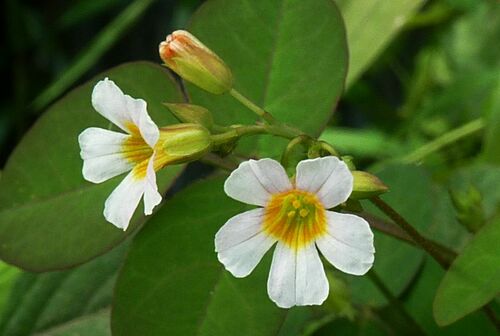
Oxalis frutescens
Ruiz. & Pav.
Shrubby Wood-sorrel
iNaturalist· cc-by-nc
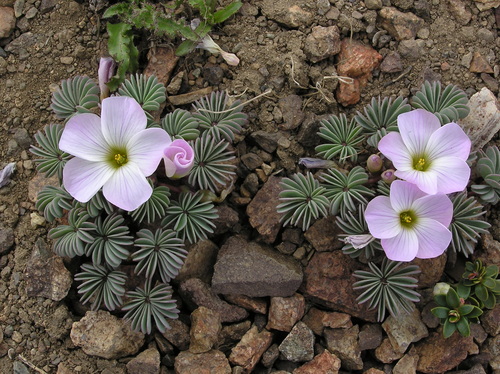
(c) Socorro Garcia Méndez, some rights reserved (CC BY-NC), uploaded by Socorro Garcia Méndez
iNaturalist· cc-by-nc
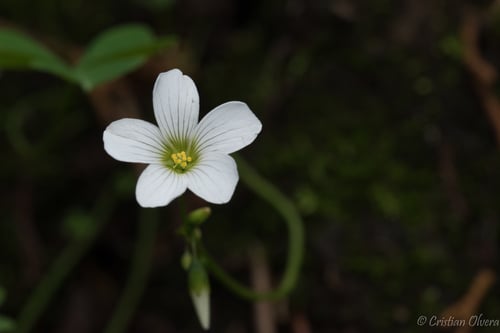
(c) Dale Lee Denham-Logsdon, some rights reserved (CC BY-NC), uploaded by Dale Lee Denham-Logsdon
iNaturalist· cc-by-nc
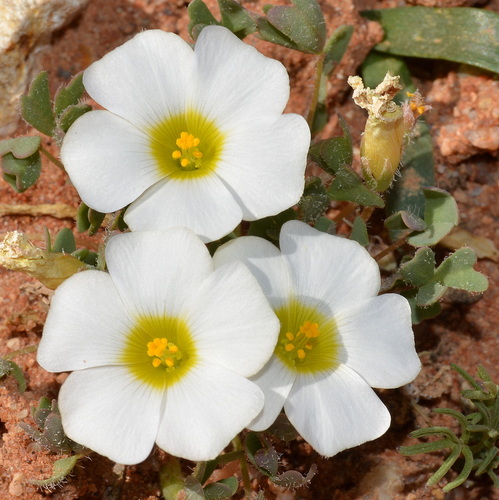
(c) Dale Lee Denham-Logsdon, some rights reserved (CC BY-NC), uploaded by Dale Lee Denham-Logsdon
Summary
Source: WikipediaOxalis frutescens, the shrubby woodsorrel, is a species of flowering plant in the family Oxalidaceae. It is native to New Mexico, Texas, Mexico, Central America, the southernmost Caribbean islands, and tropical South America as far as northern Argentina. A perennial subshrub reaching 35 cm (14 in), it is typically found in sandy soils in grasslands, pastures, roadsides, and open oak woodlands.
Description
A perennial with hermaphroditic flowers pollinated by insects. Grows in light sandy or medium loamy, well-drained soils tolerating mildly acidic to mildly alkaline pH. Requires full sun and adapts to both dry and moist soil conditions.
Edible Uses
The leaves can be eaten raw or cooked and have an acid flavour. Use in moderation due to oxalic acid content.
Medicinal Uses
None known.
Known Hazards
The leaves contain oxalic acid, which gives them their sharp flavour. Perfectly all right in small quantities, the leaves should not be eaten in large amounts since oxalic acid can bind up the body's supply of calcium leading to nutritional deficiency. The quantity of oxalic acid will be reduced if the leaves are cooked. People with a tendency to rheumatism, arthritis, gout, kidney stones or hyperacidity should take especial caution if including this plant in their diet since it can aggravate their condition.
Distribution
A tropical plant. In Argentina it grows below 500 m above sea level.
Where It Grows
Andes, Antilles, Argentina, Brazil, Guiana, Guianas, Guyana, Paraguay, Peru, South America, Suriname, Venezuela,
Cultivation
We have almost no information on this species and do not know if it will be hardy in Britain. The following notes are based on the general needs of the genus. Easily grown in a sandy soil in a warm dry position.
Propagation
Seed is best sown as soon as ripe in a cold frame. Prick out seedlings into individual pots when large enough to handle, then plant out in late spring or early summer. Division in spring — larger divisions can go directly into permanent positions. Smaller divisions are better potted up and grown on in light shade in a cold frame until well established before planting out in late spring or early summer.
Other Uses
None known.
Notes
There are about 500 Oxalis species.
References (2)
- Hedrick, U.P., 1919, (Ed.), Sturtevant's edible plants of the world. p 457 (Also as Oxalis plumieri)
- Plants for a Future database, The Field, Penpol, Lostwithiel, Cornwall, PL22 0NG, UK. http://www.scs.leeds.ac.uk/pfaf/