Acacia giraffae
Willd.
Camel thorn
iNaturalist· cc-by-nc
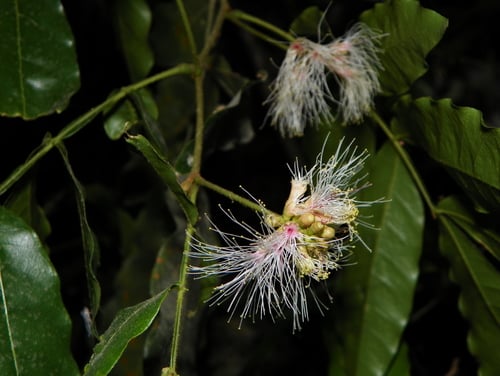
(c) Bart Wursten, some rights reserved (CC BY-NC)
iNaturalist· cc-by-nc
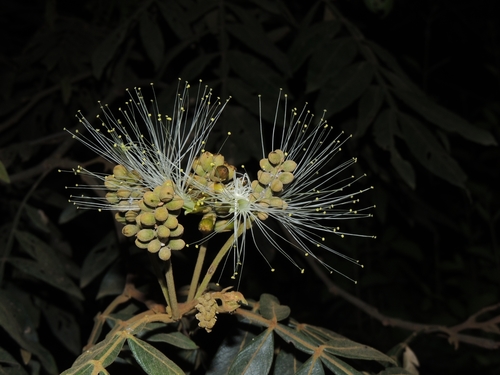
(c) Norbaya Durr, some rights reserved (CC BY-NC)
iNaturalist· cc-by-nc
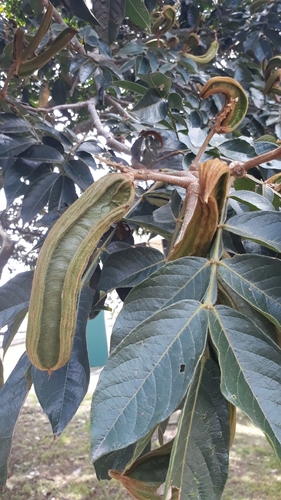
(c) Norbaya Durr, some rights reserved (CC BY-NC)
Summary
Source: WikipediaAcacia giraffae can refer to: Acacia giraffae Hochst. ex A.Rich., a synonym of Vachellia seyal var. seyal (Delile) P.J.H.Hurter Acacia giraffae Willd., a synonym of Vachellia erioloba (E.Mey.) P.J.H.Hurter
Description
A shrub or small tree. It grows 5 m tall. There are prickles along the stem. The leaves are twice divided and there are 8-18 pairs of pinnae. There are up to 50 pairs of pinnules on each pinnae. The flowers are yellow. They are in large clusters at the ends of branches. The pods are flattened.
Edible Uses
An edible gum is obtained from the trunk. Seeds are used as a coffee substitute.
Traditional Uses
The trunk is the source of an edible gum. The seeds are used as a coffee substitute.
This uses section is brief — help expand it
Distribution
It suits hardiness zones 9-11. It grows well in dry, well-drained soil. It needs an open sunny position. It is resistant to drought and frost.
Where It Grows
Africa, Angola, Australia, Botswana, Central Africa, East Africa, South Africa, Southern Africa, Zambia, Zimbabwe,
Notes
There are about 1,350 Acacia species. Over 1,000 occur in Australia.
Synonyms
References (8)
- Bodkin, F., 1991, Encyclopedia Botanica. Cornstalk publishing, p 14
- Cundall, P., (ed.), 2004, Gardening Australia: flora: the gardener's bible. ABC Books. p 75
- Facciola, S., 1998, Cornucopia 2: a Source Book of Edible Plants. Kampong Publications, p 151
- ILDIS Legumes of the World http:www;ildis.org/Legume/Web
- Kunkel,
Show all 8 references Hide references
- E. H. F. Meyer & J. F. Drege, Comm. pl. Afr. austr. 171. 1836 (Acacia erioloba)
- Palmer, E and Pitman, N., 1972, Trees of Southern Africa. Vol. 2. A.A. Balkema, Cape Town p 74-
- Tanaka,