Amaranthus cruentus
L.
Purple amaranth, Red amaranth
iNaturalist· cc-by
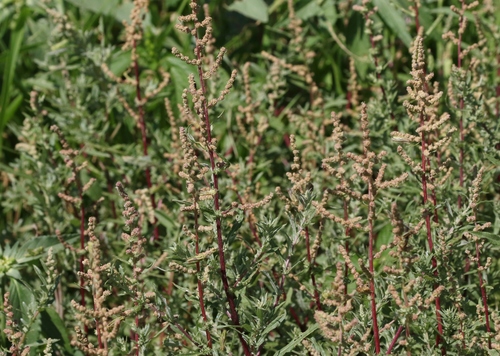
(c) Flora_DUMO, some rights reserved (CC BY), uploaded by Flora_DUMO
iNaturalist· cc-by-nc
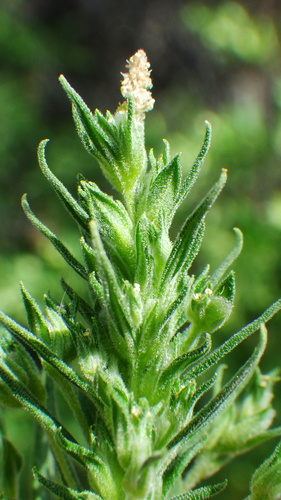
(c) Steven Kurniawidjaja, some rights reserved (CC BY-NC), uploaded by Steven Kurniawidjaja
iNaturalist· cc-by
(c) Dave Richardson, some rights reserved (CC BY), uploaded by Dave Richardson
Summary
Source: WikipediaAmaranthus cruentus is a flowering plant species that is native from Central Mexico to Nicaragua. It yields a nutritious staple amaranth grain, being one of three Amaranthus species cultivated as a grain source, the other two being Amaranthus hypochondriacus and Amaranthus caudatus. It has several common names, including blood amaranth, red amaranth, purple amaranth, prince's feather, and Mexican grain amaranth.
Description
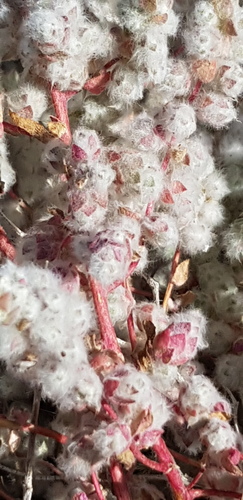
An annual erect plant. It grows to 2 m high. The stems are angular. It often branches in the upper section. It is smooth but may be hairy on younger plant parts. The young parts can be tinged purple. The leaves are oval to sword shaped and can be 10-15 cm long by 3-6 cm wide. They have a leaf stalk 1-7.5 cm long. The leaves often narrow towards the tip. They can also become thinner towards the base. There may be hairs on the midrib. The leaf may be tinged purple underneath. The flowers clusters are often branched and on side branches. The stiff branched flower arrangement at the top can be 15-25 cm long. The fruit is oval and the seed can be 1-1.3 mm across. The seed is dark brown but pale brown forms are used as grain in Central America.
Edible Uses
Colouring. Amaranthus cruentus has a long history of cultivation, especially in South and Central America, where it was grown as a staple seed crop by the Aztec and Maya civilizations. It remains a traditional and important crop in Mexico, Guatemala, and the Andes. Unlike Amaranthus blitoides or A. albus, red amaranth is primarily a cultivated species rather than a common wild plant, and thus less likely to be encountered by casual foragers. The seeds are highly nutritious and versatile, ranking among the best of all amaranths. They can be popped like popcorn, toasted, boiled into porridge, or ground into flour for breads and cakes. Seeds are usually lighter-colored than those of wild amaranths, often cream to golden, and are much easier to process. Their protein content is complete, rich in lysine, which is rare for grains. The leaves are also edible, though they are less commonly used than the seeds. They can be eaten fresh, cooked, or boiled, with a flavor similar to spinach but often milder. Culturally, A. cruentus was used by the Hopi people of Arizona to color traditional “piki bread.” The deep red flower spikes imparted a pink hue to this iconic ceremonial food. Edibility Rating: 5/5 – Excellent seed crop, with additional value in leaves.Leaves - cooked as spinach. The mild-flavoured leaves are rich in vitamins and minerals. Seed - very small but easy to harvest and very nutritious. They are eaten cooked or ground into a powder and used for making cakes etc. They can also be sprouted and used in salads. The seed can be cooked whole, and becomes very gelatinous like this, but it is rather difficult to crush all of the small seeds in the mouth, and thus some of the seed will pass right through the digestive system without being assimilated. The flowers are used as a food colouring in ceremonial maize bread.
Traditional Uses
The leaves and young plant are eaten cooked. They are also dried and stored. The seeds are ground into flour and used to make bread. The seeds are popped and used to prepare candy. CAUTION: This plant can accumulate nitrates if grown with high nitrogen inorganic fertilisers and these are poisonous. The leaves can only be stored for 2-4 days.
Medicinal Uses
The plant can be cultivated from the tropics to the temperate zone. It grows best in areas where annual daytime temperatures are within the range 22 - 28°c, but can tolerate 10 - 45°c. It can be killed by temperatures of 4°c or lower. It prefers a mean annual rainfall in the range 2,000 - 2,400mm, but tolerates 500 - 4,000mm. Prefers a well-drained fertile soil in a sunny position. Requires a hot sheltered position if it is to do well. Prefers a pH in the range 5.5 - 7, tolerating 4.3 - 7.5. Often cultivated as a food crop and ornamental plant, it has escaped from cultivation in many areas and become naturalised as a weed of cultivated and disturbed ground. A fast-growing plant, the first crop of leaves can be harvested in 30 - 50 days from sowing the seed, and the plant can carry on being harvested for up to another 250 days. Grain yields usually range from 800-1200 kg/ha but with the use of fertilizers the yield can be raised up to 3 t/ha. This species is cultivated for its edible seed in many parts of S. America and in Japan. There is at least one named variety, 'Oeschberg' is a very productive plant, growing 1 metre tall and can yield up to 2.5 tonnes per hectare. This species is the most adaptable of the grain amaranths, it also flowers under a wider range of daylength hours than the other species. Plants are particularly susceptible to attacks by leaf-chewing insects. Plants should not be given inorganic fertilizers, see notes above on toxicity. Most if not all members of this genus photosynthesize by a more efficient method than most plants. Called the 'C4 carbon-fixation pathway', this process is particularly efficient at high temperatures, in bright sunlight and under dry conditions.
Known Hazards
No members of this genus are known to be poisonous, but when grown on nitrogen-rich soils they are known to concentrate nitrates in the leaves. This is especially noticeable on land where chemical fertilizers are used. Nitrates are implicated in stomach cancers, blue babies and some other health problems. It is inadvisable, therefore, to eat this plant if it is grown inorganically.
Distribution
It grows in the tropics and more temperate regions. In the tropics it is mainly in the highlands. In Papua New Guinea it grows best between 1,200 and 2,200 m altitude. It needs a night temperature above 15°C and preferably a day temperatures above 25°C. It is best in fertile, well drained soil. In Argentina it grows between sea level and 1,000 m above sea level. It suits hardiness zones 8-11. In Yunnan.
Where It Grows
Africa, Argentina, Asia, Australia, Balkans, Benin, Botswana, Brazil, Burkina Faso, Cameroon, Canada, Cape Verde, Caucasus, Central Africa, Central America, Central Asia, Chad, Chile, China, Congo DR, Côte d'Ivoire, Croatia, Dominican Republic, East Africa, Eswatini, Ethiopia, Europe, Fiji, Gabon, Georgia, Ghana, Guatemala, Guinea, Guinée, Guyana, Haiti, Himalayas, India, Indochina, Indonesia, Ivory Coast, Jamaica, Kenya, Korea, Laos, Lesotho, Liberia, Madagascar, Malaysia, Mali, Mauritania, Mexico*, Mozambique, Nigeria, North America, Pacific, Papua New Guinea, PNG, Philippines, Sao Tome and Principe, SE Asia, Senegal, Sierra Leone, South Africa, Southern Africa, South America, Sri Lanka, Sudan, Swaziland, Uganda, Tajikistan, Tanzania, Thailand, Togo, Turkey, Türkiye, Uganda, USA, Vietnam, West Africa, West Indies, Zambia, Zimbabwe,
Cultivation
Prefers a well-drained fertile soil in a sunny position. Requires a hot sheltered position if it is to do well. Tolerates a pH in the range 4 to 7.5. Plants should not be given inorganic fertilizers, see notes above on toxicity. This species is cultivated for its edible seed in many parts of S. America and in Japan. There is at least one named variety, 'Oeschberg' is a very productive plant, growing 1 metre tall and can yield up to 2.5 tonnes per hectare. This species is the most adaptable of the grain amaranths, it also flowers under a wider range of daylength hours than the other species. Most if not all members of this genus photosynthesize by a more efficient method than most plants. Called the 'C4 carbon-fixation pathway', this process is particularly efficient at high temperatures, in bright sunlight and under dry conditions. In garden design, as well as the above-ground architecture of a plant, root structure considerations help in choosing plants that work together for their optimal soil requirements including nutrients and water. The predictable growth behaviour makes it easier to maintain without having to apply containment methods.
Propagation
Sow seed in late spring in situ. An earlier sowing can be made in a greenhouse, with plants moved outside after the last expected frosts. Germination is usually rapid and good in warm soil; a drop in temperature overnight aids germination. Cuttings of growing plants root easily.
Other Uses
Yellow and green dyes can be obtained from the whole plant. The plant is also used as a dynamic accumulator and is suitable for food forest systems.
Production
Yields of 800-1500 kg per hectare are achieved. Plants can be harvested by pulling up the entire plant or by removing leaves over several harvests.
Other Information
It is a commercially cultivated vegetable. It is an important and popular leafy green.
Notes
Seed (Fresh weight) Protein: 15 %. There are about 60 Amaranthus species. It can help control nematode populations. It is a C4 plant.
Nutrition
| Part | Moisture | kJ | kcal | Protein | Vit A | Vit C | Iron | Zinc |
|---|---|---|---|---|---|---|---|---|
| Seeds | 87.7 | 2006 | 479 | 14.7 | — | 0 | 3.8 | — |
| Leaves | 84 | 176 | 42 | 4.6 | — | 64 | 8.9 | — |
| Leaves | 87.1 | — | — | 4.5 | — | — | 9.2 | — |
| Roots | — | — | — | — | — | — | — | — |
| Seeds | — | — | — | — | — | — | — | — |
Synonyms
Also Known As
Adjogodo, Alayyafu, Alefo, Ama, Anapatsa mena, Bathu, Bee kumpeeyu, Bionuda, Biteku teku, Bitembele, Boroboro, Chaulai, Chekoi, Dodo, Doodo, Efan, Efo tete, Fotete, Gango, Grain amaranth, Grins, Hancai, Han ts'oi, Hondi, Inca wheat, Inene, Kaky mena, Ka-bonthila, Kitembele, Lalchulai, Lengalenga, Madze, Mangara kunge, Marsa, Mbwembo, Mitembele, Moca, Monzonda, Muotsu, Ngwengu, Nut keerai, Omujuiga, Phak khom daeng, Phatakshii, Quelite blanco, Rajgira, Rajira, Rana-tampala, Rau den, Red shank, Seul, Sobue, Soman we, Swie, Tandulga, Tete, Tetefufu, Tete nla, Thepe, Trator, Tseque, Tshiubavhakololo, Ts'iteli jijlaq'a, Tubua
References (110)
- Achigan-Dako, E, et al (Eds), 2009, Catalogue of Traditional Vegetables in Benin. International Foundation for Science.
- Achigan-Dako, E. G., et al, (Eds.), 2010, Traditional vegetables in Benin. Institut National des Recherches Agricoles du Bénin. Imprimeries du CENAP, Cotonou.
- Agea, J. G., et al 2011, Wild and Semi-wild Food Plants of Bunyoro-Kitara Kingdom of Uganda: etc. Environmental Research Journal 5(2) 74-86 (As Amaranthus hybridus subsp. cruentus)
- Ambasta S.P. (Ed.), 2000, The Useful Plants of India. CSIR India. p 34 (As Amaranthus paniculatus)
- Andabati, B., & Muyonga, J., 2014, Phenolic content and antioxidant activity of selected Ugandian traditional medicinal foods. African Journal of Food Science. 8(8), pp 427-434
Show all 110 references Hide references
- Anywar, G., et al, 2014, Wild Plants Used as Nutraceuticals from Nebbi District, Uganda. European Journal of Medicinal Plants 4(6): 641-660, 2014
- Bao Bojian; Steve Clemants, Thomas Borsch, Amaranthaceae [Draft], Flora of China
- Berihun, T., & Molla, E., 2017, Study on the Diversity and Use of Wild Edible Plants in Bullen District Northwest Ethiopia. Hindawi Journal of Botany.Article ID 8383468
- Brickell, C. (Ed.), 1999, The Royal Horticultural Society A-Z Encyclopedia of Garden Plants. Convent Garden Books. p 106
- Bussman, R. W. et al, 2017, Ethnobotany of Samtskhe-Javakheti, Sakartvelo (Republic of Georgia), Caucasus. Indian Journal of Traditional Knowledge Vol. 16(1) pp 7-24 (As Amaranthus paniculatus)
- Bussman, R. W., et al, 2021, Unity in diversity—food plants and fungi of Sakartvelo (Republic of Georgia), Caucasus. Journal of Ethnobiology and Ethnomedicine (2021) 17:72 p 4 (Also as Amaranthus paniculatus)
- Burkill, I.H., 1966, A Dictionary of the Economic Products of the Malay Peninsula. Ministry of Agriculture and Cooperatives, Kuala Lumpur, Malaysia. Vol 1 (A-H) p 128 (As Amaranthus paniculatus)
- Bussman, R. W., et al, 2016, A comparative ethnobotany of Khevsureti, Samtskhe-Javakheti, Tusheti, Svaneti, and Racha-Lechkhumi, Republic of Georgia (Sakartvelo), Caucasus. Journal of Ethnobiology and Ethnomedicine (2016) 12:43 (As Amaranthus paniculatus)
- Checklist of NT Vascular Plant Species. January 2003.
- Creasey, R., 2000, Edible Mexican Garden. Periplus. p 22
- Cundall, P., (ed.), 2004, Gardening Australia: flora: the gardener's bible. ABC Books. p 144
- Dansi, A., et al, 2008, Traditional leafy vegetables and their use in the Benin Republic. Genet Resour Crop Evol (2008) 55:1239–1256
- Devarkar, V. D., et al, 2011, Dietary and Medicinal Significance of Wild Vegetables from Osmanabad Region, Maharashtra (India). Life sciences Leaflets 11:317-332.
- Dolina, K. & Luczaj, L., 2014, Wild food plants used on the Dubrovnik coast (south-eastern Croatia) Acta Soc Bot Pol 83(3):175–181
- Duarte, M. C., et al, 2022, Diversity of Useful Plants in Cabo Verde Islands: A Biogeographic and Conservation Perspective. Plants 2022, 11, 1313 p 8
- Epenhuijsen C.W. van., 1974, Growing Native vegetables in Nigeria. FAO Rome, p 30
- Ertug, F, Yenen Bitkiler. Resimli Türkiye Florası -I- Flora of Turkey - Ethnobotany supplement
- Facciola, S., 1998, Cornucopia 2: a Source Book of Edible Plants. Kampong Publications, p 8
- Facciola, S., 1998, Cornucopia 2: a Source Book of Edible Plants. Kampong Publications, p 8 (As Amaranthus paniculatus)
- FAO, 1993, Valor Nutritivo Y Usis en Alimantacion humana de Algunis Cultivos Autoctonos Subexplotados de Mesoamerica. FAO, Santiago, Chile. p 107
- French, B., 1986, Food Plants of Papua New Guinea, Asia Pacific Science Foundation p 55
- Godfrey, J. et al, 2013, Harvesting, preparationand preservation of commonly consumed wild and semi-wild food plants in Bunyoro-Kitara Kingdom, Uganda. Int. J. Med. Arom. Plants. Vol.3 No.2 pp 262-282
- Grivetti, L. E., 1980, Agricultural development: present and potential role of edible wild plants. Part 2: Sub-Saharan Africa, Report to the Department of State Agency for International Development. p 65 (As Amaranthus paniculatus)
- Grubben, G.J.H., 2004. Amaranthus cruentus L. [Internet] Record from Protabase. Grubben, G.J.H. & Denton, O.A. (Editors). PROTA (Plant Resources of Tropical Africa / Ressources végétales de l’Afrique tropicale), Wageningen, Netherlands. < http://database.prota.org/search.htm>. Accessed 13 October 2009.
- Grubben, G. J. H. and Denton, O. A. (eds), 2004, Plant Resources of Tropical Africa 2. Vegetables. PROTA, Wageningen, Netherlands. p 67
- GUPTA & KANODIA. (As Amaranthus hybridus subsp. cruentus)
- GUPTA, (As Amaranthus paniculatus)
- Harisha, R. P. & Padmavathy, S., 2013, Knowledge and Use of Wild Edible Plants in Two Communities in Malai Madeshwara Hills, Southern India. International Journal of Botany 9(2): 64-72. (As Amaranthus paniculatus)
- Harkonen, M. & Vainio-Mattila, K., 1998, Some examples of Natural Products in the Eastern Arc Mountains. Journal of East African Natural History 87:265-278 (As Amaranthus hybridus subsp. cruentus)
- Hedrick, U.P., 1919, (Ed.), Sturtevant's edible plants of the world. p 47 (As Amaranthus paniculatus)
- Hermandez Bermejo, J.E., and Leon, J. (Eds.), 1994, Neglected Crops. 1492 from a different perspective. FAO Plant Production and Protection Series No 26. FAO, Rome. p 12, 93
- Hide, R., et al, 1979, A checklist of some plants in the territory of the Sinasina Nimai (Simbai Province, Papua New Guinea), with notes on their uses. Department Anthropology, University of Aukland
- HOOPER, (As Amaranthus paniculatus)
- Hu, Shiu-ying, 2005, Food Plants of China. The Chinese University Press. p 381 (As Amaranthus paniculatus)
- Hussey, B.M.J., Keighery, G.J., Cousens, R.D., Dodd, J., Lloyd, S.G., 1997, Western Weeds. A guide to the weeds of Western Australia. Plant Protection Society of Western Australia. p 80
- Jardin, C., 1970, List of Foods Used In Africa, FAO Nutrition Information Document Series No 2.p 54 (As Amaranthus hybridus subsp. cruentus)
- Kanis, A in Womersley, J.S., (Ed), 1978, Handbooks of the Flora of Papua New Guinea. Melbourne University Press. Vol 1. p 23
- Kang, Y., et al, 2012, Wild food plants and wild edible fungi in two valleys on the Qinling Mountains (Shaanxi, central China) Journal of Ethnobiology and Ethnomedicine; 9:26 (As Amaranthus paniculatus)
- Kays, S. J., and Dias, J. C. S., 1995, Common Names of Commercially Cultivated Vegetables of the World in 15 languages. Economic Botany, Vol. 49, No. 2, pp. 115-152
- Kebebew, M. & Leta, G., 2016, Wild Edible Plant Bio-diversity and Utilization System in Nech Sar National Park, Ethiopia. International Journal of Bio-resource and Stress Management 2016, 7(4):885-896
- Kepe, T., 2008, Social Dynamics of the Value of Wild Edible Leaves (Imifino) in a South African Rural Area. Ecology of Food and Nutrition, 47:531-558 (As Amaranthus paniculatus)
- Kiple, K.F. & Ornelas, K.C., (eds), 2000, The Cambridge World History of Food. CUP p 1717
- Kiran, K. C., et al, 2019, Diversity and Seasonal Availability of Potential Wild Edible Plants from Vidarbha Region of Maharashtra State, India. Int.J.Curr.Microbiol.App.Sci (2019) 8(2): 1434-1446 (Also as Amaranthus paniculatus)
- Koukou, E., et al, 2022, Local knowledge of agricultural biodiversity and food uses in two agroecological zones of southern Benin. Ethnobotany Research and Applications 23:29 (2022) p 6
- Kuhnlein, H. V., et al, 2009, Indigenous Peoples' food systems. FAO Rome p 191 (As Amaranthus paniculatus)
- Kumar, P. D., et al, 2015, Ethnobotanical Knowledge and Usage of Wild Plants in Theog Forest Division, Himachal Pradesh, North Western Himalaya. The Journal of Ethnobiology and Traditional Medicine. Photon 124(2015) 922-935 (As Amaranthus paniculatus)
- Latham, P., 2004, Useful Plants of Bas-Congo province. Latham & DFID p 22
- Latham, P. & Mbuta, A. K., 2014, Useful Plants of Bas-Congo Province, Democratic Republic of Congo. Volume 1. p 41
- Latham, P. & Mbuta, A. K., 2017, Plants of Kongo Central Province, Democratic Republic of Congo. Volume 1. 3rd ed p 44
- Lazarides, M. & Hince, B., 1993, Handbook of Economic Plants of Australia, CSIRO. p 16
- Letsela, T., et al, 2003, Plant Resources Used for Subsistence in Tsehlanyane and Boking in Lesotho. Economic Botany 57(4): 619-639 (As Amaranthus paniculatus)
- Liu, Yi-tao, & Long, Chun-Lin, 2002, Studies on Edible Flowers Consumed by Ethnic Groups in Yunnan. Acta Botanica Yunnanica. 24(1):41-56 (As Amaranthus paniculatus)
- Macmillan, H.F. (Revised Barlow, H.S., et al), 1991, Tropical Planting and Gardening. Sixth edition. Malayan Nature Society. Kuala Lumpur. p 351
- Magwede, K., van Wyk, B.-E., & van Wyk, A. E., 2019, An inventory of Vhavenḓa useful plants. South African Journal of Botany 122 (2019) 57–89
- Malaisse, F., 2010, How to live and survive in Zambezian open forest (Miombo Ecoregion). Les Presses Agronomiques de Gembloux. (As Amaranthus hybridus subsp. cruentus)
- Mapes, C. & Basurto, F., 2016, Biodiversity and Edible Plants of Mexico. Chapter 5 in R. Lira, et al. (eds.), Ethnobotany of Mexico, Ethnobiology, Springer. p 111
- Martin, F.W., & Ruberte, R.M., 1979, Edible Leaves of the Tropics. Mayaguez, Puerto Rico p 17
- Martin, F.W. & Ruberte, R.M., 1979, Edible Leaves of the Tropics. Antillian College Press, Mayaguez, Puerto Rico. p 17, 173 (As Amaranthus paniculatus)
- Maundu, P. et al, 1999, Traditional Food Plants of Kenya. National Museum of Kenya. p 61
- Mem. Soc. Sci. Nat. Cherbourg 38:205. 1912 (As Amaranthus hybridus subsp. cruentus)
- Menninger, E.A., 1977, Edible Nuts of the World. Horticultural Books. Florida p 146
- Nyadanu, D., et al, 2015, Agro-biodiversity and challenges of on-farm conservation: the case of plant genetic resources of neglected and underutilized crop species in Ghana. Genet. Resourc. Crop Evol. 62(7):
- Ochse, J.J. et al, 1931, Vegetables of the Dutch East Indies. Asher reprint. p 21 (As Amaranthus paniculatus)
- Oomen, H.A.P.C., & Grubben, G.J.H., 1978, Tropical Leaf Vegetables in Human Nutrition, Communication 69, Department of Agricultural research, RTI Amsterdam, p 66, 77
- Paczkowska, G. & Chapman, A.R., 2000, The Western Australian Flora. A Descriptive Catalogue. Western Australian Herbarium. p 136
- Peekel, P.G., 1984, (Translation E.E.Henty), Flora of the Bismarck Archipelago for Naturalists, Division of Botany, Lae, PNG. p 164, 165
- Pena, F. B., et al, 1998, Los quelites de la Sierra Norte de Puebla, Mexico: Inventory Y Formas de Preparacion. Bol. Soc. Bot. Mexico 62:49-62
- Piedra-Malagón, E. M. et al, 2022, Edible native plants of the Gulf of Mexico Province. Biodiversity Data Journal 10: e80565 p 8
- Plants for a Future database, The Field, Penpol, Lostwithiel, Cornwall, PL22 0NG, UK. http://www.scs.leeds.ac.uk/pfaf/
- Plants for a Future database, The Field, Penpol, Lostwithiel, Cornwall, PL22 0NG, UK. (As Amaranthus paniculatus)
- Plants of Haiti Smithsonian Institute http://botany.si.edu
- Pradheep, K., et al, 2016, Wild edible plants used by Konyak tribe in Mon district of Nagaland: Survey and inventorisation. Indian Journal of Natural Products and Resources. Vol 7(1) pp 74-81
- Prafulla, S., 2017, Wild Food Diversity of Nawegaon-Nagzira Tiger Reserve in Gondia-Bhandara district of Maharashtra, India. Int. J. of Life Sciences, 2017, Vol. 5 (4): 620-626
- PROSEA (Plant Resources of South East Asia) handbook Volume 10 Cereals. p 75
- Purseglove, J.W., 1968, Tropical Crops Dicotyledons, Longmans. p 624
- Purseglove, J.W., 1968, Tropical Crops Dicotyledons, Longmans. p 624 (As Amaranthus paniculatus)
- Rajapaksha, U., 1998, Traditional Food Plants in Sri Lanka. HARTI, Sri Lanka. p 30 (As Amaranthus paniculatus)
- Rana, D., et al, 2019, Ethnobotanical knowledge among the semi-pastoral Gujjar tribe in the high altitude (Adhwari’s) of Churah subdivision, district Chamba, Western Himalaya. Journal of Ethnobiology and Ethnomedicine (2019) 15:10 (As Amaranthus paniculatus)
- Razanameharizaka, J., et al, 2022, Catalogue Legumes Traditionnels de Madagascar. Université d’Antananarivo, Antananarivo (101), Madagascar. Vol. 1. p 11
- Saikia, M., 2015, Wild edible vegetables consumed by Assamese people of Dhemaji District of Assam, NE India and their medicinal values. Archives of Applied Science Research, 2015, 7 (5):102-109
- Salako, V. K. et al, 2013, Home gardens: an assessment of their biodiversity and potential contribution to conservation of threatened species and crop wild relatives in Benin. Genet Resour Crop Evol
- Saur.J.D., Grain amaranths, in Simmonds, N.W., (Ed.), 1979, Evolution of Crop Plants. Longman. p 4
- Segnon, A. C. & Achigan-Dako, E. G., 2014, Comparative analysis of diversity and utilization of edible plants in arid and semi-arid areas in Benin. Journal of Ethnobiology and Ethnomedicine 2014, 10:80
- Sharma, L. et al, 2018, Diversity, distribution pattern, endemism and indigenous uses of wild edible plants in Cold Desert Biosphere Reserve of Indian Trans Himalaya. Indian Journal of Traditional Knowledge. Vol 17(1) January 2018 pp 122-131
- Sillitoe, P. 1995, An Ethnobotanical Account of the Plant Resources of the Wola Region, Southern Highlands Province, Papua New Guinea. J. Ethnobiol. 15(2): 201-235
- Small, E., 2009, Top 100 Food Plants. The world's most important culinary crops. NRC Research Press. p 69
- Sp. pl. ed. 2, 2:1406. 1763 (As Amaranthus paniculatus)
- Swaziland's Flora Database http://www.sntc.org.sz/flora (As Amaranthus hybridus subsp. cruentus)
- Syst. nat. ed. 10, 2:1269. 1759
- Terashima, H., et al, 1992, Ethnobotany of the Lega in the Tropical Rainforest of Eastern Zaire (Congo): Part Two, Zone de Walikale, African Study Monographs, Suppl. 19:1-60
- Terra, G.J.A., 1973, Tropical Vegetables. Communication 54e Royal Tropical Institute, Amsterdam, p 23 (As Amaranthus paniculatus)
- Thakur, D., et al, 2017, Why they eat, what they eat: patterns of wild edible plants consumption in a tribal area of Western Himalaya. Journal of Ethnobiology and Ethnomedicine (2017) 13:70 (As Amaranthus paniculatus)
- Tindall, H.D., & Williams, J.T., 1977, Tropical Vegetables and their Genetic Resources, International Board for Plant Genetic Resources, Rome, p 96
- Tindall, H.D., 1983, Vegetables in the tropics. Macmillan p. 37
- Tiwari, J. K., et al, 2010, Some Promising Wild Edible Plants of Srinagar and its Adjacent Area in Alaknanda Valley of Garhwal Himalaya, India. Journal of American Science 6(4) p 167ff
- USDA, ARS, National Genetic Resources Program. Germplasm Resources Information Network - (GRIN). [Online Database] National Germplasm Resources Laboratory, Beltsville, Maryland. Available: www.ars-grin.gov/cgi-bin/npgs/html/econ.pl (10 April 2000)
- Vainio-Mattila, K., 2000, Wild vegetables used by the Sambaa in the Usumbara Mountains, NE Tanzania. Ann. Bot. Fennici 37:57-67 (As Amaranthus hybridus subsp. cruentus)
- van Wyk, B., 2005, Food Plants of the World. An illustrated guide. Timber press. p 55
- WATT. (As Amaranthus paniculatus)
- Wiersema, J. H. & Leon, B., 2013, World Economic Plants. A Standard Reference CRC Press. 2nd Ed. p 44
- Wilson, J.M. & Witcombe, J.R., Crops for Arid lands, in Wickens, G.E., Goodin, J.R., and Field, D.V.,(Eds.) 1985, Plants for Arid Lands. Unwin Hyman, London, p 45
- World Checklist of Useful Plant Species 2020. Royal Botanic Gardens, Kew
- www.pngplants.org
- Zeven, A. C. & de West, J. M. J., 1982, Dictionary of cultivated plants and their regions of diversity. Wageningen. p 49 (As Amaranthus paniculatus)
- Zon, A.P.M. van der, Grubben, G.J.H., 1976, Les legumes-feuilles spontanes et cultives du Sud-Dahomey, Communication 65, Royal Tropical Institute, Amsterdam, p 27, 29