Atriplex confertifolia
(Torr. & Frém.) S. Watson.
Shadscale
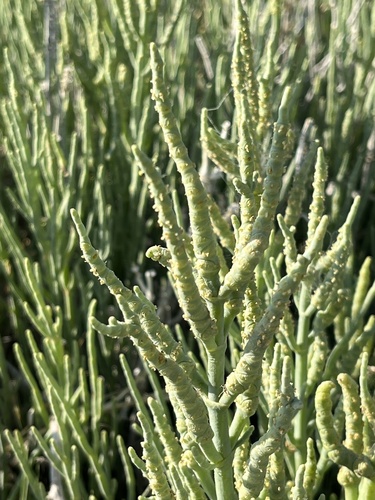
iNaturalist· cc-by-sa
(c) Matt Lavin, some rights reserved (CC BY-SA)
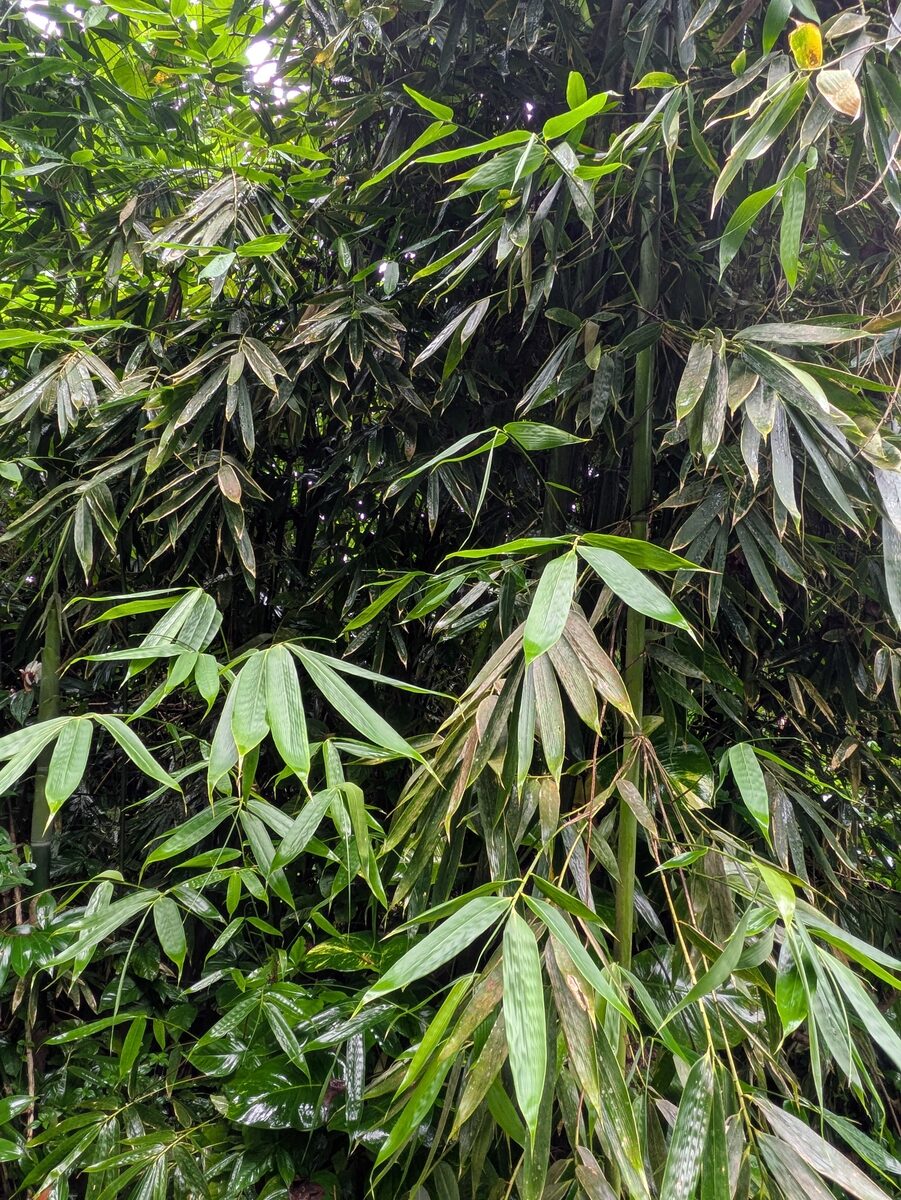
iNaturalist· cc-by-nc
(c) Jim Boone, some rights reserved (CC BY-NC), uploaded by Jim Boone
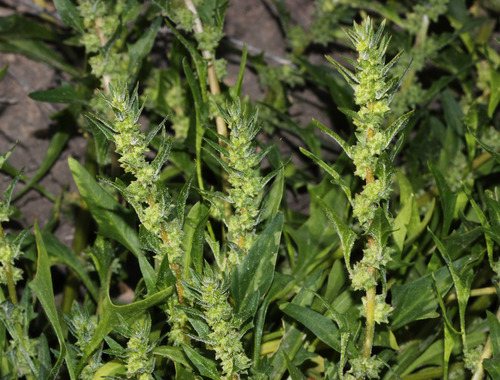
iNaturalist· cc-by-sa
(c) Matt Lavin, some rights reserved (CC BY-SA)
Summary
Source: WikipediaAtriplex confertifolia, the shadscale or spiny saltbush, is a species of evergreen shrub in the family Amaranthaceae, which is native to the western United States and northern Mexico.
Description
A shrub. It grows 30-90 cm tall. It is spiny and has rigid branches. The seeds are in yellow clusters.
This description is brief — help expand it
Edible Uses
Edible Parts: Leaves Seed Edible Uses: Edible uses & rating: Leaves (cooked, still somewhat irritating), seeds (best part but tough to free from husks). Edibility rating: 3/5. Taste & processing notes: Fresh leaves cause mouth/throat burn (oxalates/saponins); cooking reduces but doesn’t eliminate. Seeds tiny; husks thick. “Least-ineffective” method: break/burn wings - boil in husks - chew out or mash/boil/filter to make a yellow starchy broth. Season/harvest: Fruits from mid-summer; mature in autumn [2-3]. Leaves - cooked and used as greens. The water in which the leaves is cooked is used in making corn pudding. Seed - used in piñole or ground into a meal and used as a thickener in making bread or mixed with flour in making bread[95, 105. 161, 183].
Traditional Uses
The seeds are ground into a meal that is used for bread or porridge. The water in which the leaves are boiled is used for corn pudding.
This uses section is brief — help expand it
Medicinal Uses
Antispasmodic Epilepsy Poultice The plant has been burnt and the smoke inhaled as a treatment for epilepsy. The boiled leaves have been used as a liniment for sore muscles and aches. A poultice of the mashed leaves have been applied to the chest and a decoction of the leaves drunk to treat colds.
Distribution
It is a temperate plant. It grows in sandy well-drained soil.
Where It Grows
Mexico, North America, USA,
Cultivation
Plants can be grown by seed or cuttings.
Propagation
Seed - sow April/May in a cold frame in a compost of peat and sand. Germinates in 1 - 3 weeks at 13°c. Pot up the seedlings when still small into individual pots, grow on in a greenhouse for the first winter and plant out in late spring or early summer after the last expected frosts. Cuttings of half-ripe wood, July/August in a frame. Very easy. Pot up as soon as they start to root (about 3 weeks) and plant out in their permanent positions late in the following spring. Cuttings of mature wood of the current season's growth, November/December in a frame. Very easy. Pot up in early spring and plant out in their permanent position in early summer.
Other Uses
Agroforestry uses: Saltbush is often used for erosion control, as a windbreak, and for soil stabilization. Its high salt tolerance makes it suitable for saline soils, and it can be used as forage for livestock. 1.Nectary - Flowers rich in nectar and pollen: No – Saltbush is wind-pollinated, so it doesn’t produce nectar-rich flowers to attract pollinators. 2. Wildlife - Food (Fruit, Seeds, Leaf litter, Shelter, Nesting, Roosting): Yes – Saltbush provides food for wildlife through its seeds and foliage. It is an important food source for herbivores like birds and small mammals. The dense, bushy form also provides shelter and cover for nesting birds and other small animals. 3. Invertebrate Shelter (Overwintering sites, Leaf litter, Groundcover): Yes – The dense, shrubby growth of Saltbush offers good ground cover for invertebrates, and the fallen leaves can serve as shelter and overwintering sites for beneficial insects. 4.Pest Confuser (Smell): No – Saltbush does not have a strong aromatic smell that repels pests, so it is not typically used as a pest confuser. Wildlife/ecology: Critical browse in winter; nesting cover; soil stabilizer. Special Uses
Notes
There are about 100-300 Atriplex species. They have also been put in the family Chenopodiaceae.
Synonyms
Also Known As
Spiny saltbush
References (7)
- Beckstrom-Sternberg, Stephen M., and James A. Duke. "The Foodplant Database." http://probe.nalusda.gov:8300/cgi-bin/browse/foodplantdb.(ACEDB version 4.0 - data version July 1994)
- Facciola, S., 1998, Cornucopia 2: a Source Book of Edible Plants. Kampong Publications, p 75
- Kermath, B. M., et al, 2014, Food Plants in the Americas: A survey of the domesticated, cultivated and wild plants used for Human food in North, Central and South America and the Caribbean. On line draft. p 103
- Plants for a Future database, The Field, Penpol, Lostwithiel, Cornwall, PL22 0NG, UK. http://www.scs.leeds.ac.uk/pfaf/
- Proc. Amer. Acad. Arts 9:119. 1874
Show all 7 references Hide references
- Saunders, C.F., 1948, Edible and Useful Wild Plants. Dover. New York. p 54
- Tozer, F., 2007, The Uses of Wild Plants. Green Man Publishing. p 43