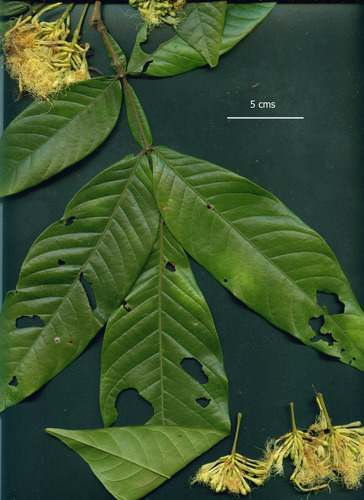
Senegalia fleckii
(Schinz) Boatwr.
Blade thorn, Sand-veld acacia
iNaturalist· cc-by-nc
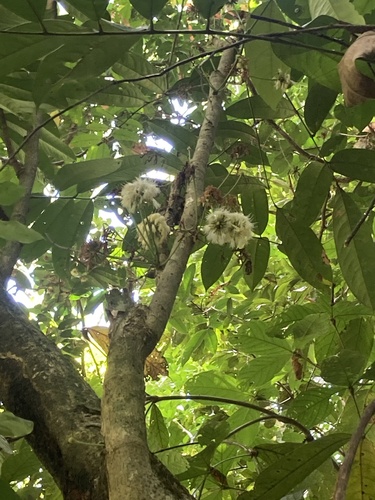
(c) Christine Sydes, some rights reserved (CC BY-NC), uploaded by Christine Sydes
iNaturalist· cc-by-nc
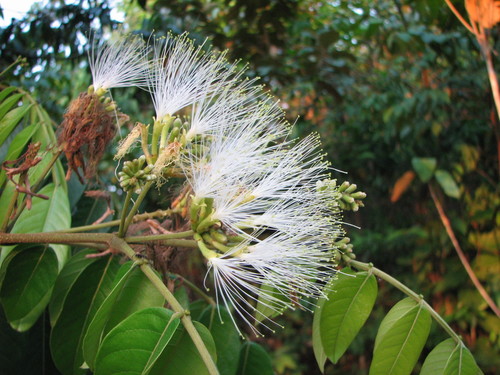
(c) Christine Sydes, some rights reserved (CC BY-NC), uploaded by Christine Sydes
iNaturalist· cc-by-nc
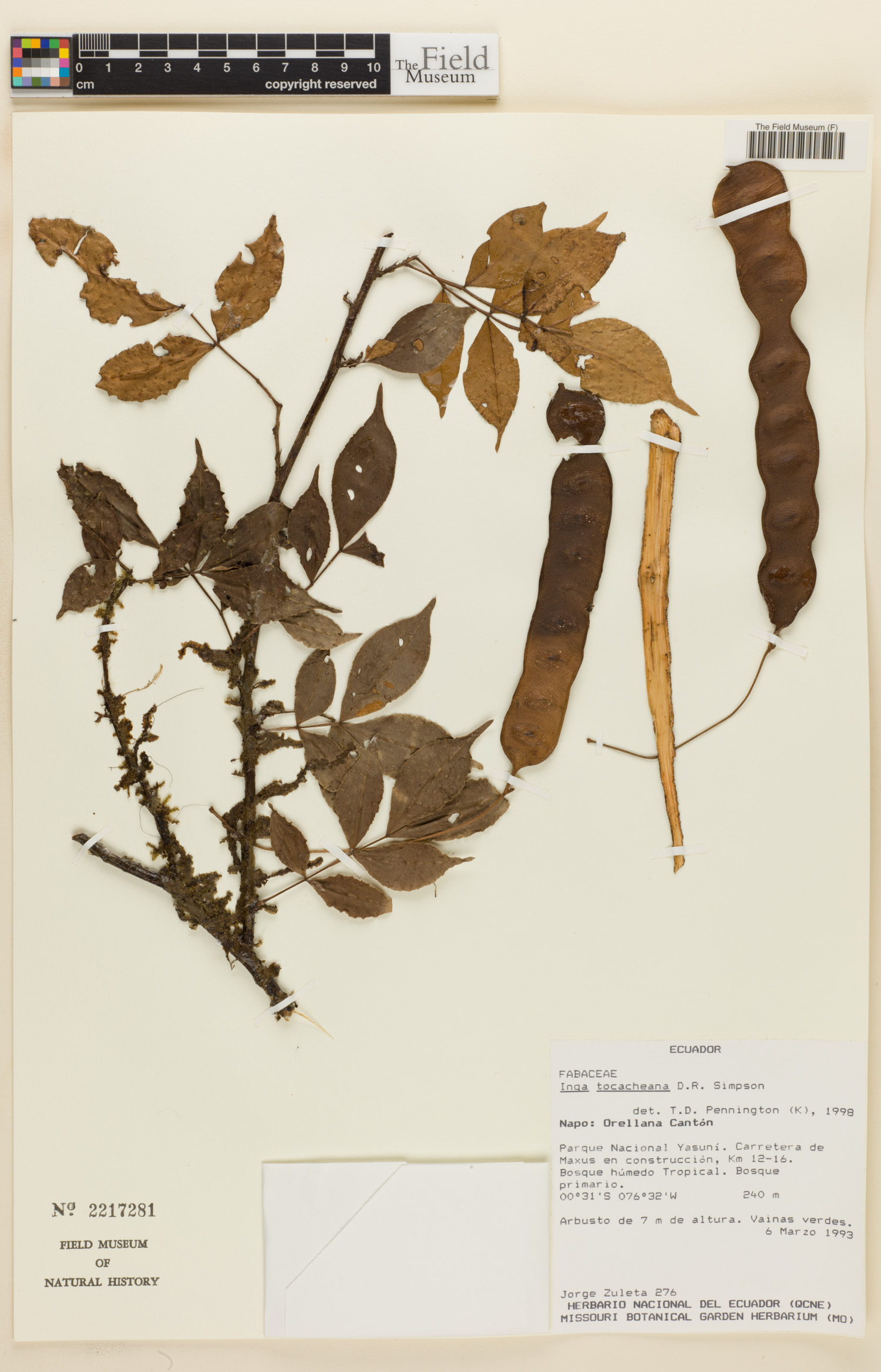
(c) Adrian Wilson, some rights reserved (CC BY-NC), uploaded by Adrian Wilson
Description
It is a shrub. Often is has several stems. It loses many of its leaves during the year. It grows up to about 2.5-6 m tall. The bark on the trunk can peel off in papery pieces. The thorns are hooked and sharp. They occur in pairs. The thorns have a swollen base. The leaves are 5-8 cm long. They have flat raised gland at the base of the leaf. The leaves have 6-14 pairs of side branches and about 10-30 pairs of leaflets. These are hairy. The leaflets are fine and grey. The flowers are pale yellow and in spikes about 8 cm long. The pods are flat and papery. They are grey or brown and about 9 cm long. They have many glands which look like red spots.
Edible Uses
The gum can be eaten as a vegetable.
Traditional Uses
The gum can be eaten.
This uses section is brief — help expand it
Distribution
It is a tropical plant. It often forms thickets on sandy soil. It grows on sand dunes. It is drought resistant. It can tolerate some frost. It grows between 400-1,450 m above sea level. It can grow in arid places.
Where It Grows
Africa, Angola, Botswana, Central Africa, East Africa, Namibia, South Africa, Southern Africa, Zambia, Zimbabwe,
Cultivation
Plants can be grown from seeds. Seeds germinate fairly easily in 5-15 days.
Other Information
Probably minor.
Notes
There are about 1,350 Acacia species. Over 1,000 occur in Australia. Also as Mimosaceae.
Synonyms
Also Known As
Bladdoring, Kane, Mhahu, Mohahu, Mofafu, Mwalala, Sand-veld acacia
References (18)
- Fowler, D. G., 2007, Zambian Plants: Their Vernacular Names and Uses. Kew. p 32 (As Acacia fleckii)
- Fox, F. W. & Young, M. E. N., 1982, Food from the Veld. Delta Books. p 201 (As Acacia fleckii)
- Grivetti, L. E., 1980, Agricultural development: present and potential role of edible wild plants. Part 2: Sub-Saharan Africa, Report to the Department of State Agency for International Development. p 79 (As Acacia fleckii)
- Grubben, G. J. H. and Denton, O. A. (eds), 2004, Plant Resources of Tropical Africa 2. Vegetables. PROTA, Wageningen, Netherlands. p 559 (As Acacia fleckii)
- http://aflora.africa.kyoto-u.ac.jp (As Acacia fleckii)
Show all 18 references Hide references
- ILDIS Legumes of the World http:www;ildis.org/Legume/Web (As Acacia fleckii)
- Lee, 1979, (As Acacia fleckii)
- Mannheimer, C. A. & Curtis. B.A. (eds), 2009, Le Roux and Muller's Field Guide to the Trees and Shrubs of Namibia. Windhoek: Macmillan Education Namibia. p 94 (As Acacia fleckii)
- Mem. Herb. Boissier 1:108. 1900 (As Acacia fleckii)
- Palgrave, K.C., 1996, Trees of Southern Africa. Struik Publishers. p 237 (As Acacia fleckii)
- Palmer, E and Pitman, N., 1972, Trees of Southern Africa. Vol. 2. A.A. Balkema, Cape Town p 758 (As Acacia fleckii)
- Peters, C. R., O'Brien, E. M., and Drummond, R.B., 1992, Edible Wild plants of Sub-saharan Africa. Kew. p 126 (As Acacia fleckii)
- Roodt, V., 1998, Trees & Shrubs of the Okavango Delta. Medicinal Uses and Nutritional value. The Shell Field Guide Series: Part 1. Shell Botswana. p 161 (As Acacia fleckii)
- Royal Botanic Gardens, Kew (1999). Survey of Economic Plants for Arid and Semi-Arid Lands (SEPASAL) database. Published on the Internet; http://www.rbgkew.org.uk/ceb/sepasal/internet [Accessed 26th April 2011] (As Acacia fleckii)
- Ruiters-Welcome, A. K., 2019, Food plants of southern Africa. Ph.D. thesis. Univ. of Johannesburg p 55 (As Acacia fleckii)
- Tanaka, 1980, (As Acacia fleckii)
- van Wyk, Ben-Erik, 2019, The diversity and multiple uses of southern African legumes. Australian Systematic Botany, 2019, 32, 519–546
- World Checklist of Useful Plant Species 2020. Royal Botanic Gardens, Kew