Alocasia cucullata
(Louriero) G. Don
Chinese taro
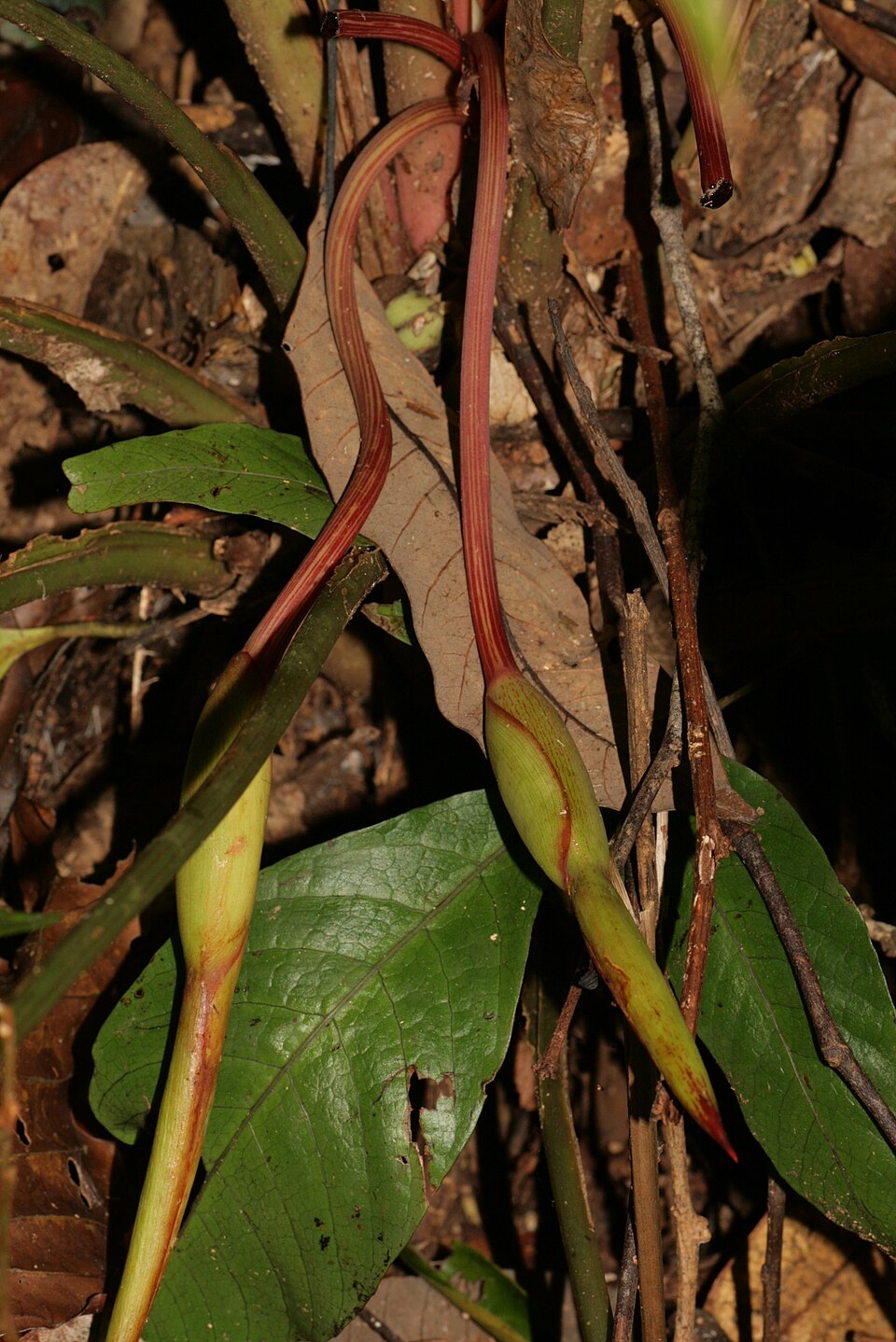
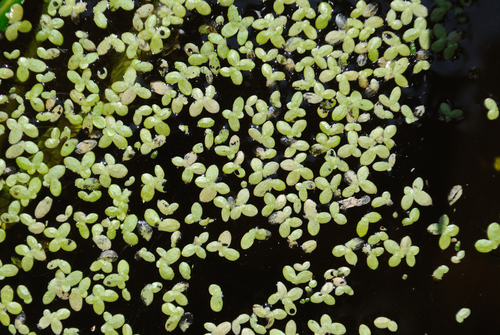
iNaturalist· cc-by-nc
(c) 陳育賢, some rights reserved (CC BY-NC), uploaded by 陳育賢
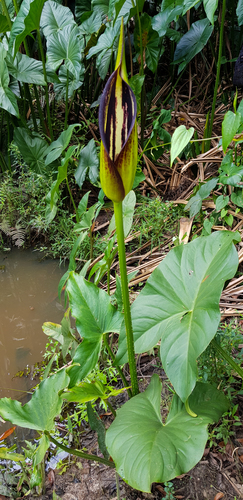
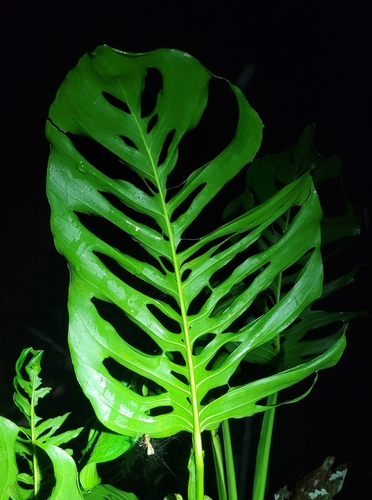
iNaturalist· cc-by-nc
(c) 洪阿愷, some rights reserved (CC BY-NC), uploaded by 洪阿愷
iNaturalist· cc-by-nc-sa
(c) Ben, some rights reserved (CC BY-NC-SA), uploaded by Ben
Summary
Source: WikipediaAlocasia cucullata is a species of flowering plant in the arum family, Araceae. It is known by the common names Chinese taro, Chinese ape, Buddha's hand, and hooded dwarf elephant ear. It is kept as an ornamental plant. The native range of the species is unclear, as it is known only from cultivation and from specimens growing around human habitation and in disturbed areas. It is grown in many parts of Asia, such as China, India, Sri Lanka, and Burma.
Description
A herb. It is a plant with a tuber and it keeps growing from year to year. It can grow for only one year. It grows to 1.5 m high. The stem can be 50 cm long and 5 cm wide. The leaf stalk is 1 m long. The leaf stalk joins the leaf blade at the edge. The leaf is glossy and oval to heart shaped. It only has short lobes at the base. It is green. The leaf blade is 40 cm long by 28 cm wide. It forms suckers freely. The flowers have a spathe 9-15 cm long.
Edible Uses
The corms and tubers are eaten as a cooked vegetable, and young leaves are eaten as a vegetable.
Traditional Uses
The corms are eaten as a cooked vegetable. The young leaves are eaten as a vegetable.
This uses section is brief — help expand it
Medicinal Uses
The plants are used externally for treatment of detoxification of viper bites, abscesses, rheumatism and arthritis.
Known Hazards
All parts of the plant contain calcium oxalate crystals. This substance is toxic fresh and, if eaten, makes the mouth, tongue and throat feel as if hundreds of small needles are digging in to them. However, calcium oxalate is easily broken down either by thoroughly cooking the plant or by fully drying it and, in either of these states, it is safe to eat the plant. People with a tendency to rheumatism, arthritis, gout, kidney stones and hyperacidity should take especial caution if including this plant in their diet.
Distribution
A tropical plant. It grows in the lowlands in open, wet locations. It is one of the more cold hardy Alocasias. Cairns Botanical Garden. In XTBG Yunnan. In Sichuan.
Where It Grows
Asia, Australia, Bangladesh, Central America, China, Cook Is., Costa Rica, Fiji, Hawaii, Himalayas, Honduras, India, Indochina, Indonesia, Japan, Laos, Malaysia, Marquesas, Marshall Islands, Micronesia, Myanmar, Nauru, Nepal, Northeastern India, Pacific, Rotuma, SE Asia, Slovenia, Sri Lanka, Taiwan, Thailand, USA, Vanuatu, Vietnam, Windward Is.,
Cultivation
It is grown by division of the clump or from offsets. It can also be grown from seed.
Propagation
Seed - best sown as soon as it is ripe. Germinates best at 24c. Division of the rootstock as the plant is coming into growth.
Other Information
It is sold in local markets. It is cultivated.
Notes
There are about 60-70 Alocasia species.
Synonyms
Also Known As
Alokasia nampu hijau, 'Apea, Bira, Boga kachu, Boga kochu, Hpa-gamon, Jian wei cao, Nang-kwak, Panchamukhi kochu, Rasy, Singjupal, Singju-paan, Sinjupaal, Tha-khashiba hagrani, Wan-nokkhum, Wan-thorahot
References (28)
- Ambasta S.P. (Ed.), 2000, The Useful Plants of India. CSIR India. p 29
- Arora, R. K., 2014, Diversity in Underutilized Plant Species - An Asia-Pacific Perspective. Bioversity International. p 23
- Bircher, A. G. & Bircher, W. H., 2000, Encyclopedia of Fruit Trees and Edible Flowering Plants in Egypt and the Subtropics. AUC Press. p 20
- Brown, D., 2000, Aroids. Plants of the Arum family. Timber Press. (Second edition) p 262, 305
- Burkill, I.H., 1966, A Dictionary of the Economic Products of the Malay Peninsula. Ministry of Agriculture and Cooperatives, Kuala Lumpur, Malaysia. Vol 1 (A-H) p 106
Show all 28 references Hide references
- Devi, O.S., P. Komor & D. Das, 2010, A checklist of traditional edible bio-resources from Ima markets of Imphal Valley, Manipur, India. Journal of Threatened Taxa 2(11): 1291-1296
- Jain et al, 2011, Dietary Use and Conservation Concern of Edible Wetland Plants at Indo-Burma Hotspot: A Case Study from Northeast India. Journal of Ethnobiology and Ethnomedicine 7:29 p 6
- Kew Plants of the World Online
- Kiple, K.F. & Ornelas, K.C., (eds), 2000, The Cambridge World History of Food. CUP p 1717
- Konsam, S., et al, 2016, Assessment of wild leafy vegetables traditionally consumed by the ethnic communities of Manipur, northeast India. Journal of Ethnobiology and Ethnomedicine, 12:9
- Kuo, W. H. J., (Ed.) Taiwan's Ethnobotanical Database (1900-2000), http://tk.agron.ntu.edu.tw/ethnobot/DB1.htm
- Li Heng, Araceae, Flora of China
- Lim, T. K., 2015, Edible Medicinal and Non Medicinal Plants. Volume 9, Modified Stems, Roots, Bulbs. Springer p 6
- McClatchey, W., Thaman, R., & Vodonaivalu, S., 2000, A Preliminary Checklist of the Flora of Rotuma with Rotuman Names. Pacific Science (2000) Vol. 54, No. 4: 345-363
- Medhi, P., Sarma, A and Borthakur, S. K., 2014, Wild edible plants from the Dima Hasao district of Assam, India. Pleione 8(1): 133-148
- Onwueme, I.C., 1978, The Tropical Tuber Crops. Wiley, p 199
- Pagag, K. & Borthakur, S.K., 2012, Wild edible wetland plants from Lakhimpur district of Assam, India. Pleione 6(2): 322 - 327
- Patiri, B. & Borah, A., 2007, Wild Edible Plants of Assam. Geethaki Publishers. p 154
- PROSEA handbook Volume 9 Plants yielding non-seed carbohydrates. p165
- Staples, G.W. and Herbst, D.R., 2005, A tropical Garden Flora. Bishop Museum Press, Honolulu, Hawaii. p 599 (Drawing)
- Sukarya, D. G., (Ed.) 2013, 3,500 Plant Species of the Botanic Gardens of Indonesia. LIPI p 1055
- R. Sweet, Hort. brit. ed. 3:631. 1839 "cucullatum"
- Thaman, R. R., et al, 1994, The Flora of Nauru. Atoll Research Bulletin No. 392. Smithsonian Institute p 39
- USDA, ARS, National Genetic Resources Program. Germplasm Resources Information Network - (GRIN). [Online Database] National Germplasm Resources Laboratory, Beltsville, Maryland. Available: www.ars-grin.gov/cgi-bin/npgs/html/econ.pl (10 April 2000)
- Vander Velde, N, 2003, The Vascular Plants of Majuro Atoll, Republic of the Marshall Islands. Atoll research Bulletin. No. 503. Smithsonian Institute. p 16
- Wiersema, J. H. & Leon, B., 2013, World Economic Plants. A Standard Reference CRC Press. 2nd Ed. p 38
- World Checklist of Useful Plant Species 2020. Royal Botanic Gardens, Kew
- Zeven, A. C. & de West, J. M. J., 1982, Dictionary of cultivated plants and their regions of diversity. Wageningen. p 71