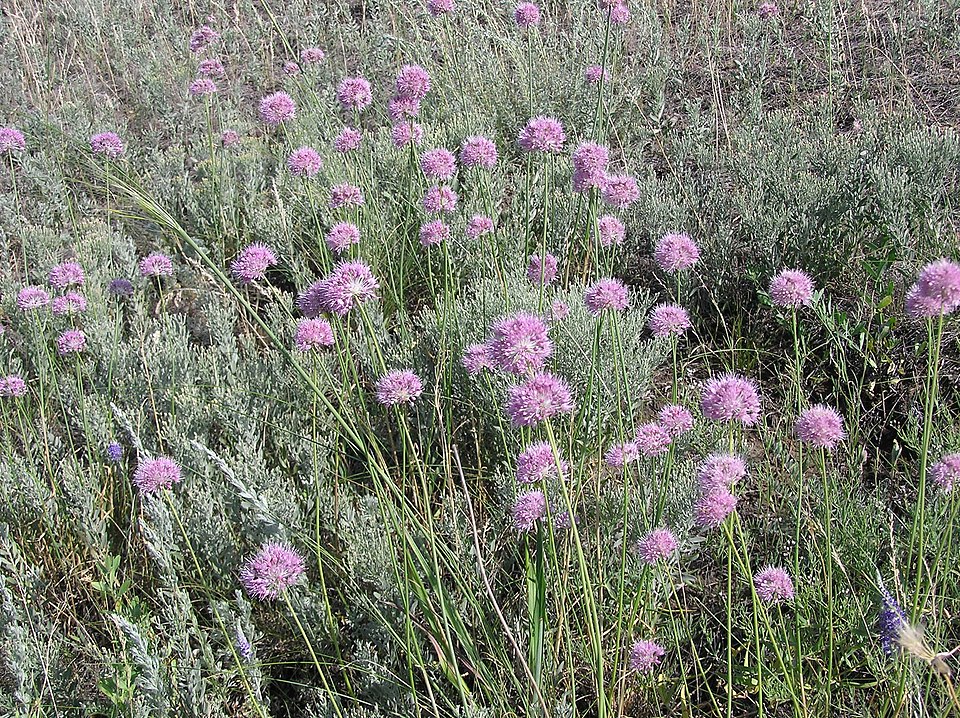
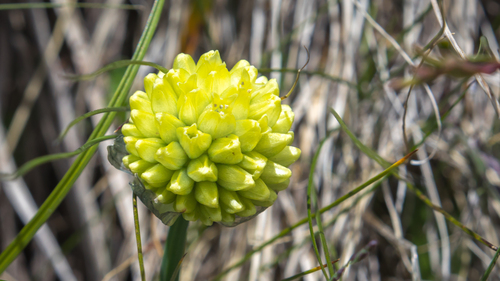
Allium ursinum
L.
Wild garlic, Bear’s Garlic, Ramsons, Ramps
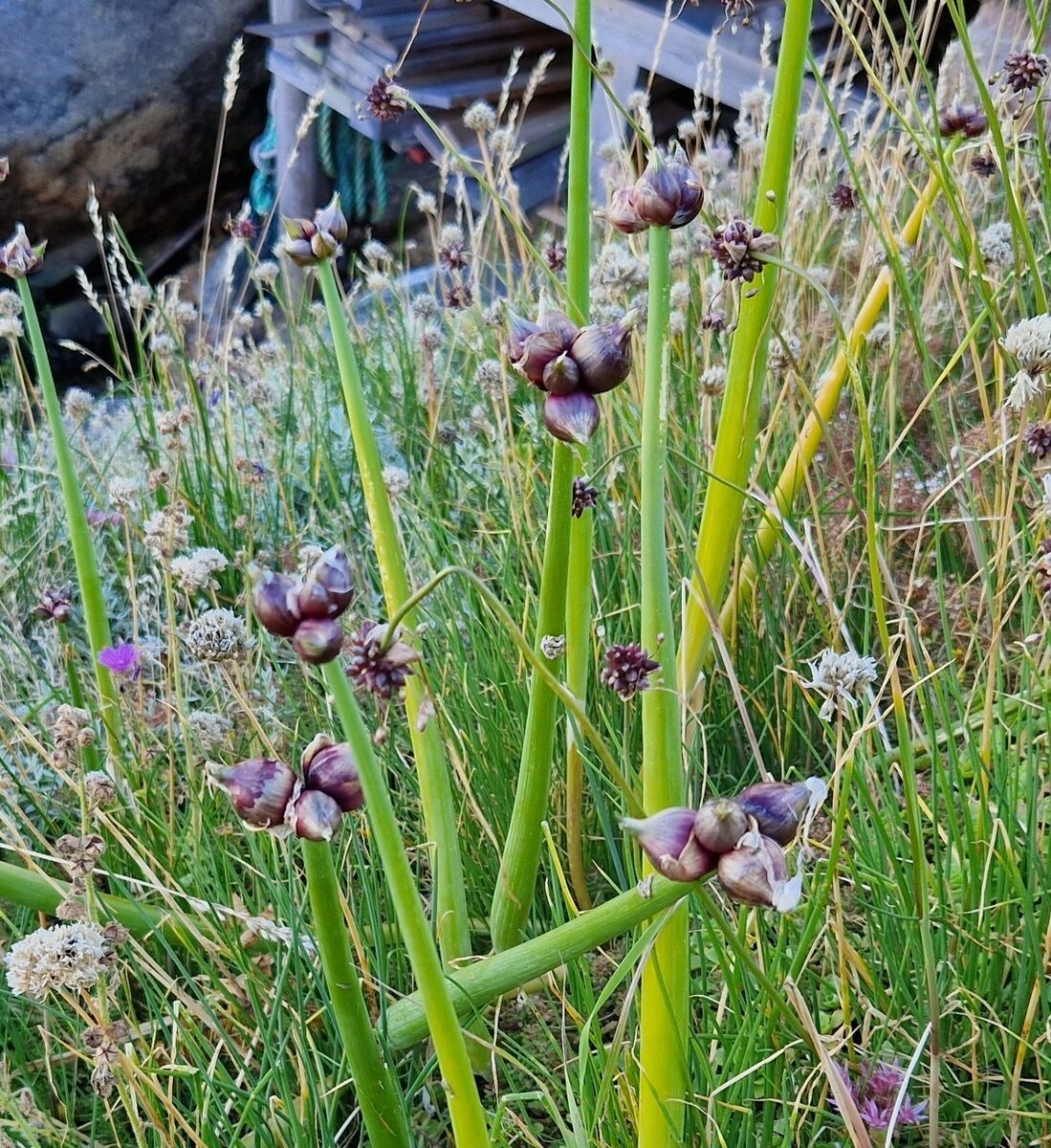
iNaturalist· cc-by
(c) Ulrika, some rights reserved (CC BY)
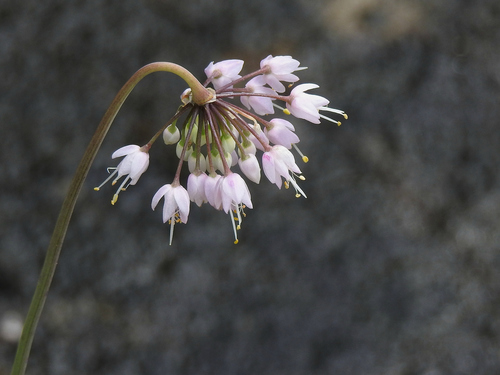
iNaturalist· cc-by
(c) Christian Guthier, some rights reserved (CC BY)
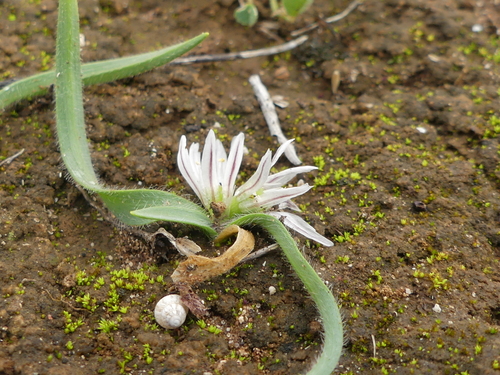
iNaturalist· cc-by-nc
(c) Hermann Falkner, some rights reserved (CC BY-NC)
Summary
Source: WikipediaAllium ursinum, known as wild garlic, ramsons, cowleekes, cows's leek, cowleek, buckrams, broad-leaved garlic, wood garlic, bear leek, Eurasian wild garlic, onion grass, or bear's garlic, is a bulbous perennial flowering plant in the amaryllis family, Amaryllidaceae. It is native to Eurasia, where it grows in moist woodland. It is a wild relative of onion and garlic, all belonging to the same genus, Allium. There are two recognized subspecies: A. ursinum subsp. ursinum and A. ursinum subsp. ucrainicum.
Description
An onion family plant. It is a plant which keeps growing from year to year. It grows 30-40 cm high. Plants have a garlic like smell. The bulbs are narrow, white and bottle shaped. There are 2 or 3 leaves on long, white stalks from the base. The bulbs divide to produce a clump. The leaves are bright-green and broadly oval. They taper to the tip and have parallel veins. The flowers are on 2 to 3 angled stems. The flowers are white and star like. The heads can be 6 cm across.
Edible Uses
Leaves are available raw or cooked from late January onward. One account describes an overpowering garlic odour that fades on cooking, though in practice they tend to be considerably milder than garlic. Raw, they make a welcome and flavourful addition to salads — particularly valued as a fresh green leaf in midwinter. The flowers are somewhat stronger in flavour than the leaves; used in small quantities raw or cooked, they make a decorative and tasty addition to salads. Flowering heads remain edible as the seed pods form, though the flavour intensifies as the seeds ripen. The bulb has a fairly strong garlic flavour and can be eaten raw or cooked, though it is small — up to 4cm long and 1cm in diameter — and somewhat fiddly to harvest. Bulbs can be dug at any point while the plant is dormant, from early summer to early winter; those harvested in early summer store for at least 6 months. The small green bulbils are used as a substitute for capers.
Traditional Uses
The leaves and bulbs are finely sliced and added to salads. The leaves are used for sarma in Turkey. They are rolled around a filling of rice or minced meat. They are also used in soups and sauces. They are used in pickles. The flowers can be eaten raw or used as a garnish in salads. The young green bulbils are used as a caper substitute. CAUTION: They should not be eaten in large amounts.
Medicinal Uses
Ramsons shares most of the health benefits associated with cultivated garlic, though its action is weaker. Regular use promotes general health, and it is particularly effective at reducing high blood pressure and blood cholesterol levels. It is also recognised as beneficial for fermentative dyspepsia. All parts of the plant can be used medicinally, though the bulb is the most active. The plant is anthelmintic, antiasthmatic, anticholesterolemic, antiseptic, antispasmodic, astringent, cholagogue, depurative, diaphoretic, diuretic, expectorant, febrifuge, hypotensive, rubefacient, stimulant, stomachic, tonic, and vasodilator. It eases stomach pain and supports digestion, making it useful in treating diarrhoea, colic, wind, indigestion, and loss of appetite. An infusion of the whole herb can be taken internally or administered as an enema to treat threadworms. It is also beneficial for asthma, bronchitis, and emphysema. The juice supports weight loss when taken internally and can be applied externally to rheumatic and arthritic joints, where its mild irritant action stimulates local circulation.
Known Hazards
Plants that may be mistaken for A. ursinum include lily of the valley, Colchicum autumnale, Arum maculatum, and Veratrum viride or Veratrum album, all of which are poisonous. In Europe, where ramsons are popularly harvested from the wild, people are regularly poisoned after mistakenly picking lily of the valley or Colchicum autumnale. Grinding the leaves between the fingers and checking for a garlic-like smell can be helpful, but if the smell remains on the hands, one can mistake a subsequent poisonous plant for a safe one. When the leaves of A. ursinum and Arum maculatum first sprout, they look similar, but unfolded Arum maculatum leaves have irregular edges and many deep veins, while ramsons leaves are convex with a single main vein. The leaves of lily of the valley are in pairs, dull green, and come from a single reddish-purple stem, while the leaves of A. ursinum each have their own stem, are shiny when new, and are bright green.
Distribution
It is a temperate plant. It grows in woods throughout Europe in moist soils especially alkaline soils. The can grow in low light. It is best in humus-rich, moist, well-drained soil.
Where It Grows
Armenia, Australia, Austria, Balkans, Belarus, Bosnia, Britain, Bulgaria, Caucasus, Croatia, Czech Republic, Estonia, Europe, Finland, Georgia, Germany, Greece, Hungary, Ireland, Italy, Latvia, Lithuania, Luxembourg, Macedonia, Mediterranean, Netherlands, Norway, Poland, Romania, Russia, Scandinavia, Sicily, Slovakia, Slovenia, Sweden, Switzerland, Turkey, Türkiye,
Cultivation
Prefers woodland conditions in a moist well-drained soil. Plants are often found in the wild growing in quite wet situations. When growing in suitable conditions, wild garlic forms a dense carpet of growth in the spring and can be a very invasive plant. It dies down in early summer, however, allowing other plants to grow in the same space. The bulbs should be planted fairly deeply. The seeds are dispersed by ants. Grows well with most plants, especially roses, carrots, beet and chamomile, but it inhibits the growth of legumes. This plant is a bad companion for alfalfa, each species negatively affecting the other. Members of this genus are rarely if ever troubled by browsing deer.
Propagation
Seed is best sown as soon as ripe, either in situ or in a cold frame. It germinates quickly; seedlings can be grown on under glass for the first year and planted out as dormant bulbs in late summer of the following year. Stored seed can be sown in spring in a greenhouse. Division in summer after the plant has died down is very easy, and the divisions can be planted straight out into their permanent positions.
Other Uses
The juice serves as a moth repellent, and the whole plant is said to repel insects and moles. The juice has also been used as a general household disinfectant. Ramsons is noted as a useful companion plant and suits food forest settings.
Other Information
It is foraged and eaten in restaurants in Sweden.
Notes
There are about 300-700 Allium species. Most species of Allium are edible (Flora of China). All alliums are edible but they may not all be worth eating! They have also been put in the family Alliaceae.
Dangerous Lookalikes
This plant can be confused with the following toxic species. Always verify identification carefully before consuming any wild plant.
Lords-and-Ladies (Cuckoo Pint)
Arum maculatum
Frank Vincentz
Wild garlic
Allium ursinum
(c) Ulrika, some rights reserved (CC BY)
Lords-and-Ladies (Cuckoo Pint): No garlic smell, rounded lobes at leaf base, often dark-spotted leaves, hooded flower (spadix), bright red berries.
Wild garlic: Strong garlic smell when crushed, single leaf per stem from bulb.
Lily of the Valley
Convallaria majalis
Amanda Slater from Coventry, West Midlands, UK
Wild garlic
Allium ursinum
(c) Ulrika, some rights reserved (CC BY)
Lily of the Valley: No garlic smell, 2-3 leaves per stem wrapped at base, leaves often paired, tiny bell-shaped flowers.
Wild garlic: Strong garlic smell when crushed, single leaf per stem from bulb, flat leaf blade.
Autumn Crocus
Colchicum autumnale
Sarah Stierch
Wild garlic
Allium ursinum
(c) Ulrika, some rights reserved (CC BY)
Autumn Crocus: No garlic smell, multiple broad leaves from base, no flowers in spring (flowers in autumn), thicker/stiffer leaves.
Wild garlic: Strong garlic smell, single leaf per stem, white star-shaped flowers in spring.
Nutrition
| Part | Moisture | kJ | kcal | Protein | Vit A | Vit C | Iron | Zinc |
|---|---|---|---|---|---|---|---|---|
| Leaves | 51 | 12 | — | — | — | — | — | — |
| Bulb | — | — | — | — | — | — | — | — |
| Flowers | — | — | — | — | — | — | — | — |
Synonyms
Also Known As
Agghiu ursinum Aglio selvatico, Barenlauch, Broad-leaved garlic, Buckrams, čemaž, Cesnek medvedf, Cheremsha, Cipudda di serpi, Daslook, De zo, Div chesan, Div luk, Ghandzili, Gipsy onion, Laksi, Leurda, Ramsay, Ramslauk, Remza, Shumski luk, Wood garlic
References (43)
- Bodkin, F., 1991, Encyclopedia Botanica. Cornstalk publishing, p 66
- Bremness, L., 1994, Herbs. Collins Eyewitness Handbooks. Harper Collins. p 143
- Brown, D., 2002, The Royal Horticultural Society encyclopedia of Herbs and their uses. DK Books. p 114
- Bussman, R. W., et al, 2016, A comparative ethnobotany of Khevsureti, Samtskhe-Javakheti, Tusheti, Svaneti, and Racha-Lechkhumi, Republic of Georgia (Sakartvelo), Caucasus. Journal of Ethnobiology and Ethnomedicine (2016) 12:43
- Bussman, R. W. et al, 2017, Ethnobotany of Samtskhe-Javakheti, Sakartvelo (Republic of Georgia), Caucasus. Indian Journal of Traditional Knowledge Vol. 16(1) pp 7-24
Show all 43 references Hide references
- Cerne, M., 1992, Wild Plants from Slovenia used as Vegetables. Acta Horticulturae 318.
- Denes, A., et al, 2012, Wild plants used for food by Hungarian ethnic groups living in the Carpathian Basin. Acta Societatis Botanicorum Poloniae 81 (4): 381-396
- Dogan, Y., et al, 2015, Of the importance of a leaf: the ethnobotany of sarma in Turkey and the Balkans. Journal of Ethnobiology and Ethnomedicine, 11:56
- Esperanca, M. J., 1988. Surviving in the wild. A glance at the wild plants and their uses. Vol. 1. p 93
- Facciola, S., 1998, Cornucopia 2: a Source Book of Edible Plants. Kampong Publications, p 7
- Geraci, A., et al, 2018, The wild taxa utilized as vegetables in Sicily (Italy): a traditional component of the Mediterranean diet. Journal of Ethnobiology and Ethnomedicine (2018) 14:14 (As subsp. ucrainicum)
- Girard, N. J., 2020, Sustainable Foraging of Wild Edible Plants in Norway. A Bioculutral Approach. M. Sc. thesis Norwegian University. p 37
- Hedrick, U.P., 1919, (Ed.), Sturtevant's edible plants of the world. p 44
- http://nordicfood lab/org/blog/2102/9/wild-edible-plants-an-overview
- Irving, M., 2009, The Forager Handbook, A Guide to the Edible Plants of Britain. Ebury Press p 337
- Kalle, R. & Soukand, R., 2012, Historical ethnobotanical review of wild edible plants of Estonia (1770s-1960s) Acta Societatis Botanicorum Poloniae 81(4):271-281
- Kasper-Pakosz, R., et al, 2016, Wild and native plants and mushrooms sold in the open-air markets of south- eastern Poland. Journal of Ethnobiology and Ethnomedicine 12:45
- Luczaj, L., 2012, Ethnobotanical review of wild edible plants of Slovakia. Acta Societatis Botanicorum Poloniae 81(4):245-255
- Luczaj, L. et al, 2012, Wild food plant use in 21st century Europe: the disappearance of old traditions and the search for new cuisines involving wild edibles. Acta Soc Bot Pol 81(4):359–370
- Łukasz Łuczaj and Wojciech M Szymański, 2007, Wild vascular plants gathered for consumption in the Polish countryside: a review. J Ethnobiol Ethnomedicine. 3: 17
- Lukasz, L., et al, 2013, Wild edible plants of Belarus: from Rostafiński’s questionnaire of 1883 to the present. Journal of Ethnobiology and Ethnomedicine 2013, 9:21
- Luczaj, L. et al, 2017, Comfrey and Buttercup Eaters: Wild Vegetables of the Imereti Region in Western Georgia, Caucasus. Economic Botany, 71(2), 2017, pp. 188–193
- Mabey, R., 1973, Food for Free. A Guide to the edible wild plants of Britain, Collins. p 143
- Michael, P., 2007, Edible Wild Plants and Herbs. Grub Street. London. p 175
- Miskoska-Milevska, E. et al, 2020, Traditional uses of wild edible plants in the Republic of North Macedonia. PHYTOLOGIA BALCANICA 26(1): 155–162, Sofia, 2020 p 158
- Nedelcheva A., 2013, An ethnobotanical study of wild edible plants in Bulgaria. EurAsian Journal of BioSciences 7, 77-94
- Pasta, S., et al, 2020, An Updated Checklist of the Sicilian Native Edible Plants: Preserving the Traditional Ecological Knowledge of Century-Old Agro-Pastoral Landscapes. Frontiers in Plant Science. Volume 11|Article 388
- Petkova, N., et al, 2019, Fructans and antioxidants in leaves of culinary herbs from Asteraceae and Amaryllidaceae families. Food Research 3 (5) : 407 - 415
- Plants for a Future database, The Field, Penpol, Lostwithiel, Cornwall, PL22 0NG, UK. http://www.scs.leeds.ac.uk/pfaf/
- Pruse, B., et al, 2021, Active Wild Food Practices among Culturally Diverse Groups in the 21st Century across Latgale, Latvia. Biology 2021, 10, 551.
- Redzic, S. J., 2006, Wild Edible Plants and their Traditional Use in the Human Nutrition in Bosnia-Herzegovina. Ecology of Food and Nutrition, 45:189-232
- Rexhepi, B., et al, 2018, Ethnobotanical Study of Wild Edible Plants in Pelagonia Region (Southwestern Macedonia) International Journal of Advances in Science Engineering and Technology, Vol. 6 (1) p 57
- Sansanelli, S., et al, 2014, Wild food plants traditionall consumed in the area of Bologna (Emilia Romagna region, Italy). Journal of Ethnobiology and Ethnomedicine 10:69
- Schunko, C., et al, 2010, Organic farmers use of wild food plants and fungi in a hilly area in Styria (Austria). Journal of Ethnobiology and Ethnomedicine 6:17
- Seidemann J., 2005, World Spice Plants. Economic Usage, Botany, Taxonomy. Springer. p 26
- Simkova, K. et al, 2014, Ethnobotanical review of wild edible plants used in the Czech Republic. Journal of Applied Botany and Food Quality 88, 49-67
- Smith, N., Mori, S.A., et al, 2004, Flowering Plants of the Neotropics. Princeton. Plate 53 (Photo)
- Soukand, R., et al, 2017, Multi-functionality of the few: current and past uses of wild plants for food and healing in Liubań region, Belarus. Journal of Ethnobiology and Ethnomedicine (2017) 13:10
- Sp. pl. 1:300. 1753
- Turner, N. J. et al, 2011, Edible and Tended Wild Plants, Traditional Ecological Knowledge and Agroecology. Critical Reviews in Plant Sciences, 30:198-225
- Vari, A., et al, 2020, Berries, greens, and medicinal herbs—mapping and assessing wild plants as an ecosystem service in Transylvania (Romania). Journal of Ethnobiology and Ethnomedicine (2020) 16:13
- Vermeulen, N, 1998, The Complete Encyclopedia of Herbs. Rebo Publishers. p 39
- Woodward, P., 1996, Garlic and Friends. The History, Growth and Use of Edible Alliums. Hyland House. p 174