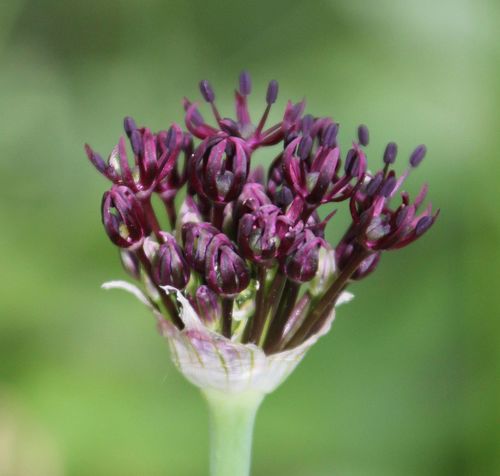
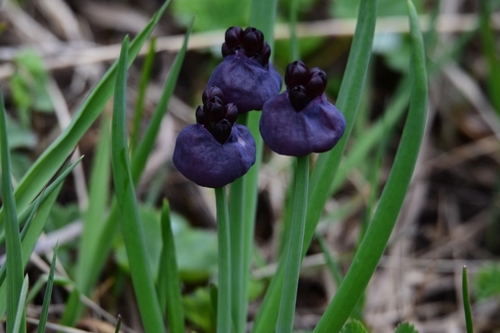
Allium sphaerocephalon
L.
Round-headed leek, Globe garlic
iNaturalist· cc-by-nc
(c) José María, some rights reserved (CC BY-NC), uploaded by José María
iNaturalist· cc-by-sa
(c) jacinta lluch valero, some rights reserved (CC BY-SA)
iNaturalist· cc-by-nc
(c) Muriel Bendel, some rights reserved (CC BY-NC), uploaded by Muriel Bendel
Summary
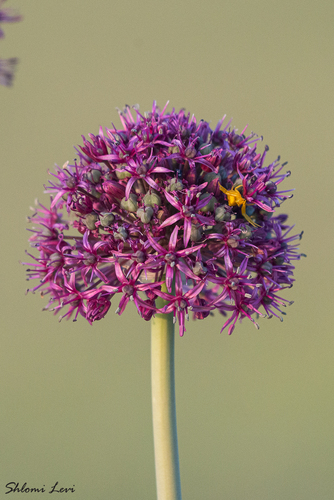
Source: WikipediaAllium sphaerocephalon is a plant species in the Amaryllis family known as round-headed leek, round-headed garlic, ball-head onion, and other variations on these names. Drumstick allium is another common name applied to this species. Some publications use the alternate spelling Allium sphaerocephalum. It is a bulbous herbaceous perennial plant. Allium sphaerocephalon is found in the wild across all parts of Europe except in the northern and western countries (Scotland, Ireland, Netherlands, Scandinavia, and the Baltic States). Its native range extends to northern Africa and to western Asia as far east as Iran. It is also reportedly naturalised in New York State in the United States. In England it grows wild only in the Avon Gorge so is known locally as the Bristol onion. The species is prized by gardeners because of its striking floral display. The spherical "head" (technically an umbel) is borne on a long scape, up to 50 cm in height, usually in July. It can contain hundreds of deep reddish purple flowers. The specific epithet sphaerocephalon derives from ancient Greek, meaning "spherical head". This plant has gained the Royal Horticultural Society's Award of Garden Merit.
Description
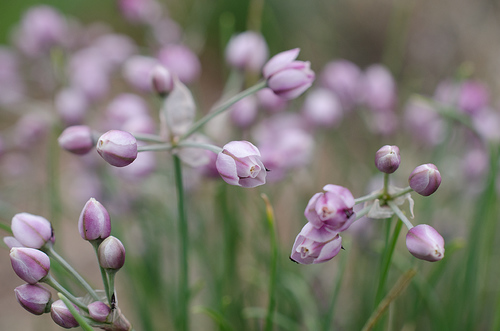
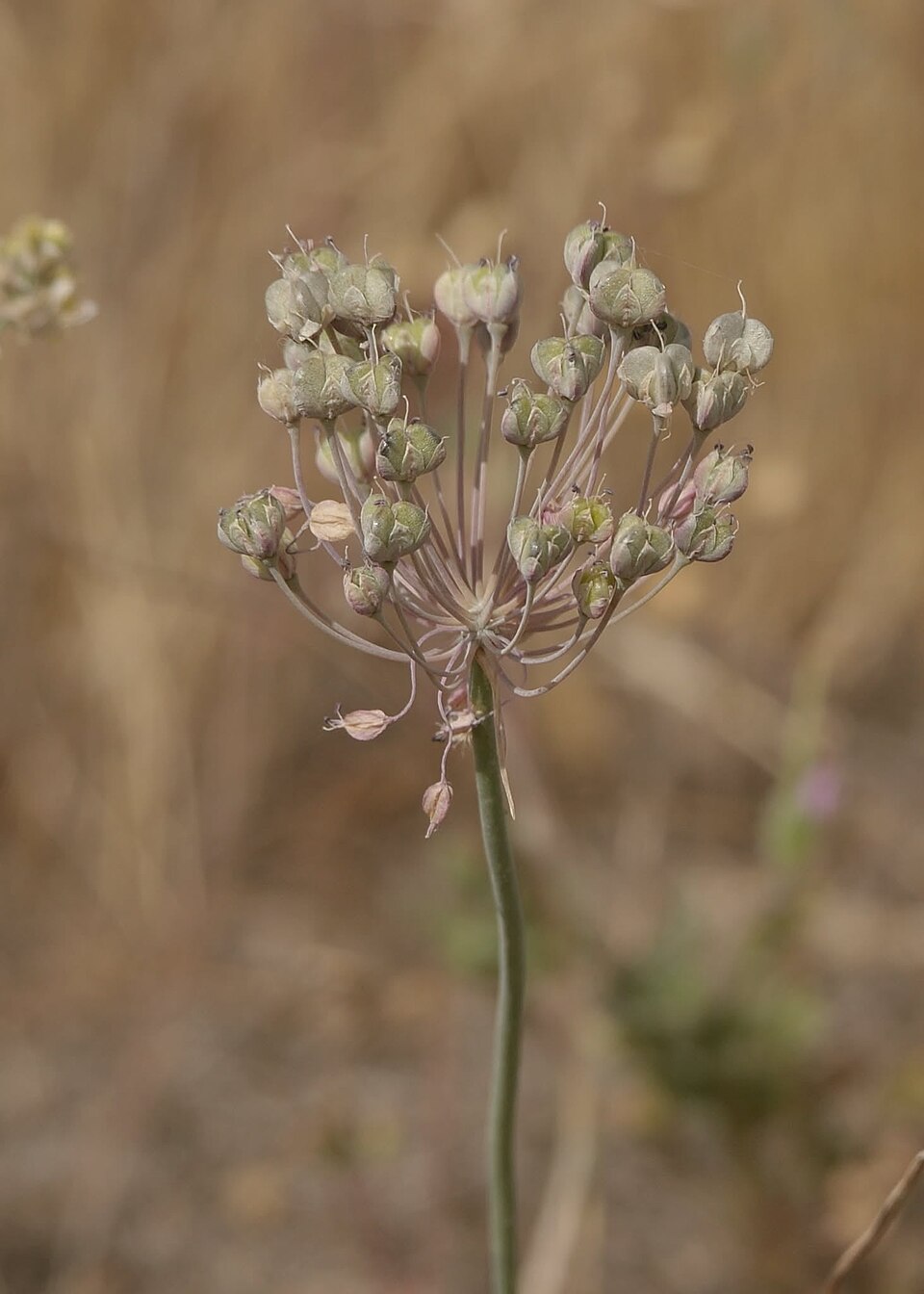
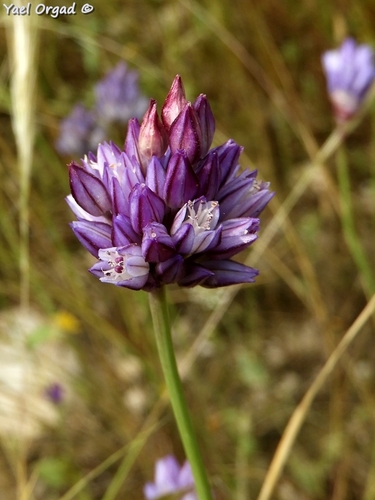
An onion family plant. It is a bulb plant. It grows 60-90 cm high and spreads 30-50 cm wide. The leaves are hollow and 30 cm long. There are 2-6 leaves on each bulb. They sheath the lower part of the stem. The bract around the flowers has 2 valves and a short beak. The flower-heads are cone shaped. They have small, purple or red flowers. There can sometimes be bulbils. The flower-heads can be 2-4 cm across. The stamens stick out.
Edible Uses
The bulbs, which grow up to 35mm in diameter, are edible raw or cooked and serve as an onion substitute. The leaves can be eaten raw or cooked and may also be dried for later use. The flowers are eaten raw and used as a garnish on salads.
Traditional Uses
The bulbs are eaten. The dried leaves are used as food. The flowers can be eaten raw or used as a garnish on salads. They are used in salads and soups.
Medicinal Uses
No specific medicinal uses have been recorded for this species, but members of this genus are generally considered very healthy additions to the diet. They contain sulphur compounds responsible for their onion flavour, and eaten regularly they help reduce blood cholesterol levels, act as a tonic to the digestive system, and support the circulatory system.
Known Hazards
Although no individual reports regarding this species have been seen, there have been cases of poisoning caused by the consumption, in very large quantities and by some mammals, of certain members of this genus. Dogs seem to be particularly susceptible.
Distribution
It is a temperate plant. It grows in sandy and rocky places in grass. It suits hardiness zones 5-9.
Where It Grows
Africa, Albania, Asia, Australia, Balkans, Bosnia, Britain, Bulgaria, Caucasus, Croatia, Europe, France, Greece, India, Italy, Mediterranean, Middle East, Moldova, North Africa, Saudi Arabia, Siberia, Slovenia, Spain, Tasmania, Turkey, Türkiye,
Cultivation
An easily grown plant. it prefers a sunny position in a light well-drained soil. Established plants are fairly drought tolerant. The bulbs should be planted fairly deeply. Grows well with most plants, especially roses, carrots, beet and chamomile, but it inhibits the growth of legumes. This plant is a bad companion for alfalfa, each species negatively affecting the other. Plants often divide freely at the roots. A good bee plant. The flowers are very attractive to bees. The flowers are sometimes replaced with bulbils. Members of this genus are rarely if ever troubled by browsing deer.
Propagation
Sow seed in spring in a cold frame. Prick seedlings into individual pots when large enough to handle — for faster clumps, place three plants per pot. Grow on in the greenhouse for at least the first winter, then plant out in spring once growing vigorously. Division in spring is straightforward; plants can be divided at any point during the growing season — pot the divisions in a cold frame or greenhouse until growing well before planting out into permanent positions.
Other Uses
The plant juice is used as a moth repellent. The whole plant is also said to repel insects and moles. The plant attracts wildlife.
Notes
There are about 300-700 Allium species. Most species of Allium are edible (Flora of China). All alliums are edible but they may not all be worth eating! They have also been put in the family Alliaceae.
Synonyms
Also Known As
Ajestrino, Ceapa, Kragal luk, Kurrath, Oblasti luk, Round-headed garlic
References (18)
- Blamey, M and Grey-Wilson, C., 2005, Wild flowers of the Mediterranean. A & C Black London. p 486
- Cerne, M., 1992, Wild Plants from Slovenia used as Vegetables. Acta Horticulturae 318.
- Ciocarlan, N. & Ghendov, V., 2015, Ethnobotanical and Ecological Studies of Wild Edible Plants from Bugeac Steppe, Republic of Moldova. Journal of EcoAgriTourism. Cailta terra Vol. 11(2):
- Cundall, P., (ed.), 2004, Gardening Australia: flora: the gardener's bible. ABC Books. p 128
- Facciola, S., 1998, Cornucopia 2: a Source Book of Edible Plants. Kampong Publications, p 6
Show all 18 references Hide references
- Hedrick, U.P., 1919, (Ed.), Sturtevant's edible plants of the world. p 43
- Hibbert, M., 2002, The Aussie Plant Finder 2002, Florilegium. p 25
- Kew Plants of the World onLine
- Luczaj et al, 2013, Wild vegetable mixes sold in the markets of Dalmatia (southern Croatia). Journal of Ethnobiology and Ethnomedicine. 8:2
- Mandaville, J. P., 2004, Bedouin ethnobotany: Plant concepts and plant use in a desert pastoral world. PhD thesis University of Arizona. p 155
- Nedelcheva A., 2013, An ethnobotanical study of wild edible plants in Bulgaria. EurAsian Journal of BioSciences 7, 77-94
- Plants for a Future database, The Field, Penpol, Lostwithiel, Cornwall, PL22 0NG, UK. http://www.scs.leeds.ac.uk/pfaf/
- Redzic, S. J., 2006, Wild Edible Plants and their Traditional Use in the Human Nutrition in Bosnia-Herzegovina. Ecology of Food and Nutrition, 45:189-232
- Seidemann J., 2005, World Spice Plants. Economic Usage, Botany, Taxonomy. Springer. p 26
- Singh, H.B., Arora R.K., 1978, Wild edible Plants of India. Indian Council of Agricultural Research, New Delhi. p 10, 17
- Sp. pl. 1:297. 1753
- Tardio, J., et al, 2006, Ethnobotanical review of wild edible plants in Spain. Botanical J. Linnean Soc. 152, 27-71
- World Checklist of Useful Plant Species 2020. Royal Botanic Gardens, Kew