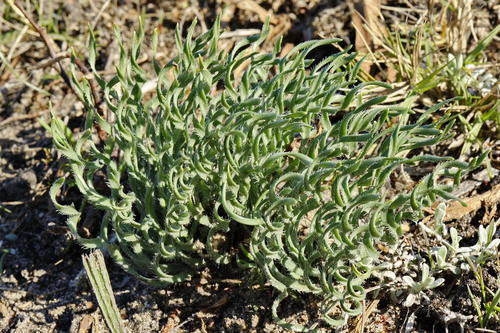
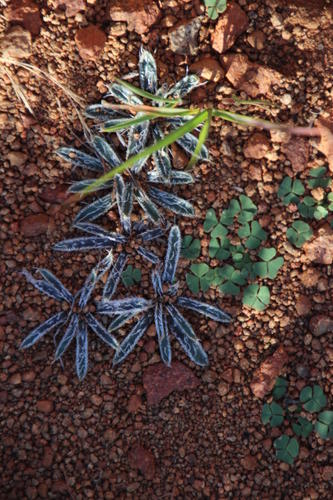
Allium scorodoprasum
L.
Giant garlic, Sand leek, Rocambole, Spanish garlic
iNaturalist· cc-by-nc
(c) Giacomo Assandri, some rights reserved (CC BY-NC), uploaded by Giacomo Assandri
iNaturalist· cc-by-nc
(c) ilia_sautkin, some rights reserved (CC BY-NC), uploaded by ilia_sautkin
iNaturalist· cc-by-nc
(c) Сергей, some rights reserved (CC BY-NC), uploaded by Сергей
Summary
Source: WikipediaThe sand leek (Allium scorodoprasum), also known as rocambole and Korean pickled-peel garlic, is a Eurasian species of wild onion with a native range extending across much of Europe, Middle East, and Korea. The species should not be confused with rocambole garlic, which is A. sativum var. ophioscorodon.
Description
An onion family plant. It is a bulb plant. It grows 30-90 cm high and spreads 15-40 cm wide. The leaves are grass like. They are 25 cm long. There are 2-5 leaves on each bulb. The flowers are in small round heads. They are lilac or purple-red. There are also purple-red bulbils.
Edible Uses
The bulbs, which measure 10–20mm in diameter, are eaten raw or cooked as a garlic substitute, used to flavour salads, soups, and similar dishes. They are smaller and milder than true garlic and are produced both at the stem nodes and at the base of the plant. The leaves are eaten raw or cooked as a flavouring in salads and other dishes. The flowers are eaten raw and used as a garnish on salads.
Traditional Uses
The bulbs are used for flavouring. They are also pickled. The leaves are eaten raw in salads.
This uses section is brief — help expand it
Medicinal Uses
The plant is digestive and depurative. The bulb is used in the treatment of abscesses, amoebic dysentery, bronchitis, cholera, dysentery, influenza, skin diseases, and tuberculosis.
Known Hazards
Although no individual reports regarding this species have been seen, there have been cases of poisoning caused by the consumption, in very large quantities and by some mammals, of certain members of this genus. Dogs seem to be particularly susceptible.
Distribution
It is a temperate and Mediterranean climate plant. It suits hardiness zones 7-9.
Where It Grows
Asia, Australia, Balkans, Britain, Bulgaria, China, Denmark, Europe, Greece, Hungary, Ireland, Luxembourg, Macedonia, Mediterranean, Middle East, New Zealand, Norway, Russia, Scandinavia, Slovakia, Slovenia, Spain, Sweden, Syria, Turkey, Türkiye,
Cultivation
Prefers a sunny position in a light well-drained soil. Thrives in poor dry soils. The bulbs should be planted fairly deeply. Many forms of this species produce numerous bulbils in the flowering head. The plants can become very invasive by means of these bulbils. The sub-species A. scorodoprasum jajlae and A. scorodoprasum rotundum do not produce bulbils. Grows well with most plants, especially roses, carrots, beet and chamomile, but it inhibits the growth of legumes. This plant is a bad companion for alfalfa, each species negatively affecting the other. Occasionally cultivated, especially in Russia, for its edible bulb. Members of this genus are rarely if ever troubled by browsing deer.
Propagation
Sow seed in spring in a cold frame. Prick out seedlings into individual pots once large enough to handle, or place three per pot to build clumps more quickly. Grow under glass for at least the first winter, then plant out into permanent positions in spring once plants are vigorous and sufficiently sized. Divide in spring. Division is very straightforward and can be done at any point during the growing season; divisions can be planted directly into their permanent positions if needed.
Other Uses
The juice of the plant is used as a moth repellent, and the whole plant is said to deter insects and moles.
Other Information
It is a commercially cultivated vegetable. The leaves and seeds are foraged and sold in restaurants in Sweden.
Notes
There are about 300-700 Allium species. Most species of Allium are edible (Flora of China). All alliums are edible but they may not all be worth eating! They have also been put in the family Alliaceae.
Also Known As
Divy cesnek, Hagyma, Kigyohagyma, Sirik, Solyask, Sorelask, Vadhagyma, Vad fokhagyma, Vranski luk
References (23)
- Cerne, M., 1992, Wild Plants from Slovenia used as Vegetables. Acta Horticulturae 318.
- Crawford, M., 2012, How to grow Perennial Vegetables. Green Books. p 80
- Cundall, P., (ed.), 2004, Gardening Australia: flora: the gardener's bible. ABC Books. p 128
- Denes, A., et al, 2012, Wild plants used for food by Hungarian ethnic groups living in the Carpathian Basin. Acta Societatis Botanicorum Poloniae 81 (4): 381-396
- Ertug, F, Yenen Bitkiler. Resimli Türkiye Florası -I- Flora of Turkey - Ethnobotany supplement
Show all 23 references Hide references
- Facciola, S., 1998, Cornucopia 2: a Source Book of Edible Plants. Kampong Publications, p 6
- Hedrick, U.P., 1919, (Ed.), Sturtevant's edible plants of the world. p 43
- Irving, M., 2009, The Forager Handbook, A Guide to the Edible Plants of Britain. Ebury Press p 335
- Kays, S. J., and Dias, J. C. S., 1995, Common Names of Commercially Cultivated Vegetables of the World in 15 languages. Economic Botany, Vol. 49, No. 2, pp. 115-152
- Lazarides, M. & Hince, B., 1993, Handbook of Economic Plants of Australia, CSIRO. p 14
- Low, T., 1991, Wild Herbs of Australia and New Zealand. Angus & Robertson. p 105
- Low, T., 1992, Bush Tucker. Australia’s Wild Food Harvest. Angus & Robertson. p 181
- Luczaj, L., 2012, Ethnobotanical review of wild edible plants of Slovakia. Acta Societatis Botanicorum Poloniae 81(4):245-255
- Luczaj, L. et al, 2012, Wild food plant use in 21st century Europe: the disappearance of old traditions and the search for new cuisines involving wild edibles. Acta Soc Bot Pol 81(4):359–370
- Mabey, R., 1973, Food for Free. A Guide to the edible wild plants of Britain, Collins. p 143
- Nedelcheva A., 2013, An ethnobotanical study of wild edible plants in Bulgaria. EurAsian Journal of BioSciences 7, 77-94
- Plants for a Future database, The Field, Penpol, Lostwithiel, Cornwall, PL22 0NG, UK. http://www.scs.leeds.ac.uk/pfaf/
- Rexhepi, B., et al, 2018, Ethnobotanical Study of Wild Edible Plants in Pelagonia Region (Southwestern Macedonia) International Journal of Advances in Science Engineering and Technology, Vol. 6 (1) p 57
- Seidemann J., 2005, World Spice Plants. Economic Usage, Botany, Taxonomy. Springer. p 24
- Sp. pl. 1:297. 1753
- Wiersema, J. H. & Leon, B., 2013, World Economic Plants. A Standard Reference CRC Press. 2nd Ed. p 36
- World Checklist of Useful Plant Species 2020. Royal Botanic Gardens, Kew
- Yesil, Y. et al, 2019, Traditional knowledge of wild edible plants in Hasankeyf (Batman Province, Turkey). Acta Societatis Botanicorum Poloniae. 88(3):3633