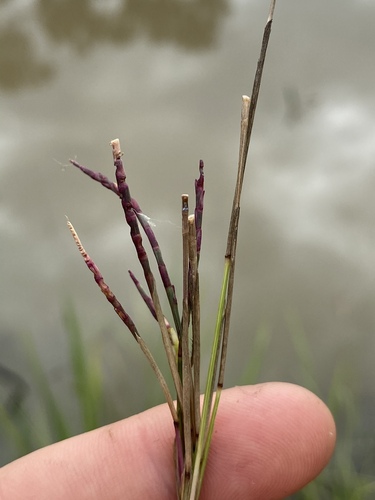
Himalayacalamus hookerianus
(Munro) Stapleton
Himalayan blue bamboo
iNaturalist· cc-by-nc
(c) Phuentsho, some rights reserved (CC BY-NC), uploaded by Phuentsho
iNaturalist· cc-by-nc
(c) coqwallon, some rights reserved (CC BY-NC)
Summary
Source: WikipediaHimalayacalamus hookerianus is a species of flowering plant in the family Poaceae found in Nepal, Sikkim, Bhutan, and Assam.
Description
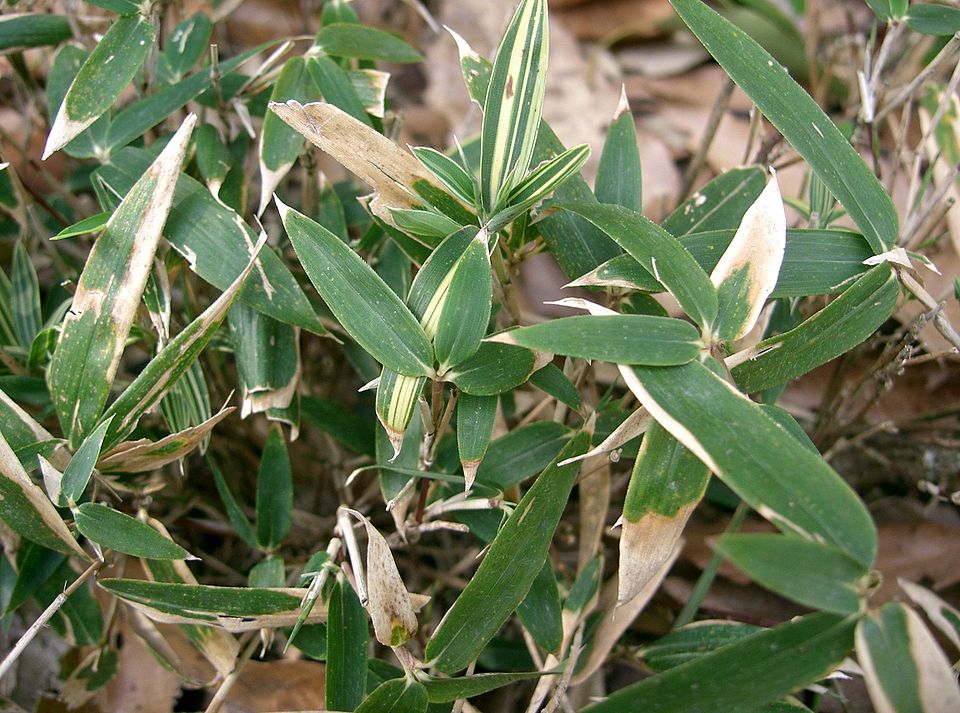
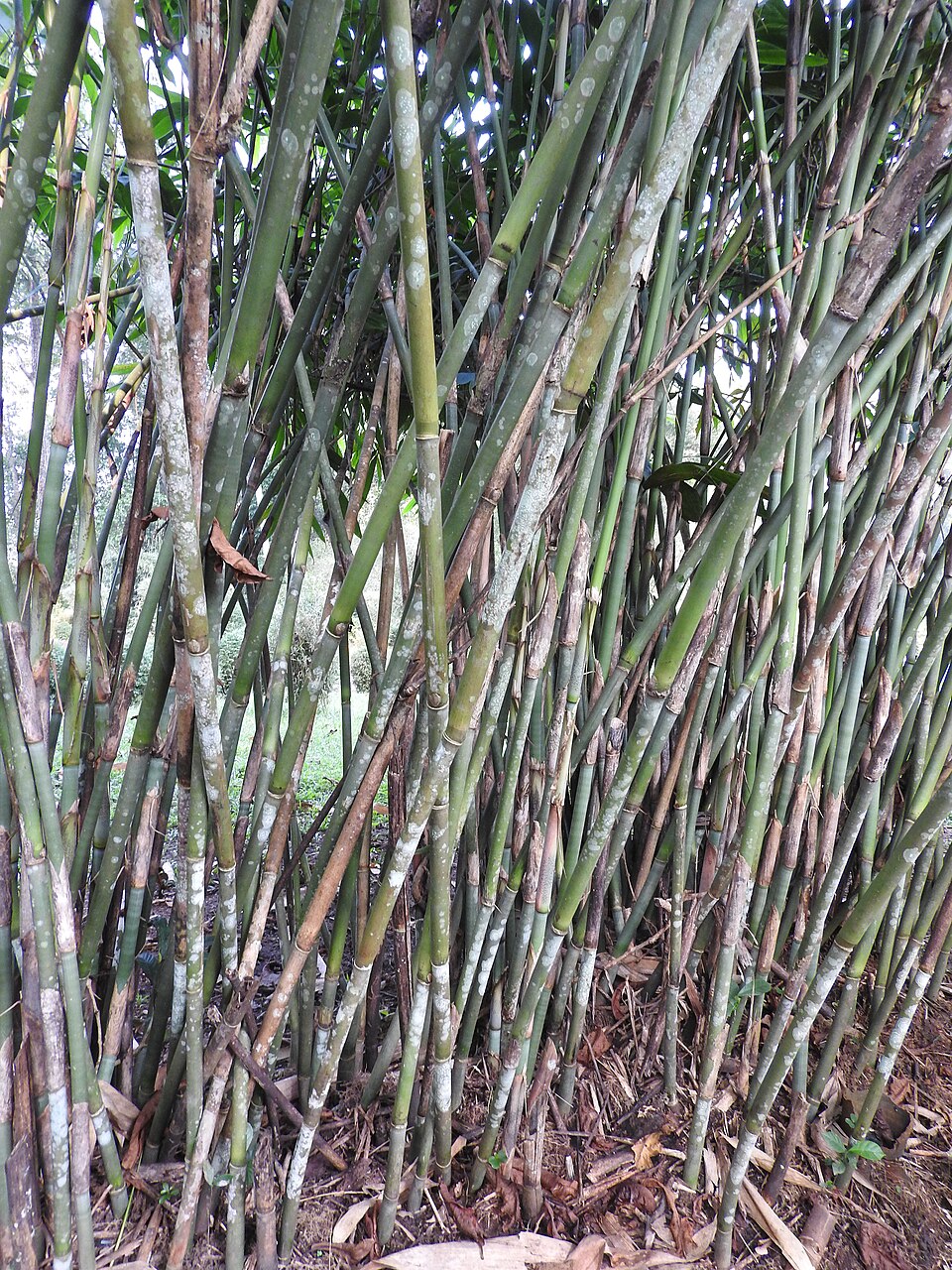
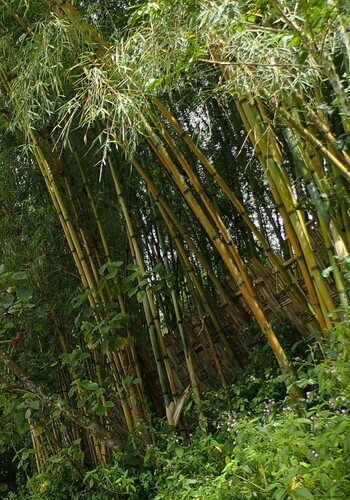
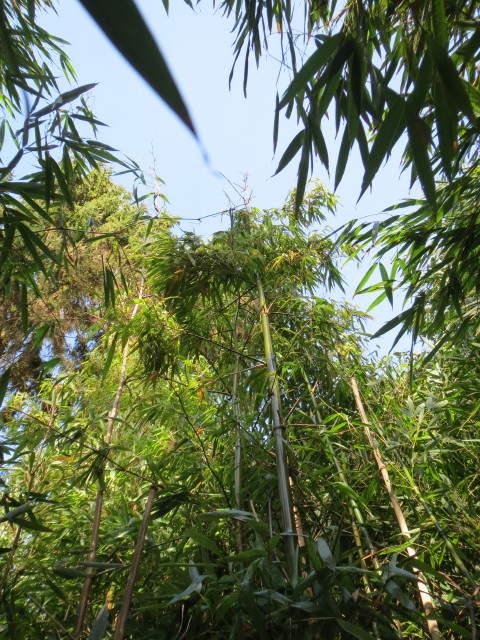
A bamboo. It grows 6 m tall. It grows in clumps and keeps growing from year to year. The stems are 5-9 m long and 2-4 cm wide. The internodes are 15-20 cm long. The culm sheaths are 30-40 cm long. The leaf blades are narrowly sword shaped and 15-30 cm long by 1-4 cm wide.
Edible Uses
The seed can be cooked whole or ground into a powder and used as a cereal. Plants flower at roughly 50-year intervals but produce fertile seed abundantly when they do flower in British gardens.
Medicinal Uses
No medicinal uses are known for this plant.
Distribution
A tropical and subtropical plant. In Bhutan it grows between 1,000-2,100 m above sea level. It suits hardiness zones 8b-9
Where It Grows
Africa, Asia*, Bhutan, East Africa, Himalayas, India, Indochina, Myanmar, Nepal, North America, Northeastern India, SE Asia, Sikkim, Tanzania, Thailand, USA
Propagation
Surface sow seed as soon as it is ripe in a greenhouse at around 20°C, keeping the compost consistently moist. The seed has some dormancy and may take 1–8 months to germinate at 20–25°C; a cold pre-treatment may shorten this period. Grow on in light shade in the greenhouse until large enough to plant out. Seed is rarely available. Division can be done in spring as new growth begins — take divisions with at least three canes, disturbing the main plant's roots as little as possible. Grow divisions in light shade in a greenhouse in a high-fertility sandy medium, misting the foliage regularly until established. Plant out once a good root system has developed, which may take a year or more. Basal cane cuttings are also an option.
Other Uses
Older stems are harvested for weaving into baskets and mats. The canes reach up to 3cm in diameter and, thanks to the long gaps between nodes, provide a high-quality weaving material. The plant is also very effective at stabilising soil on steep slopes.
Synonyms
Also Known As
Mwanzi, Pagjiok-pao, Pah-ryang, Parang, Prong
References (9)
- Bhatt, B. P., et al, 2003, Commercial edible bamboo species and their market potentiality in three Indian tribal states of the North Eastern Himalayan Region. J. Bamboo and Rattan. 2(2): 111-133 (As Chimonobambusa hookeriana)
- Crouzet, I., Starosta, P., 1998, Bamboos. Evergreen. p 33
- Manandhar, N.P., 2002, Plants and People of Nepal. Timber Press. Portland, Oregon. p 262
- Mukhia, P.K., et al, 2013, Wild plants as Non Wood Forest Products used by the rural community of Dagana, a southern foothill district of Bhutan, SAARC Journal, 27 pages
- Newslett. Bamboo Soc. (European Bamboo Soc. Great Brit.) 17:21. 1993
Show all 9 references Hide references
- Plants for a Future database, The Field, Penpol, Lostwithiel, Cornwall, PL22 0NG, UK. http://www.scs.leeds.ac.uk/pfaf/
- Wiersema, J. H. & Leon, B., 2013, World Economic Plants. A Standard Reference CRC Press. 2nd Ed. p 350
- Wild edible plants of Himachal Pradesh (As Chimonobambusa hookeriana)
- World Checklist of Useful Plant Species 2020. Royal Botanic Gardens, Kew