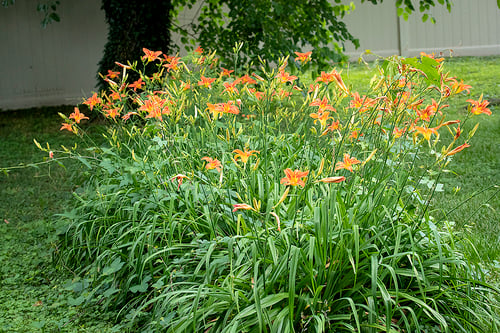
Hemerocallis citrina
Baroni
Lemon day lily
iNaturalist· cc-by-nc
(c) Keita Watanabe, some rights reserved (CC BY-NC), uploaded by Keita Watanabe
Summary
Source: WikipediaHemerocallis citrina, commonly known as citron daylily and long yellow daylily, is a species of herbaceous perennial plant in the family Asphodelaceae.
Description
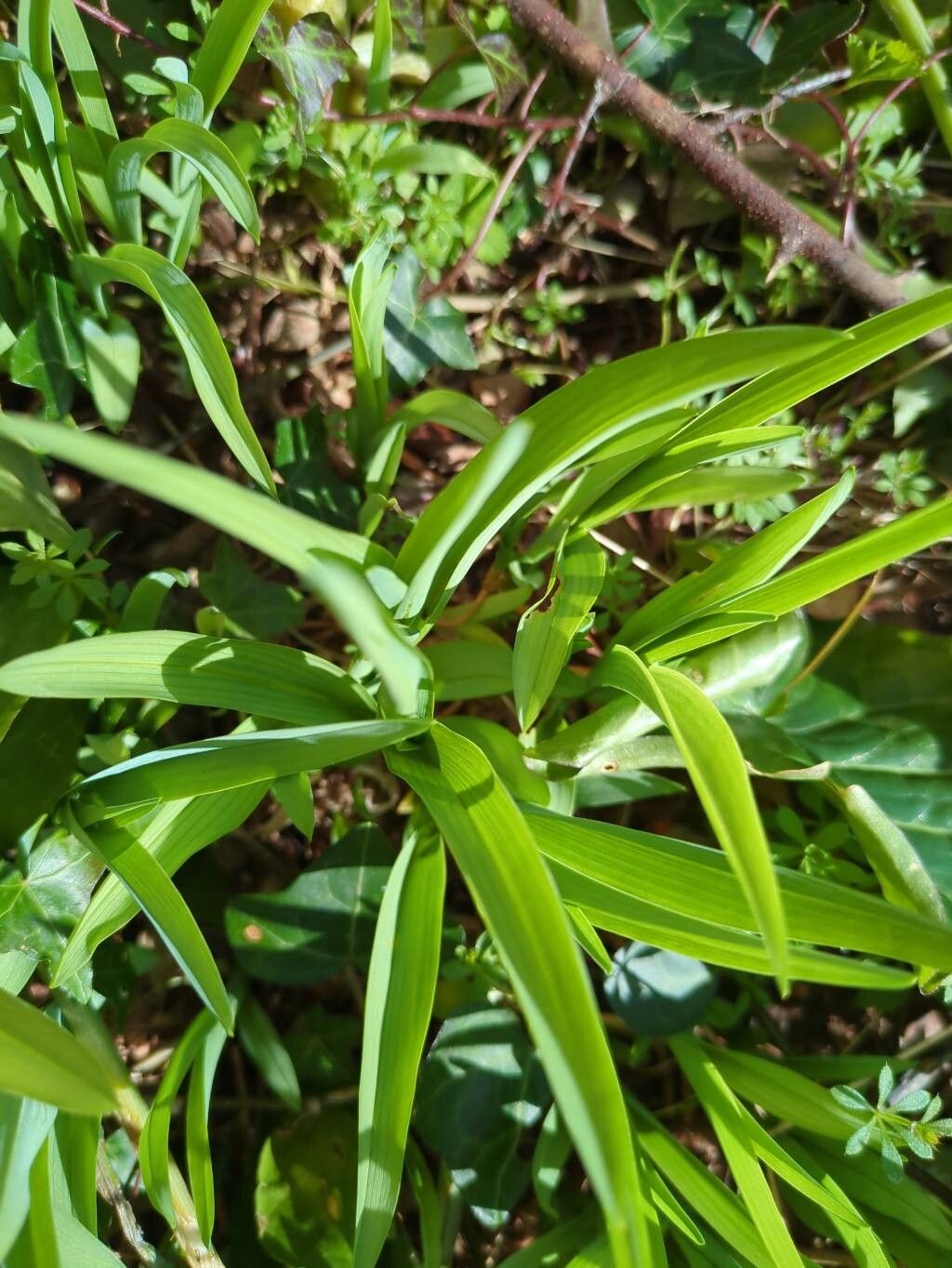
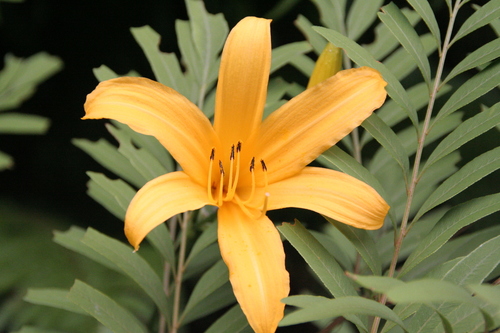
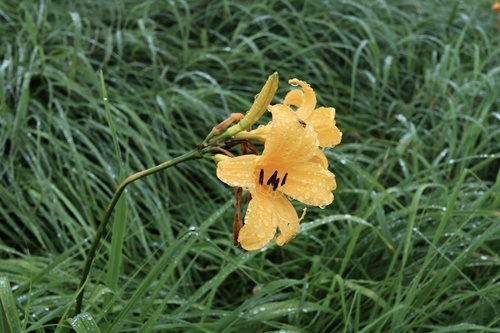
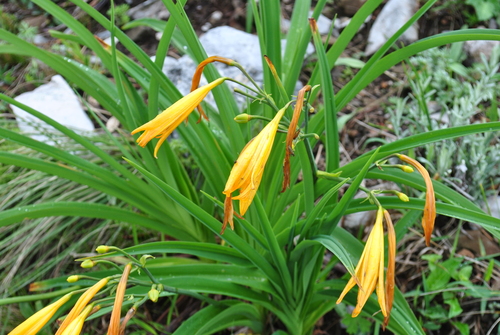
A herb. It grows 1-1.5 m tall. It spreads 0.9-2 m wide. It loses its leaves in winter. The roots are rather stout and fleshy. They often have an oblong swollen tuber at the tip. The leaves are narrow and 50-130 cm long by 0.5-2.5 cm wide. The leaf sheath has red edges. The flowering stalk is branched. There are 3-5 groups of 2-5 flowers. They are purplish black in bud and lemon coloured when open. They are large and open in the afternoon and last about 1 day. They have a scent. The fruit is a capsule about 2-2.5 cm long and 1.2-1.5 cm wide.
Edible Uses
Leaves and young shoots are edible when cooked, but must be harvested while very young before they become fibrous. Flowers and flower buds can be eaten raw or cooked; the slender trumpets range from 12–17cm long, and a single flowering stem can carry between 7 and 65 buds. The flowers can also be dried and used as a thickener in soups and similar dishes. The buds contain approximately 43mg of vitamin C per 100g, 983 IU of vitamin A, and 3.1% protein. The root can be eaten raw or cooked and has a flavour somewhat like radish but less sharp.
Traditional Uses
The mature flower buds are gathered just as they open and scalded in boiling water, or steamed then sun dried. They are used in sauce or soup.
This uses section is brief — help expand it
Medicinal Uses
The juice of the roots is an effective antidote in cases of arsenic poisoning. A tea made from boiled roots is used as a diuretic.
Known Hazards
Consuming its raw or undercooked non-dried flowers may cause unwellness. Symptoms include vomiting, abdominal pain and diarrhea.
Distribution
It is a temperate plant. It grows on the edges of forests and in grassy fields. It grows from near sea level to 2000 m in N China. It suits hardiness zones 4-9. In Sichuan. In Yunnan.
Where It Grows
Asia, Australia, China*, Hawaii, Japan, Korea, Mongolia, Pacific, Slovenia, USA,
Cultivation
Succeeds in most soils, including dry ones, preferring a rich moist soil. Grows well in heavy clay soils. Succeeding in sun or shade, it produces more flowers in a sunny position though these flowers can be shorter-lived in very sunny positions. Succeeds in short grass if the soil is moist. Prefers a pH between 6 and 7. Plants are hardy to at least -20°c. Widely cultivated in China for its edible flowers, especially in Hunan province. Hybridizes freely with other members of this genus. This species is said to be self-incompatible. Many of the plants in cultivation under this name are H. thunbergii. The sub-species H. citrina vespertina (Hara.)Erhardt. is a very free-flowering form, producing up to 75 buds per scape and capable of flowering from July to October if the weather is suitable. The plant forms a loose spreading clump. The roots form pseudobulbs. Plants take a year or two to become established after being moved. Plants seem to be immune to the predations of rabbits. The plants are very susceptible to slug and snail damage, the young growth in spring is especially at risk. Individual flowers are very short-lived, they open in the late afternoon and die in the morning. However, plants produce a succession of flowers for several weeks of the summer. The number of flowers on a scape varies from 7 to 65. The flowers have a lemony scent. Another report says that they have a pronounced honeysuckle scent.
Propagation
Sow seed in mid-spring in a greenhouse; germination is usually fairly rapid and reliable. Prick seedlings into individual pots when large enough to handle, overwinter under glass, and plant out in late spring. Divide plants in spring or after flowering in late summer or autumn. Division is straightforward and can succeed at almost any time of year. Larger clumps can go directly into permanent positions; smaller clumps are best potted and grown on in a cold frame until well rooted before planting out in spring.
Other Uses
The tough dried foliage can be plaited into cord and used for making footwear. The flowers are rich in nectar and pollen, attracting pollinators including bees and butterflies. The flowers and young buds are edible and may also be consumed by wildlife, while the dense foliage can offer some shelter for small animals. The leaf litter and ground cover can provide overwintering habitat for beneficial insects.
Other Information
It is widely cultivated in China for its edible flowers, especially in Hunan. It is a priority under-utilised crop for China. It is sold in local markets in China.
Notes
There are about 15 Hemerocallis species. Also put in the family Hemerocallidaceae.
Synonyms
Also Known As
Citronasto rumena maslenica, Citron daylili, Huang hua cai
References (19)
- Bot. Mag. (Tokyo) 46:123. 1932 (As Hemerocallis coreana)
- Chen Xinqi, Liang Songyun, Xu Jiemei, Tamura M.N., Liliaceae. Flora of China. Vol 24 p 162 and Flora of China. www.eFloras.org
- Cundall, P., (ed.), 2004, Gardening Australia: flora: the gardener's bible. ABC Books. p 692
- Herbetia 9:103. 1943 (As Hemerocallis altissima)
- Hu, Shiu-ying, 2005, Food Plants of China. The Chinese University Press. p 318
Show all 19 references Hide references
- Jia, X., et al, 2022, Ethnobotany of wild edible plants in multiethnic areas of the Gansu–Ningxia–Inner Mongolia junction zone. Journal of Ethnobiology and Ethnomedicine 18:53
- Li, D. et al, 2017, Ethnobotanical survey of herbal tea plants from the traditional markets in Chaoshan, China. Journal of Ethnopharmacology. 205 (2017) 195-206
- Liu, Yi-tao, & Long, Chun-Lin, 2002, Studies on Edible Flowers Consumed by Ethnic Groups in Yunnan. Acta Botanica Yunnanica. 24(1):41-56
- Nuovo Giorn. Bot. Ital. ser. 2, 4:305. 1897
- Plants for a Future database, The Field, Penpol, Lostwithiel, Cornwall, PL22 0NG, UK. http://www.scs.leeds.ac.uk/pfaf/ (Also as Hemerocallis altissima, and Hemerocallis coreana)
- Seidemann J., 2005, World Spice Plants. Economic Usage, Botany, Taxonomy. Springer. p 175
- Slocum, P.D. & Robinson, P., 1999, Water Gardening. Water Lilies and Lotuses. Timber Press. p 121
- Solomon, C., 2001, Encyclopedia of Asian Food. New Holland. p 219 See for uses of Hemerocallis sp. (As Hemerocallis altissima)
- Staples, G.W. and Herbst, D.R., 2005, A tropical Garden Flora. Bishop Museum Press, Honolulu, Hawaii. p 688
- Wang, J. et al, 2013, A Study on the Utilization of Wild Plants for Food in Liangshan Yi Autonomous Prefecture. Plant Diversity and Resources. 35(4): 416-471
- Wang, J., et al, 2020, An ethnobotanical survey of wild edible plants used by the Yi people of Liangshan Prefecture, Sichuan Province, China. Journal of Ethnobiology and Ethnomedicine 16:10 p 9
- Wiersema, J. H. & Leon, B., 2013, World Economic Plants. A Standard Reference CRC Press. 2nd Ed. p 346
- World Checklist of Useful Plant Species 2020. Royal Botanic Gardens, Kew
- Zhang, L., et al, 2016, Ethnobotanical study of traditional edible plants used by the Naxi people during droughts. Journal of Ethnobiology and Ethnomedicine. 12:39