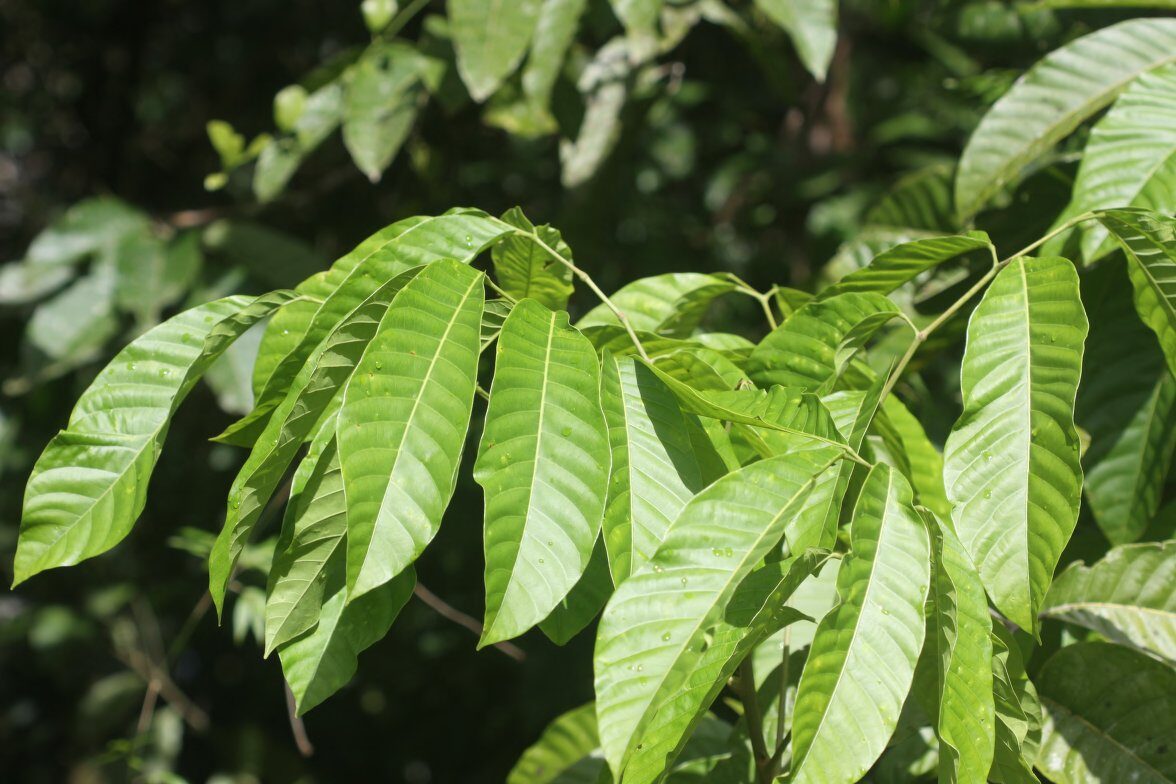
Haplolobus floribundus
(Schum.) Merr.
Mala adoa
gbif· cc-by
The New York Botanical Garden
gbif· cc0
Bell Museum, University of Minnesota
gbif· cc0
Bell Museum, University of Minnesota
Description
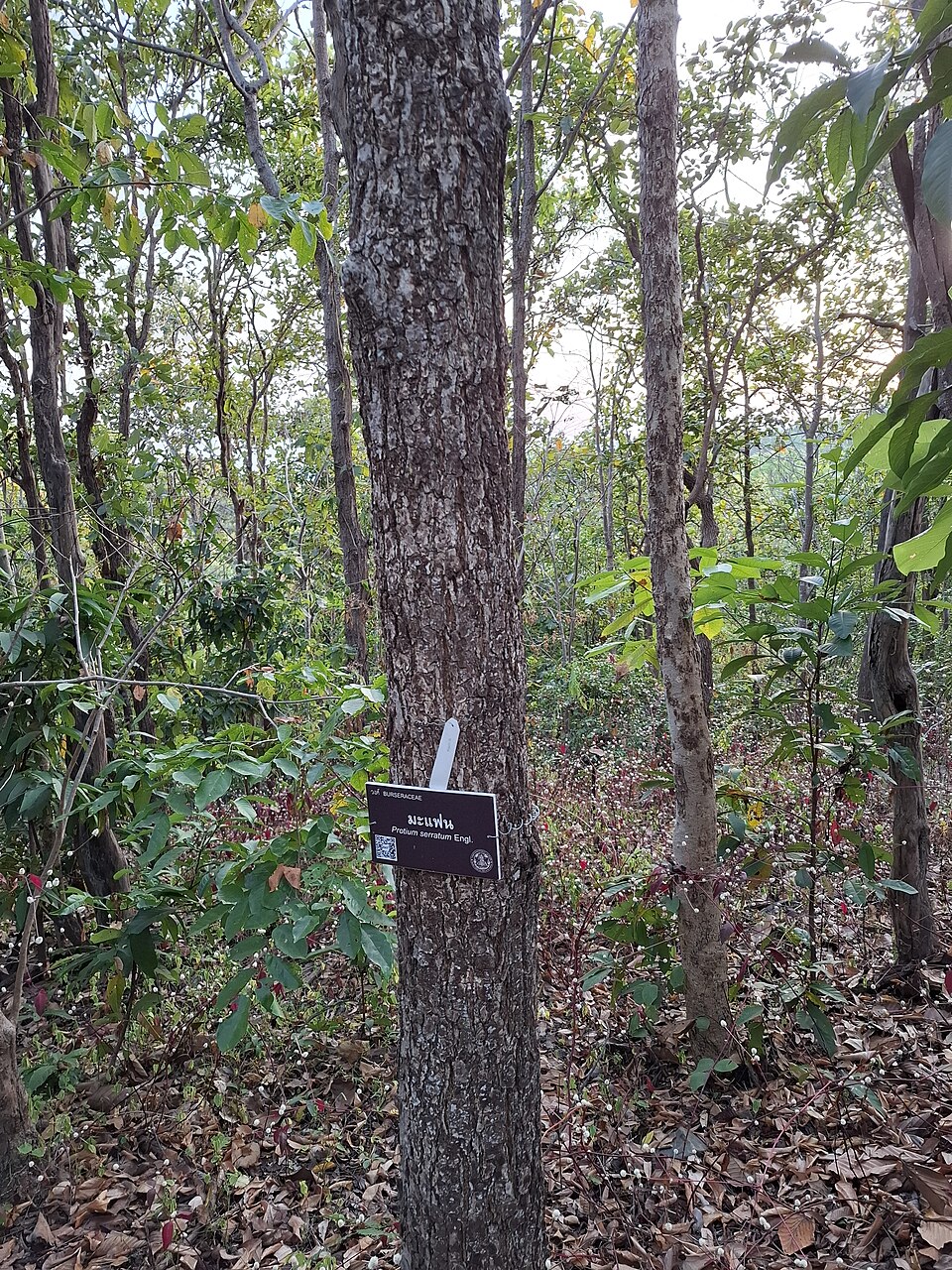
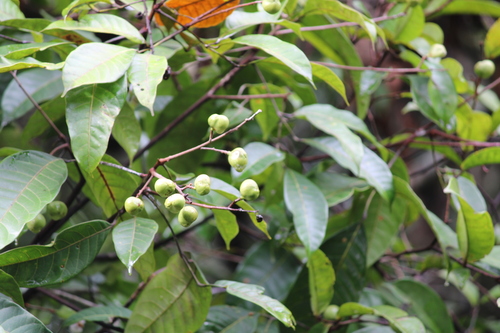
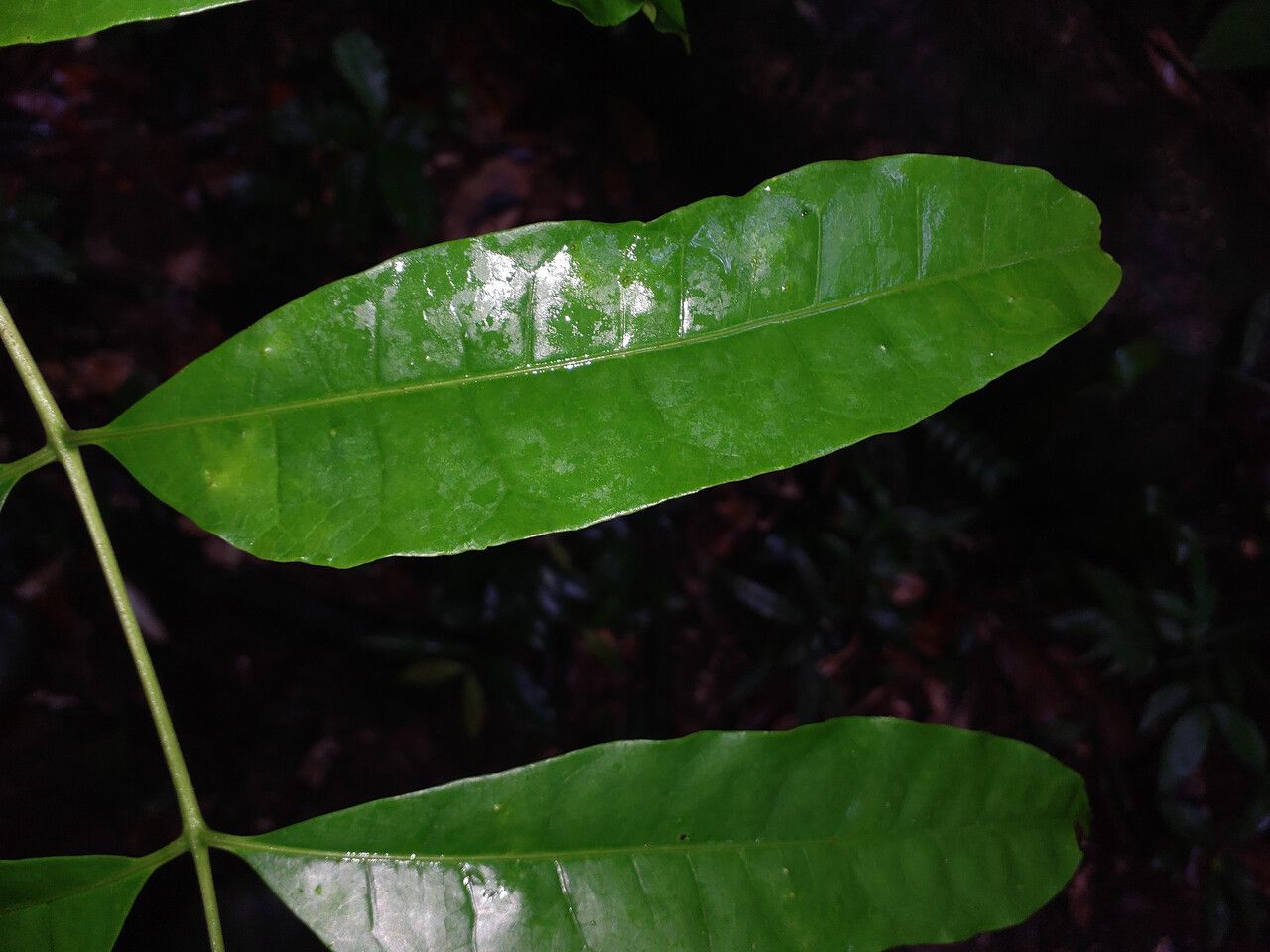
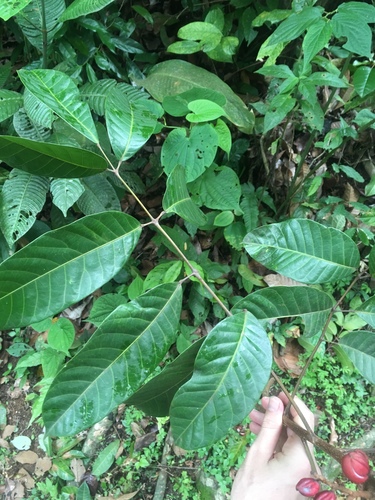
Medium to large trees that develop short medium round buttresses. The tree can vary between 5 and 24 m high. The trunk can be 60 cm across. The bark is covered with small growths but is not rough to touch. The bark smells like green mangoes and when cut oozes pale white latex. The leaves occur on opposite sides along the stalk. The leaflets are hairy on the underside. There is no stipules or leafy structure at the base of the leaf stalk which helps distinguish them from closely related Canariums. Male and female flower parts are on separate flowering stalks. These flowers occur among the leaves not at the very tips. The flowers are small and white and have a smell. The fruit are thinned walled. Fruit range from 2-5 cm and mostly oval with a sharp tip.
Edible Uses
The fruit is boiled for about 5 minutes before eating the flesh. The seeds must be soaked for several weeks to remove toxicity before cooking. The nuts are an important traditional food on Rennell Island.
Traditional Uses
The fruit are boiled for about 5 minutes, then the flesh is eaten. The seeds are soaked for some weeks to remove toxicity, then cooked.
This uses section is brief — help expand it
Known Hazards
Seeds contain toxicity and must be soaked for some weeks before cooking to make them safe.
Distribution
A tropical plant. It occurs on Rennell Island in the Solomon Islands. In Fiji it grows between 90 and 850 m altitude.
Where It Grows
East Timor, Fiji, Pacific, Papua New Guinea, PNG, Samoa, SE Asia, Solomon Islands, Timor-Leste, Vanuatu,
Other Information
The nut is an important traditional food on Rennell Island in the Solomon Islands.
Notes
Probably subsp. salomonensis in Solomons. Pigs chew the bark near the base of the tree.
Synonyms
Also Known As
Gemugi, Kaunigai, Maramara ngari, Ngeemungi
References (10)
- Cowie, I, 2006, A Survey of Flora and vegetation of the proposed Jaco-Tutuala-Lore National Park. Timor-Lests (East Timor) www.territorystories.nt/gov.au p 45
- Evans, B. R, 1999, Edible nut Trees in Solomon Islands. A variety collection of Canarium, Terminalia and Barringtonia. ACIAR Technical Report No. 44 96pp
- French, B.R., 2010, Food Plants of Solomon Islands. A Compendium. Food Plants International Inc. p 335
- GTZ 1996, A Guide to some Indigenous Fijian Trees. GTZ Suva. p 99
- Henderson, C.P. and I.R.Hancock, 1988, A Guide to the Useful Plants of the Solomon Islands. Res. Dept. Min of Ag. & Lands. Honiara, Solomon Islands. p 40
Show all 10 references Hide references
- Lebot, V. & Sam, C., Green desert or ‘all you can eat’? How diverse and edible was the flora of Vanuatu before human introductions?. Terra australis 52 p 410 (As Canarium aneityensis)
- McClatchey, W. C., 2012, Wild food plants of Remote Oceania. Acta Societatis Botanicorum Poloniae 81(4) 371-380
- Smith, A.C., 1985, Flora Vitiensis Nova: A New flora of Fiji, Hawai Botanical Gardens, USA Vol 3 p 465
- Walter, A. & Sam C., 2002, Fruits of Oceania. ACIAR Monograph No. 85. Canberra. p 280
- World Checklist of Useful Plant Species 2020. Royal Botanic Gardens, Kew