Gynura bicolor
(Willdenow) A.P. de Candolle
Velvet plant, Gynura, Okinawan spinach, Red groundsel
iNaturalist· cc0
no rights reserved, uploaded by 葉子
iNaturalist· cc-by-nc
(c) Stargazer, some rights reserved (CC BY-NC)
iNaturalist· cc-by-nc
(c) Stargazer, some rights reserved (CC BY-NC)
Summary
Source: WikipediaGynura bicolor, also called hongfeng cai (紅鳳菜) in Chinese, suizenjina (水前寺菜) in Japanese, Okinawan spinach or edible gynura, is a member of the chrysanthemum family (Asteraceae). It is native to China, Thailand, and Myanmar but grown in many other places as a vegetable and as a medicinal herb. There are two kinds: one that is green on both sides, and another with leaves that are green on the top and purple underneath. Both kinds are considered medicinal vegetables. Gynura bicolor is a perennial and therefore found for sale throughout the year, however, winter and spring are the best times to use the plant.
Description
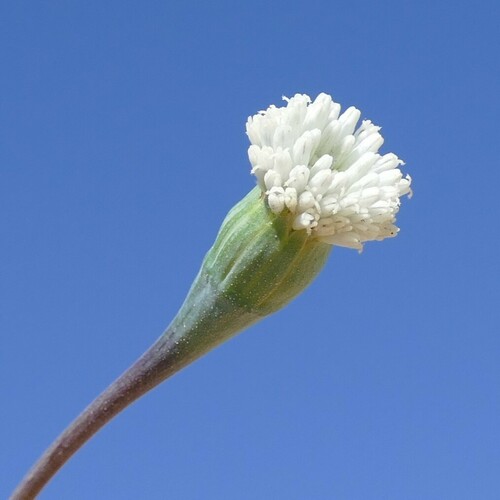
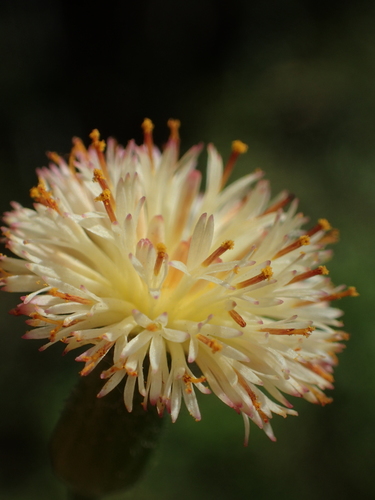
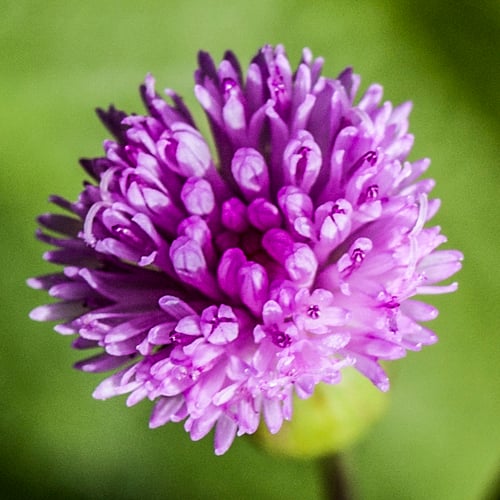
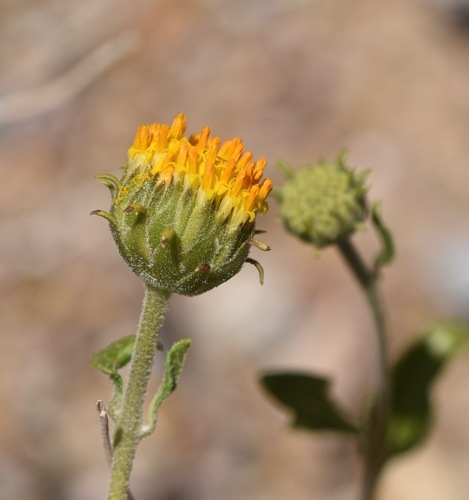
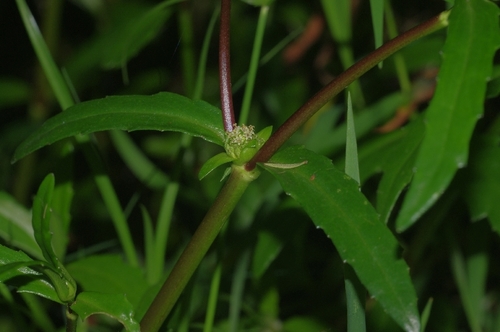
A herb. It keeps growing from year to year It can be scrambling or erect. It grows 35 cm long. The leaves often have no leaf stalks. The leaf blades are broadly oval and 8-15 cm long. They are usually green on top and purple underneath. They are fleshy. They can have teeth or lobes. The flowers are in loose clusters or 4-13 flower heads. They have purple tips.
Edible Uses
Gynura bicolor contains high levels of vitamin C, crude protein, iron, carotenoids, calcium, essential amino acids, and is a rich source of anthocyanins. According to Chinese food grouping, Gynura bicolor is a 'cool' food, so the leaves are stir-fried with sesame oil and ginger (both 'hotter' foods) to achieve balance. The stems and roots of the plant can also be made into tea. Choose leaves with few bruises and without black stains. In Japan, Gynura bicolor is eaten as local vegetable in Ishikawa, Kumamoto, and Okinawa, blanched lightly and served with ponzu, as an ingredient of miso soup, or tempura. The roots of the plant have been used for consumption in aviation for their richness in Vitamin K. It has an application to address bone decay in astronauts, increasing the absorption of calcium. It can also help female astronauts during menstruation.
Traditional Uses
Young leaves are eaten as a vegetable or cooked in soups. The young leaves are flavoured with sauces and vinegar. The roots are cooked with sliced pork.
Known Hazards
Pyrrolizidine alkaloids, toxic to the human liver, have been discovered in Gynura bicolor tested from five regions in China. No significant genotoxic effects were found. Samples collected from one region, Jiangsu, displayed weak cytotoxicity at the concentration of 100mg/ml, indicating that some caution should be had. Another study found that the plant generally has a negligible level of toxicity when administered orally and has been labeled safe in experimental rats. The plant was not cytotoxic to the normal cell line and "confirmed the safety of the G. bicolor for consumption." The study also found that the plant had a chemoprevention potential. Controlled consumption of the plant has been advised to prevent any potential harmful effects from the generally low presence of pyrrolizidine alkaloids.
Distribution
A tropical plant. It needs a sunny location. In southern China it grows in rocky or wet places by rivers between 600-1,500 m above sea level. In Sichuan and Yunnan.
Where It Grows
Asia, China, Hawaii, Himalayas, India, Indochina, Indonesia, Japan, Nepal, Myanmar, Northeastern India, Pacific, SE Asia, Taiwan, Thailand, Tuvalu, USA, Vietnam,
Cultivation
It is easily grown from cuttings.
Propagation
Seed - Cuttings of half-ripe wood.
Other Information
It is a commercially cultivated vegetable. It is sold in local markets in China.
Notes
There are about 100 Gynura species. They are mostly in the tropics. Gynura bicolor (Burm.f.) Merr. is a synonym of Gynura pseudochina.
Nutrition
| Part | Moisture | kJ | kcal | Protein | Vit A | Vit C | Iron | Zinc |
|---|---|---|---|---|---|---|---|---|
| Leaves | 91.6 | 109 | 26 | 3.7 | — | — | 2.3 | — |
Synonyms
Also Known As
Ebolo, Ginura, Redflower ragleaf, Suizenji-na, Tlang-nal, Zi-bei-tian-kui
References (19)
- Arora, R. K., 2014, Diversity in Underutilized Plant Species - An Asia-Pacific Perspective. Bioversity International. p 40
- AVRDC files
- Bremness, L., 1994, Herbs. Collins Eyewitness Handbooks. Harper Collins. p 176
- Chao, Pi-Yu, et al, 2014, Antioxidant Activity in Extracts of 27 Indigenous Taiwanese Vegetables. Nutrients 2014, 6, 2115-2130
- "Chinese Nutrition Journal", 2002, Vol 23(11) p 121
Show all 19 references Hide references
- Facciola, S., 1998, Cornucopia 2: a Source Book of Edible Plants. Kampong Publications, p 38
- Food Composition Tables for use in East Asia FAO http://www.fao.org/infoods/directory No. 784
- Hu, Shiu-ying, 2005, Food Plants of China. The Chinese University Press. p 732
- Kar, A., et al, 2013, Wild Edible Plant Resources used by the Mizos of Mizoram, India. Kathmandu University Journal of Science, Engineering and Technology. Vol. 9, No. 1, July, 2013, 106-126
- Kays, S. J., and Dias, J. C. S., 1995, Common Names of Commercially Cultivated Vegetables of the World in 15 languages. Economic Botany, Vol. 49, No. 2, pp. 115-152
- Kuo, W. H. J., (Ed.) Taiwan's Ethnobotanical Database (1900-2000), http://tk.agron.ntu.edu.tw/ethnobot/DB1.htm
- Larkcom, J., 1991, Oriental Vegetables, John Murray, London, p 129
- Li, D. et al, 2017, Ethnobotanical survey of herbal tea plants from the traditional markets in Chaoshan, China. Journal of Ethnopharmacology. 205 (2017) 195-206
- Lim, T. K., 2015, Edible Medicinal and Non Medicinal Plants. Volume 9, Modified Stems, Roots, Bulbs. Springer p 44
- Niwano, Y. et al., 2009, Extensive Screening for Plant Foodstuffs in Okinawa, Japan with Anti-Obese Activity on Adipocytes, in vitro. Plant Foods in Human Nutrition 64:6-10
- Prodr. 6:299. 1838
- Staples, G.W. and Herbst, D.R., 2005, A tropical Garden Flora. Bishop Museum Press, Honolulu, Hawaii. p 161
- Thaman, R. R, 2016, The flora of Tuvalu. Atoll Research Bulletin No. 611. Smithsonian Institute p 68
- World Checklist of Useful Plant Species 2020. Royal Botanic Gardens, Kew