Prosthechea cochleata
(L.) W. E. Higgins
Tree orchis
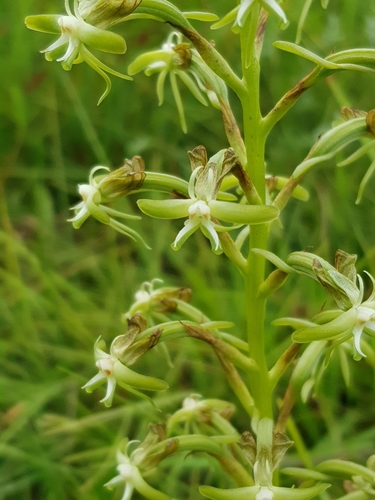
iNaturalist· cc-by-nc-nd
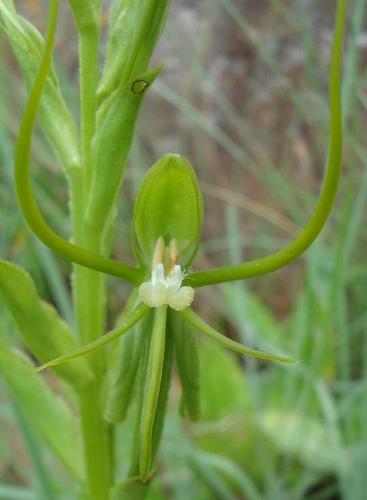
(c) Josiah Townsend, some rights reserved (CC BY-NC-ND), uploaded by Josiah Townsend
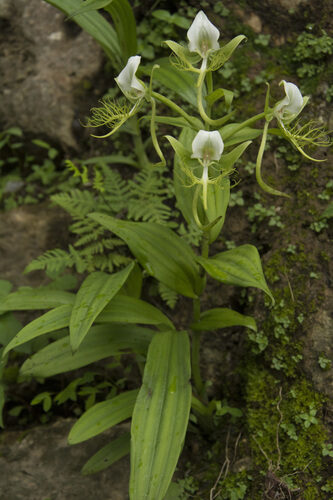
iNaturalist· cc-by-nc-nd
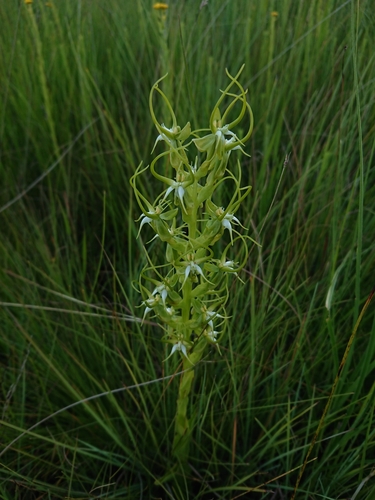
(c) cskk, some rights reserved (CC BY-NC-ND)
iNaturalist· cc-by-nc-nd
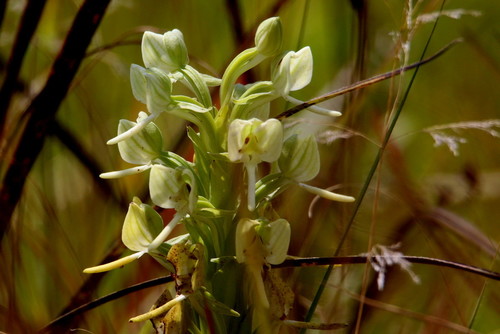
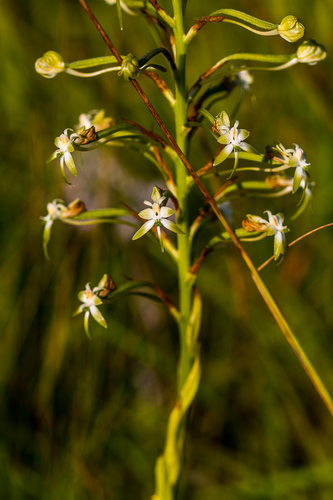
(c) Marcel Holyoak, some rights reserved (CC BY-NC-ND)
Summary
Source: WikipediaProsthechea cochleata, commonly referred to as the clamshell orchid or cockleshell orchid, is an epiphytic, sympodial New World orchid native to Central America, the West Indies, Colombia, Venezuela, and southern Florida. It is also known as the black orchid in Belize, where it is the national flower. Each oblong discoid pseudobulb bears one or two linear nonsucculent leaves. The flowers are unusual in that though the labellum is usually below the column in the orchids, in the members of Prosthechea the labellum forms a "hood" over the column. This makes the flower effectively upside down, or non-resupinate. Whereas the species usually has one anther, Prosthechea cochleata var. triandra is an endangered variety that has three anthers and is autogamous, allowing its existence in Florida where no appropriate pollinators appear to be present. P. cochleata is common in cultivation, and is valued for its uniquely shaped and long-lasting flowers on continually growing racemes. Several hybrids have been produced with this species, including the popular Prosthechea Green Hornet. (still often listed as Encyclia Green Hornet)
Description
An orchid. It grows attached to rock and plants. It has a false bulb 9-20 cm long. This produces leaves 20-30 cm long and a flowering scape 20-50 cm long.
Edible Uses
The pseudobulbs are used to provide an edible mucilage similar to okra.
Traditional Uses
The pseudobulbs are used to provide an edible mucilage like okra.
This uses section is brief — help expand it
Distribution
It is a tropical plant.
Where It Grows
Antilles, Bahamas, Belize, Central America, Colombia, Costa Rica, Cuba, Dominican Republic, Ecuador, El Salvador, French Guiana, Guatemala, Guyana, Haiti, Honduras, Jamaica, Leeward Is., Mexico, Nicaragua, Panama, Puerto Rico, North America, South America, Suriname, USA, Venezuela, Winward Is.,
Other Uses
The pseudobulbs are used as a source of mucilage.
Synonyms
Also Known As
Black orchid, Clamshell orchid, Cockleshell orchid, Vasquita
References (5)
- Facciola, S., 1998, Cornucopia 2: a Source Book of Edible Plants. Kampong Publications, p 164 (As Epidendrum cochleatum)
- Fern, K., 2012, Tropical Species Database http://theferns.info/tropical/
- Kermath, B. M., et al, 2014, Food Plants in the Americas: A survey of the domesticated, cultivated and wild plants used for Human food in North, Central and South America and the Caribbean. On line draft. p 705
- Kew Plants of the World Online
- Lovelock, (As Epidendrum cochleatum)