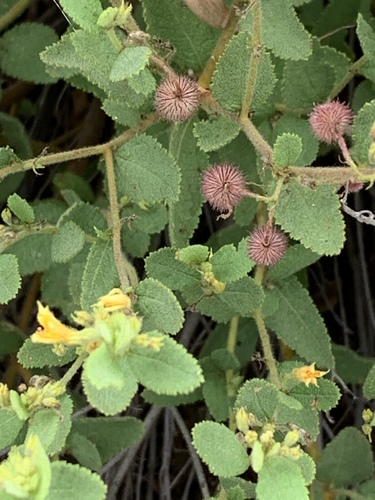
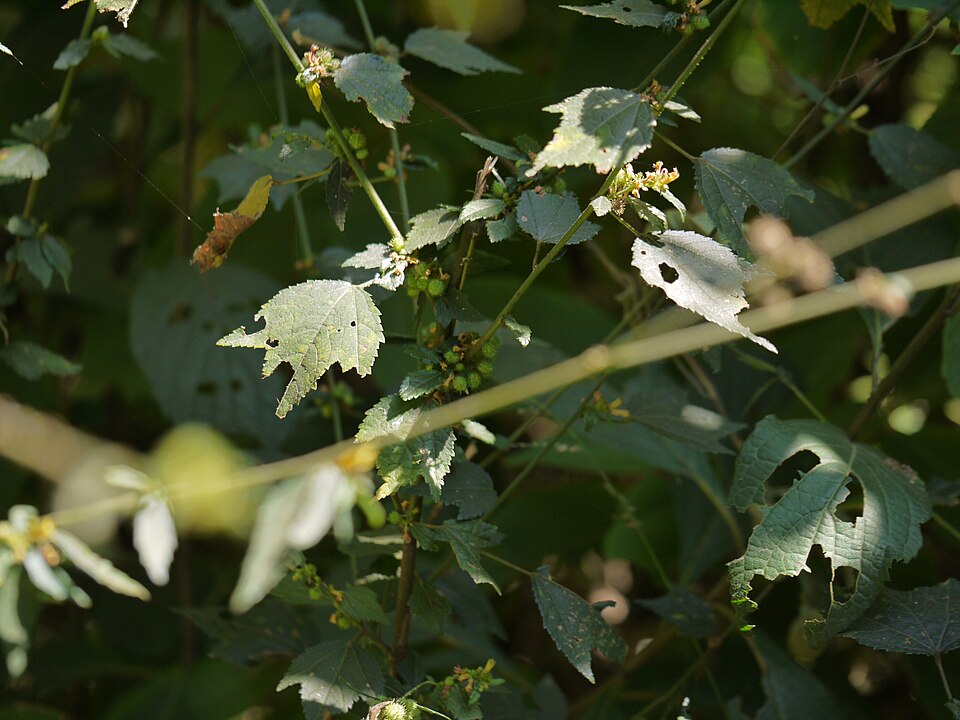
Grewia carpinifolia
Juss.
Ntanta
iNaturalist· cc-by-nc-sa
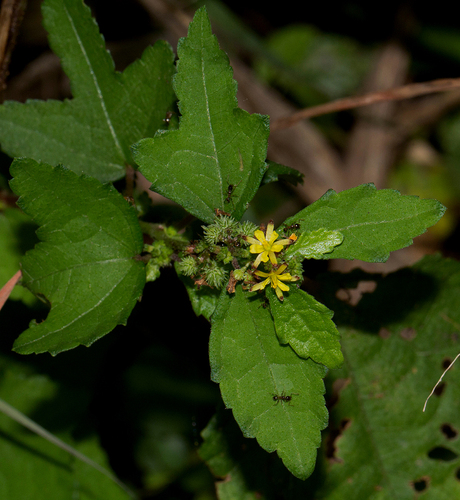
(c) Marco Schmidt, some rights reserved (CC BY-NC-SA), uploaded by Marco Schmidt
iNaturalist· cc-by-nc-sa
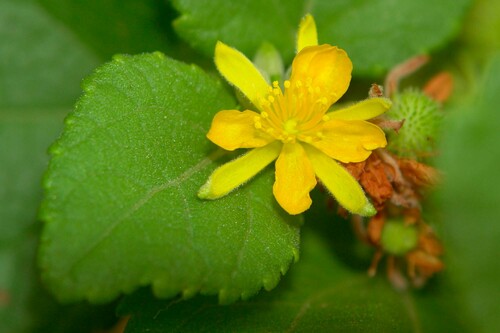
(c) Marco Schmidt, some rights reserved (CC BY-NC-SA)
Description
A scrambling or climbing shrub that can reach 6 m or more in height, native to dry soils and secondary jungle patches in West African closed forests and the Western Ghats of India. It occurs in both tropical and arid environments.
Edible Uses
The leaves are eaten as a vegetable, the ripe fruit are used as a dessert fruit and vegetable, and the bark is cooked and eaten. The flower nectar is eaten, especially by children.
Traditional Uses
The leaves are eaten as a vegetable. The ripe fruit are used as a dessert fruit and also as a vegetable. The bark is cooked and eaten.
This uses section is brief — help expand it
Medicinal Uses
Grewia species are valued in many cultures for their medicinal virtues. The main medicinal action appears to come from the mucilage that is found in the leaves, stems and roots, which has been shown to have soothing and healing properties. Taken internally it is often used as a remedy for diarrhoea and dysentery, for example, whilst externally it is applied to wounds, cuts, ulcers, irritations etc. The plant can be taken as a simple infusion or decoction, or it can be applied topically as a poultice of the plant, or the mucilage can be extracted from the plant, if required, by maceration and then decoction. The plant (part not specified) is considered to be generally healing and pain relieving. It is used in the treatment of digestive problems. The plant (?root) is used in herbal mixtures as an aphrodisiac. The leaves are used in the treatment of itching, venereal diseases, small-pox, chicken-pox, measles, cutaneous, subcutaneous and parasitic infections The roots and the shoots are abortifacients and ecbolics They are used in treating problems connected to the menstrual cycle. The bark is used in the treatment of dropsy, swellings, oedema, gout. The plant has been reported to have antiparasitic and antioxidant activities. It has also been shown that an ethanolic extract of the leaves may increase muscle strength, and may also possess CNS depressing activity
Distribution
A tropical plant. It grows on dry soils. It grows in patches of secondary jungle in closed forest in West Africa. It can grow in arid places. It occurs in the Western Ghats in India.
Where It Grows
Africa, Angola, Asia, Benin, Burkina Faso, Cameroon, Central Africa, Congo, Côte d'Ivoire, Ghana, India, Ivory Coast, Middle East, Nigeria, Sao Tome and Principe, Senegal, Sierra Leone, South Africa, Southern Africa, Togo, West Africa, Yemen,
Propagation
Seed - we have no specific information for this species but seed of this genus is generally best sown as soon as it is ripe. Stored seed has a hard seedcoat and may benefit from scarification before sowing in order to speed up and improve germination. This can usually be done by pouring a small amount of nearly boiling water on the seeds (being careful not to cook them!), allowing the mix to cool somewhat and then leaving it in a warm place to soak for 12 - 24 hours. Sow the seeds in situ or in a nursery seedbed or trays - do not allow the compost to become dry. Germination and early growth are usually quite quick. Cuttings - best taken with a heel.
Other Uses
A fibre used for cordage is obtained from the bark. The split or whle stems can be used for making baskets. The plant is used to wash the hair in order to prevent and remove lice. The seeds are used as beads in necklaces etc. The wood is used for fuel.
Production
In India fruit are produced July to November.
Other Information
The flower nectar is eaten especially by children.
Notes
There are about 200 Grewia species. They are mostly tropical. The fruit of most may be edible. These were in the Sparrmanniaceae and the Tiliaceae.
Nutrition
| Part | Moisture | kJ | kcal | Protein | Vit A | Vit C | Iron | Zinc |
|---|---|---|---|---|---|---|---|---|
| Leaves | 73.6 | 624 | — | 23.6 | — | — | — | — |
Synonyms
Also Known As
Akpet, Nkukumbe, Ntabuna, Ntanta
References (18)
- Abbiw, D.K., 1990, Useful Plants of Ghana. West African uses of wild and cultivated plants. Intermediate Technology Publications and the Royal Botanic Gardens, Kew. p 42
- Atato, A., et al, 2010, Diversity of Edible Wild Fruit Tree Species of Togo. Global Science Books.
- Bongers, F. et al (Eds), Forest Climbing Plants of West Africa: Diversity, Ecology and Management. CABI
- Burkill, H. M., 1985, The useful plants of west tropical Africa, Vol. 5. Kew.
- Codjia, J. T. C., et al, 2003, Diversity and local valorisation of vegetal edible products in Benin. Cahiers Agricultures 12:1-12
Show all 18 references Hide references
- Dalziel, J. M., 1937, The Useful plants of west tropical Africa. Crown Agents for the Colonies London.
- Dansi, A., et al, 2008, Traditional leafy vegetables and their use in the Benin Republic. Genet Resour Crop Evol (2008) 55:1239–1256
- FAO, 1988, Traditional Food Plants, FAO Food and Nutrition Paper 42. FAO Rome p 307
- Grubben, G. J. H. and Denton, O. A. (eds), 2004, Plant Resources of Tropical Africa 2. Vegetables. PROTA, Wageningen, Netherlands. p 562
- Herzog, F., et al, 1993, Nutritive Value of Four Wild Leafy Vegetables in Côte d'Ivoire. Internat. J. Vit. Nutr. Res. 63 (1993) 234-238
- Jardin, C., 1970, List of Foods Used In Africa, FAO Nutrition Information Document Series No 2.p 79, 140
- Le Houerou, H. N., (Ed.), 1980, Browse in Africa. The current state of knowledge. International Livestock Centre for Africa, Ethiopia. p 163
- Martin, F.W. & Ruberte, R.M., 1979, Edible Leaves of the Tropics. Antillian College Press, Mayaguez, Puerto Rico. p 221
- Misra S. & Misra M., 2016, Ethnobotanical and Nutritional Evaluation of Some Edible Fruit Plants of Southern Odisha, India. International Journal of Advances in Agricultural Science and Technology, Vol.3 Issue.1, March- 2016, pg. 1-30
- Misra, S., 2020, Survey of edible plants for human consumption in south Odisha, India. Journal of Emerging Technologies and Innovative Research (JETIR) Vol. 7, Issue 12 p 278
- Peters, C. R., O'Brien, E. M., and Drummond, R.B., 1992, Edible Wild plants of Sub-saharan Africa. Kew. p 191
- Royal Botanic Gardens, Kew (1999). Survey of Economic Plants for Arid and Semi-Arid Lands (SEPASAL) database. Published on the Internet; http://www.rbgkew.org.uk/ceb/sepasal/internet [Accessed 11th June 2011]
- World Checklist of Useful Plant Species 2020. Royal Botanic Gardens, Kew