Gleditsia japonica
Miq
Japanese locust
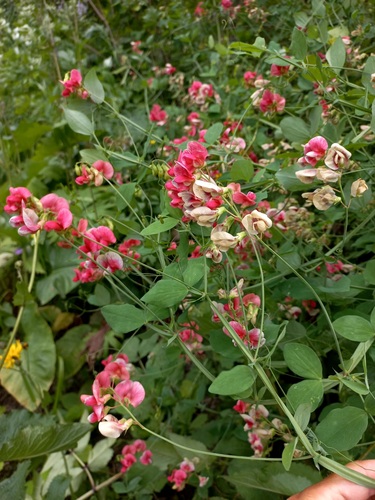
iNaturalist· cc-by
(c) Andrew Conboy, some rights reserved (CC BY), uploaded by Andrew Conboy
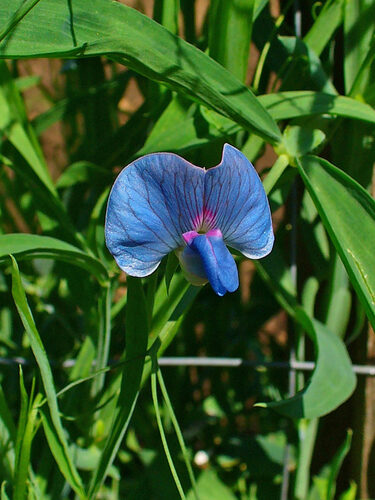
iNaturalist· cc-by-nc
(c) Charles, some rights reserved (CC BY-NC)
iNaturalist· cc-by-nc
(c) lin-marina, some rights reserved (CC BY-NC)
Summary
Source: WikipediaGleditsia japonica, the Japanese locust, is a species of flowering plant in the family Fabaceae, native to the eastern Himalayas, central and southern China, Manchuria, Korea, and central and southern Japan. It is used as a street tree in a number of cities in China and Europe.
Description
A deciduous tree. It grows 21 m tall. It spreads to 10 m wide. It has thorns which are branched. The fruit are pods. They can be 30 cm long. They often become twisted at maturity. The seeds are 9-10 mm long by 5-7 mm wide.
Edible Uses
The seeds are roasted, dehusked, soaked until soft, then boiled and eaten with sugar. They contain 22.4% protein and 2.8% fat. Young leaves are cooked and eaten, though they are considered a famine food used only when all else fails.
Traditional Uses
The seeds roasted, and the husks removed then the seeds are soaked until soft and boiled and eaten with sugar. The leaves of the plant are also eaten. The flesh inside the seedpod is eaten.
Medicinal Uses
The plant is antitussive, astringent, expectorant, and haemostatic, and has applications for skin complaints. It is used in the treatment of syphilitic skin diseases.
Distribution
It is a temperate plant. It grows on sunny slopes and near streams between 100-2,500 m above sea level in China. It suits hardiness zones 6-10.
Where It Grows
Asia, Australia, China, Japan, Korea,
Cultivation
Easily grown in a loamy soil, requiring a sunny position. Succeeds in most soils. Tolerates drought once established and atmospheric pollution. A rather tender plant, especially when young, it is seen at its best in southern Britain. Older trees, however, are completely hardy in Britain. Trees at Kew produced lots of pods and fertile seeds in the hot summer of 1989, they also fruited well in the cool summer of 1993 and also in 1994, 95 and 96. Trees are cultivated for their seedpods in Japan. Trees have a light canopy, they come into leaf late in the spring and drop their leaves in early autumn making them an excellent canopy tree for a woodland garden. Plants in this genus are notably resistant to honey fungus. This species has a symbiotic relationship with certain soil bacteria, these bacteria form nodules on the roots and fix atmospheric nitrogen. Some of this nitrogen is utilized by the growing plant but some can also be used by other plants growing nearby.
Propagation
Pre-soak seed for 24 hours in warm water, then sow in spring in a greenhouse. The seed should have swollen; if not, soak for another 24 hours. If soaking alone fails, carefully file away part of the seed coat without damaging the embryo, then soak again until the seed swells. Once swollen, germination takes 2–4 weeks at 20°C. Prick seedlings into individual deep pots as soon as they are large enough to handle, and plant out into permanent positions in summer. Provide some protection from cold during the first few winters outdoors.
Other Uses
A soap substitute is obtained from the pulp inside the seedpods, or from the seed itself according to some reports. The wood is strong, durable, and coarse-grained. This plant also fixes nitrogen.
Notes
There are about 14 Gleditsia species. Also as Caesalpinaceae.
Synonyms
Also Known As
Korean honey locust, Shan zao jia, Tsao La
References (7)
- Ann. Mus. Bot. Lugduno-Batavum 3:54. 1867
- Bodkin, F., 1991, Encyclopedia Botanica. Cornstalk publishing, p 498
- Brickell, C. (Ed.), 1999, The Royal Horticultural Society A-Z Encyclopedia of Garden Plants. Convent Garden Books. p 476
- Cundall, P., (ed.), 2004, Gardening Australia: flora: the gardener's bible. ABC Books. p 641
- Etherington, K., & Imwold, D., (Eds), 2001, Botanica's Trees & Shrubs. The illustrated A-Z of over 8500 trees and shrubs. Random House, Australia. p 346
Show all 7 references Hide references
- Plants for a Future database, The Field, Penpol, Lostwithiel, Cornwall, PL22 0NG, UK. http://www.scs.leeds.ac.uk/pfaf/ (Also as Gleditsia korainensis)
- READ,