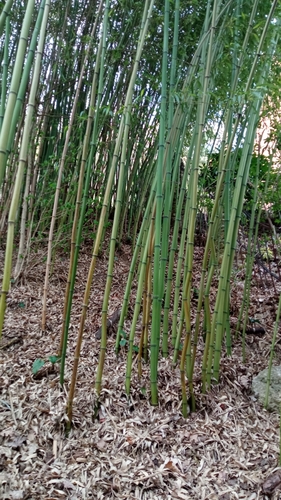
Gigantochloa verticillata
(Willd.) Munro
Whorled bamboo, Giant stripy bamboo
iNaturalist· cc-by-nc
(c) Ganjar Cahyadi, some rights reserved (CC BY-NC), uploaded by Ganjar Cahyadi
iNaturalist· cc-by-nc
(c) Ganjar Cahyadi, some rights reserved (CC BY-NC), uploaded by Ganjar Cahyadi
iNaturalist· cc-by-nc
(c) Ganjar Cahyadi, some rights reserved (CC BY-NC), uploaded by Ganjar Cahyadi
Summary
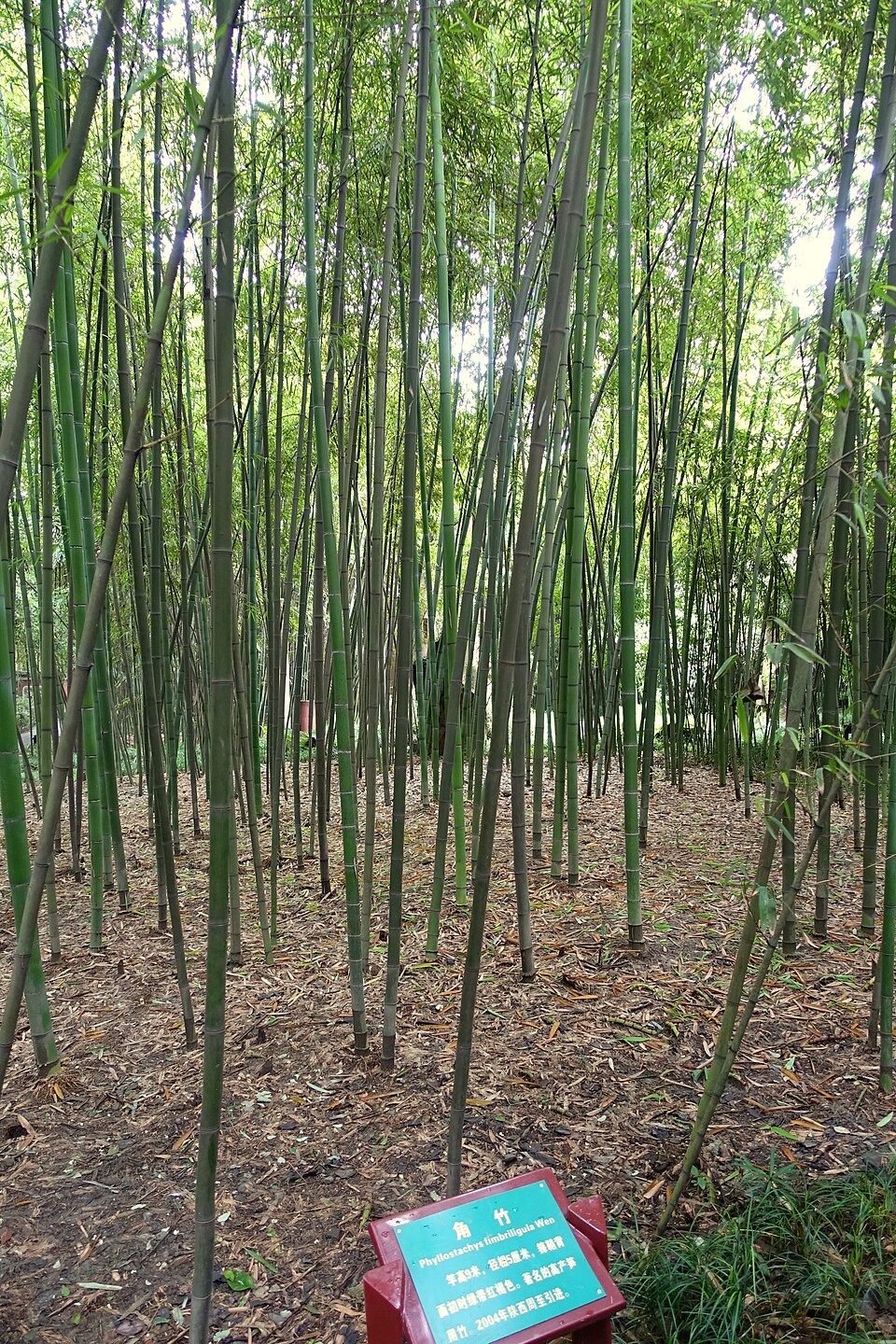
Fast-growing evergreen bamboo reaching 15m tall with a 6m spread. Culms range 7-30 metres in length, 5-13cm diameter at base, with 40-60cm long internodes and thick walls up to 2cm wide. Canes display green to yellow-green coloring with yellow striping, initially showing scattered brown hairs on upper sections, becoming glabrous and smooth with age. Requires full sun and grows in light sandy and medium loamy soils with good drainage. Tolerates mildly acid, neutral, and mildly alkaline pH. Prefers moist soil. Hardy to UK zone 10.
Description
A bamboo. It grows 20-40 m high. It forms many tillers. The stems can be 25 cm thick. They have drooping tops. They are light green and have yellow stripes. The leaves are broadly sword shaped. They are 13-45 cm long by 2-7 cm wide.
Edible Uses
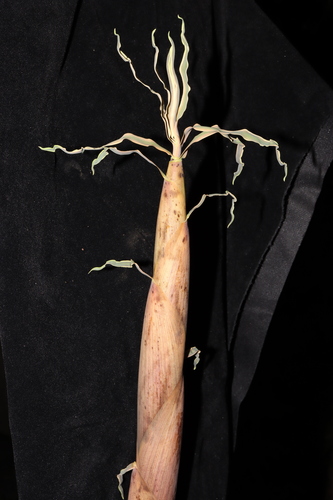
The young shoots are eaten as a vegetable, particularly those from less robust forms of the plant.
Traditional Uses
The young shoots are eaten as a vegetable. They are bitter.
This uses section is brief — help expand it
Medicinal Uses
None known.
Distribution
A tropical plant. It grows in tropical rainforests. It grows in the lowlands and up to 1,200 m above sea level.
Where It Grows
Asia, Brunei, Cambodia, China, Colombia, Ecuador, Honduras, India, Indochina, Indonesia, Malaysia, Myanmar, Philippines, SE Asia*, Singapore, South America, Thailand, Vietnam,
Cultivation
Plants are grown from sections of the rhizome.
Propagation
This plant is propagated vegetatively only, using rhizome, culm, or branch cuttings. Cuttings taken from flowering clumps should be avoided, as they will begin flowering shortly after planting. Culm cuttings have shown a survival rate of nearly 100%. In Indonesia, the optimal planting window is the rainy season from December to March. A spacing of 8 m × 8 m is recommended, and the plant performs best in high-rainfall areas.
Other Uses
The canes serve a wide range of practical purposes, including building construction, water pipes, furniture, household utensils, chopsticks, and toothpicks. They are also used in basketry (though Gigantochloa apus is generally preferred for this) and in making musical instruments (though Gigantochloa atroviolacea is preferred). Culms range from 7–30 metres in length, measuring 5–13 cm in diameter at the base, with internodes 40–60 cm long and walls up to 2 cm thick. The canes are green to yellow-green with yellow striping, initially bearing scattered appressed brown hairs on the upper sections, becoming smooth and hairless with age. The culms can also be made into charcoal, with an energy value of approximately 30,000 kJ/kg.
Synonyms
Also Known As
Awi andong, Awi gombong, Awi temen, Bamboo andong, Bamboo ater, Bambu belang raksasa, Buluh Jawa, Kayali, Pereng keles, Pring legi, Pring surat, Wa-pyu
References (11)
- Hedrick, U.P., 1919, (Ed.), Sturtevant's edible plants of the world. p 328
- http://www.plantnames.unimelb.edu.au/sorting/Bamboos_Edible.html
- Kew Plants of the World Online
- Martin, F.W. & Ruberte, R.M., 1979, Edible Leaves of the Tropics. Antillian College Press, Mayaguez, Puerto Rico. p 194
- Ochse, J.J. et al, 1931, Vegetables of the Dutch East Indies. Asher reprint. p 323
Show all 11 references Hide references
- Priyadi, H., et al, Five hundred plant species in Gunung Halimun Salak National Park West Java. A checklist including Sundanese names, distribution and use. CIFOR, FFPRI, SLU p 18
- Purseglove, J.W., 1972, Tropical Crops. Monocotyledons. Longmans p 133
- Sukarya, D. G., (Ed.) 2013, 3,500 Plant Species of the Botanic Gardens of Indonesia. LIPI p 847
- Terra, G.J.A., 1973, Tropical Vegetables. Communication 54e Royal Tropical Institute, Amsterdam, p 27
- Trans. Linn. Soc. London 26:124. 1868
- World Checklist of Useful Plant Species 2020. Royal Botanic Gardens, Kew