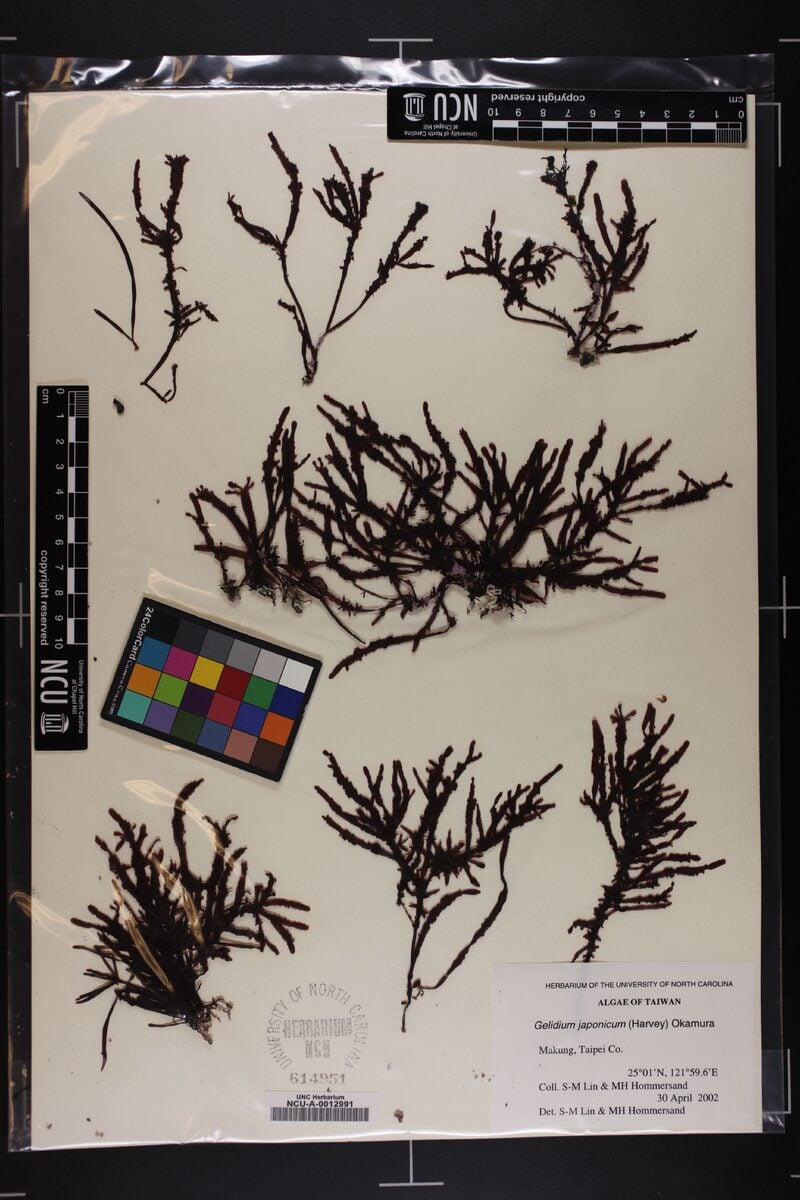
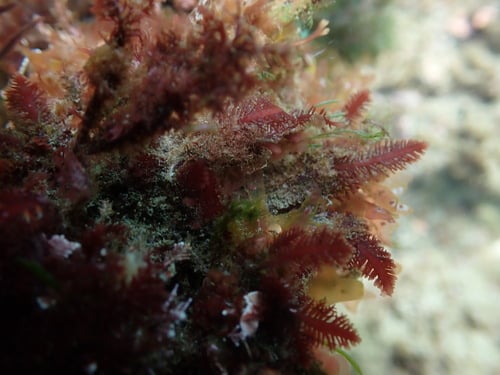
Gelidium amansii
(Lamour.) Lamour.
Japanese isinglass
iNaturalist· cc0
no rights reserved, uploaded by 葉子
iNaturalist· cc0
no rights reserved, uploaded by 葉子
iNaturalist· cc-by-nc
(c) Khadija El bouchikhi, some rights reserved (CC BY-NC)
Summary
Source: WikipediaGelidium amansii, also known as by its Korean name umutgasari, is an economically important species of red algae commonly found and harvested in the shallow coast (3 to 10 m or 10 to 33 ft of depth below the water) of many East Asian countries including North and South Korea, China, Japan, Singapore, and northeast Taiwan.
Description
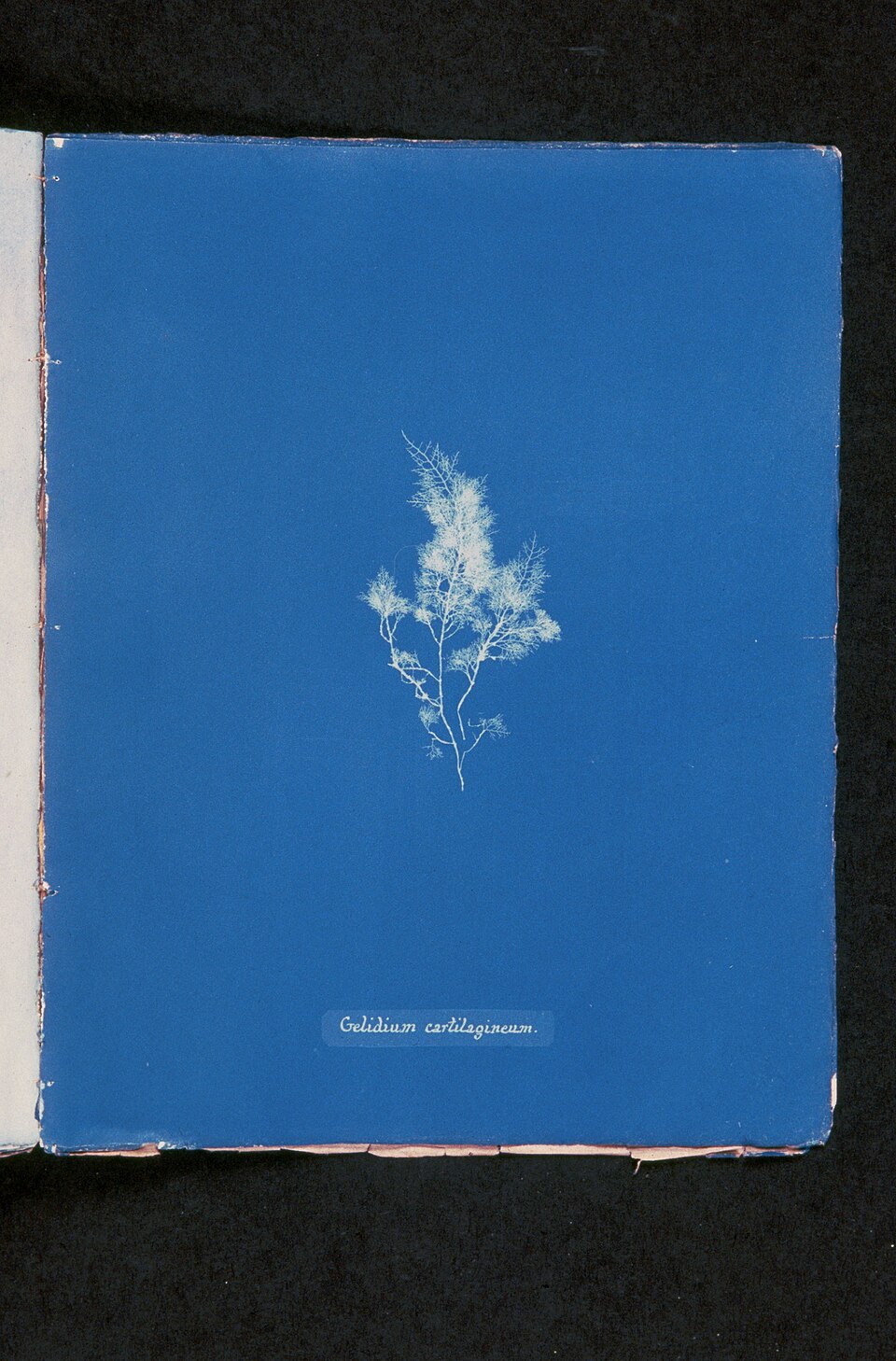
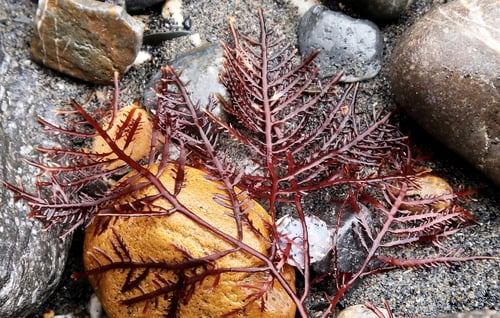
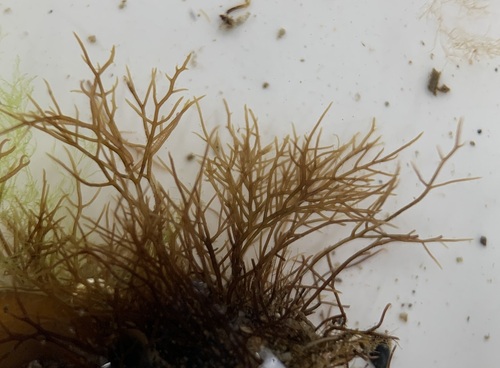
A seaweed. It is red and keeps growing from year to year. It forms tufts. The fronds are branched and rigid. The fronds have thread-like segments.
Edible Uses
The fronds are boiled and dried to make quick-setting agar and jelly, available as bundled strips, cakes, or powder. It can be eaten with soy sauce and vinegar, or used to make noodles.
Traditional Uses
It is processed by boiling and drying and used to make quick setting agar and jelly. It is available in bundled strips, cakes or as powder. It can be eaten with soy sauce and vinegar. It is used for making noodles.
Medicinal Uses
G. amansii is an important food source in East Asian countries and has been shown to have medicinal effects on dieting. Hence, in folklore medicine G. amansii is used to treat constipation. In Japan, it was historically used to make tokoroten. This algae is used to make agar, whose components are the polysaccharide agarose and agaropectin, from the large amount of algin which is located in the algae's cell wall, as well it is sometimes served as part of a salad, puddings, jams, and other culinary dishes in producing regions. Agar is a gelatinous substance that is commercially used both as an ingredient in gelatinous desserts and as an incubation matrix for microbes and other products that require an ecologically friendly gelatinous matrix. G. amansii is being studied as a cheap biofuel.
Distribution
A tropical and subtropical plant. It grows in the intertidal zone. It occurs along Pacific coasts.
Where It Grows
Asia, China, Indonesia, Japan, Korea, Russia, SE Asia,
Cultivation
It is grown from spores that spread naturally.
Notes
There are about 20 Gelidium species. It is claimed to prevent obesity.
Also Known As
Agar-agar, Shie-hua-ts'ai, Tengusa
References (13)
- Brouk, B., 1975, Plants Consumed by Man. Academic Press, London. p 253
- Brown, D., 2002, The Royal Horticultural Society encyclopedia of Herbs and their uses. DK Books. p 221
- Burkill, I.H., 1966, A Dictionary of the Economic Products of the Malay Peninsula. Ministry of Agriculture and Cooperatives, Kuala Lumpur, Malaysia. Vol 1 (A-H) p 1081
- Facciola, S., 1998, Cornucopia 2: a Source Book of Edible Plants. Kampong Publications, p 258
- http://www.seavegetables.com
Show all 13 references Hide references
- Hu, Shiu-ying, 2005, Food Plants of China. The Chinese University Press. p 261
- Kiple, K.F. & Ornelas, K.C., (eds), 2000, The Cambridge World History of Food. CUP p 237
- Solomon, C., 2001, Encyclopedia of Asian Food. New Holland. p 3
- Song, M., et al, 2013, Traditional knowledge of wild edible plants in Jeju Island, Korea. Indian Journal of Traditional Knowledge. 12(2) pp 177-194
- Subba Rao, G.N., 1965, Uses of seaweed directly as human food. Indo-Pacific Fisheries Council Regional Studies 2:1-32
- Tanaka,
- Xia, B., and Abbott, I.A., 1987, Edible seaweeds of China and their place in the Chinese diet. Economic Botany 41:341-53
- Zemke-White, W. L. & Ohno, M., 1999, World seaweed utilisation: An end-of-century summary. Journal of Applied Phycology 11: 369-376