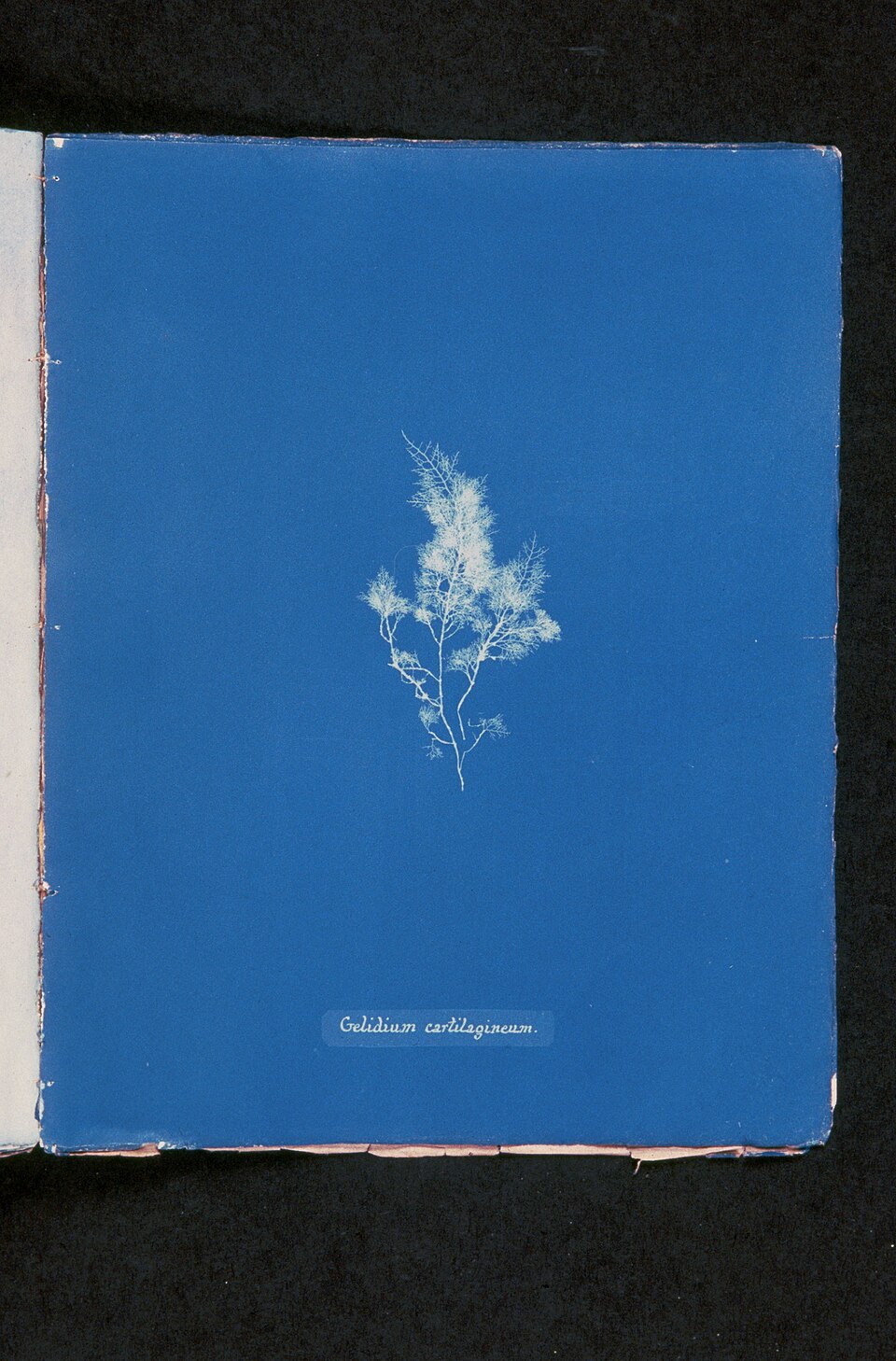
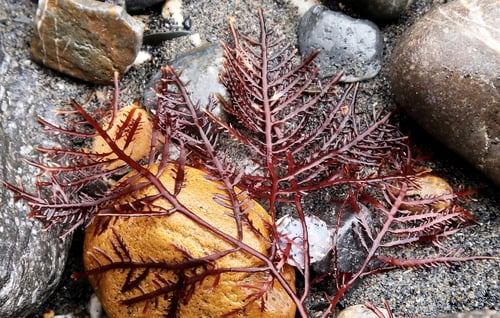
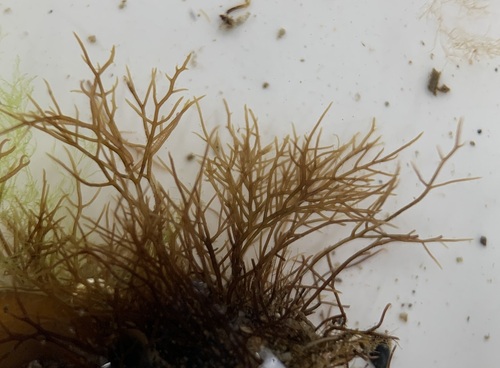
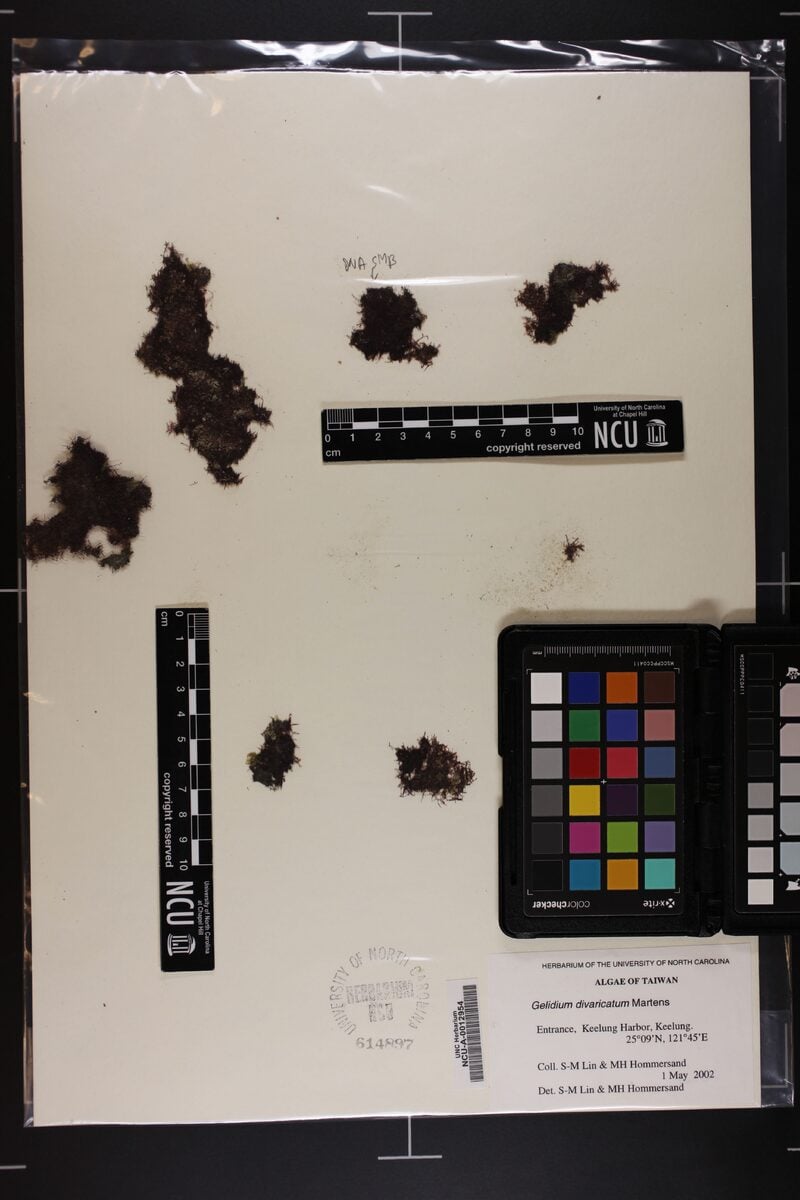
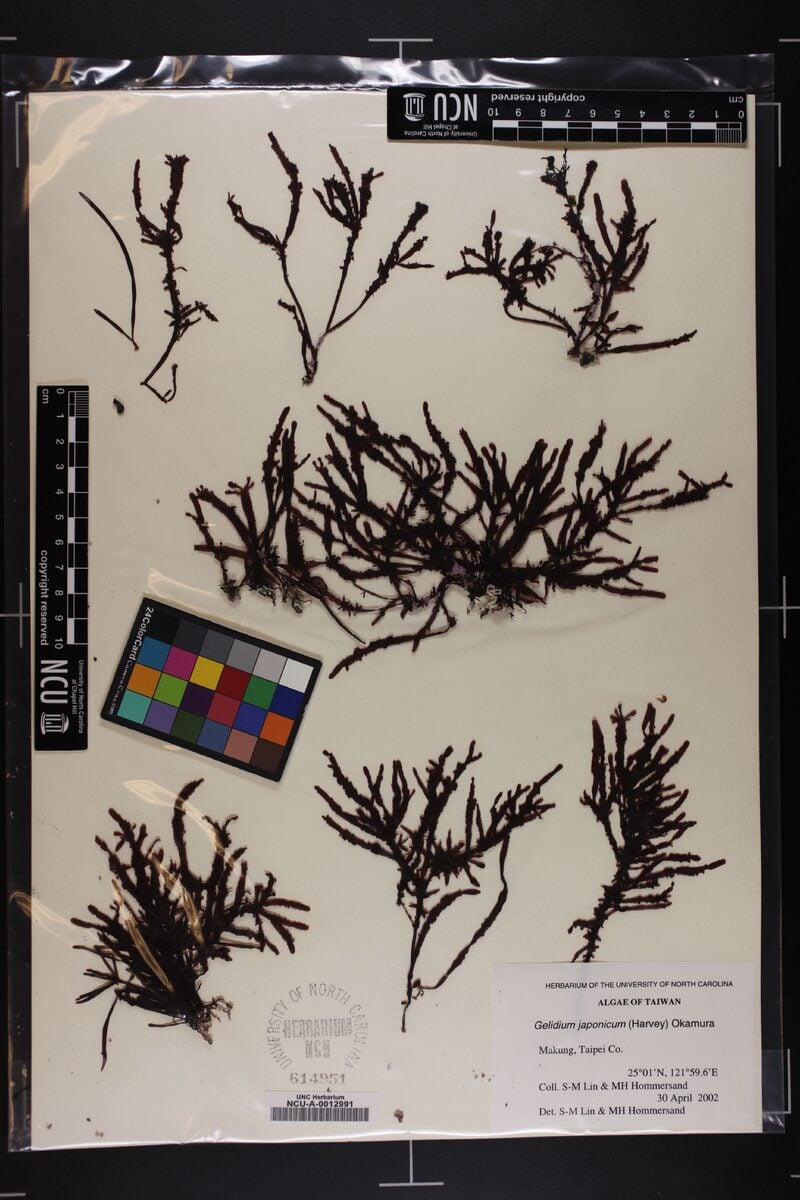
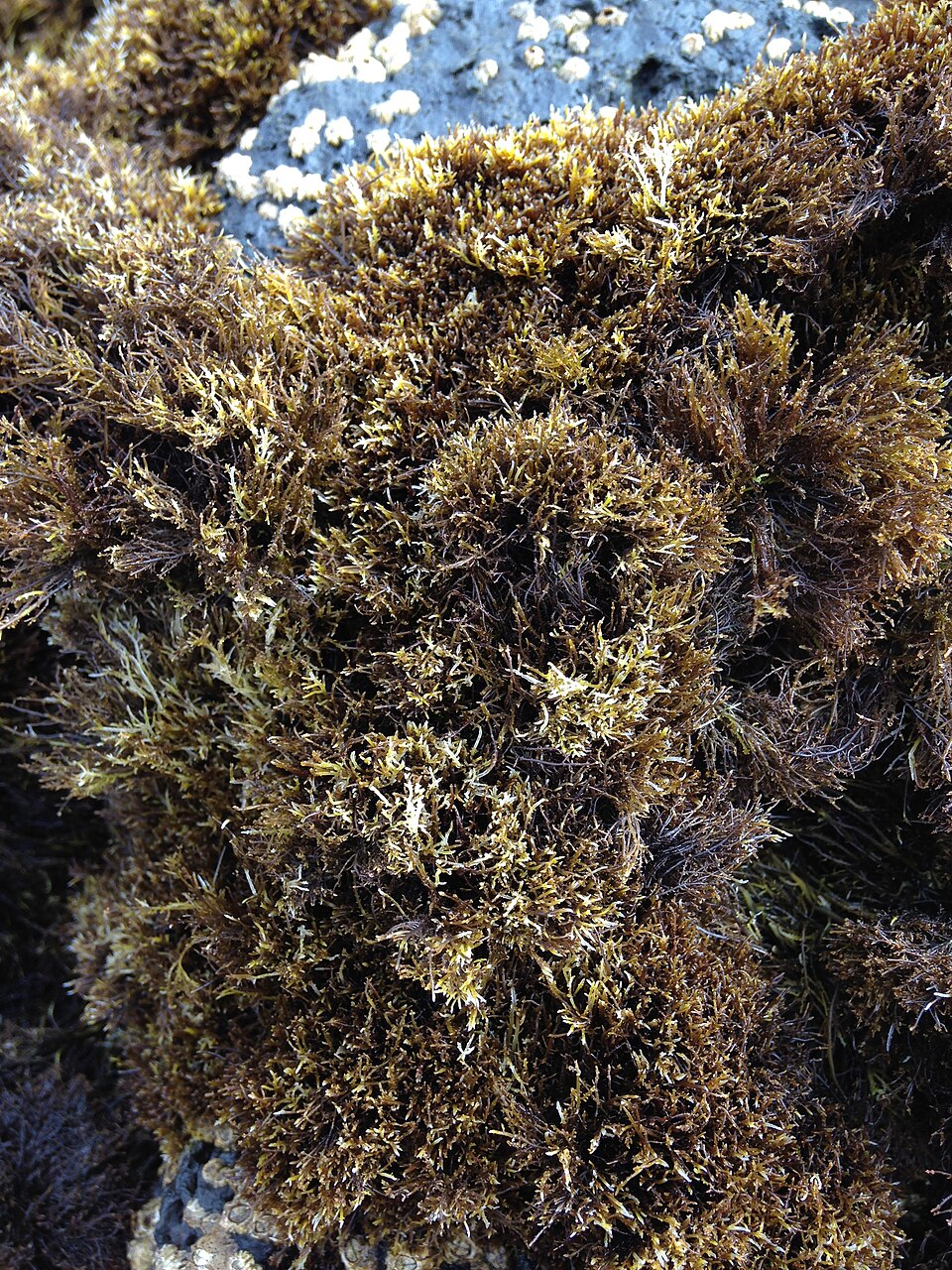
Gelidium latifolium
(Greville)Bornet & Thuret
Jelly plant
iNaturalist· cc0
no rights reserved
iNaturalist· cc-by
(c) Héctor Ibáñez Cantero, some rights reserved (CC BY)
iNaturalist· cc-by-nc
(c) Benoît Segerer, some rights reserved (CC BY-NC)
Description
A red seaweed in the Gelidiaceae family found in temperate and tropical waters. It is a major commercial source of agar and is traditionally dried, bleached, and boiled to improve its flavor.
Edible Uses
The seaweed and its fronds are eaten as algae. It is processed to produce agar, a key ingredient used in food preparation.
Traditional Uses
It is dried, bleached and boiled to improve the flavour. It is a main source of agar.
This uses section is brief — help expand it
Distribution
It grows in temperate and tropical places.
Where It Grows
Asia, Atlantic, Britain, China, Europe, Hawaii, Indonesia, Ireland, Pacific, SE Asia, USA,
Also Known As
Limu loloa
References (9)
- Brouk, B., 1975, Plants Consumed by Man. Academic Press, London. p 253
- Burkill, I.H., 1966, A Dictionary of the Economic Products of the Malay Peninsula. Ministry of Agriculture and Cooperatives, Kuala Lumpur, Malaysia. Vol 1 (A-H) p 1081
- http://www.seavegetables.com
- Hu, Shiu-ying, 2005, Food Plants of China. The Chinese University Press. p 261
- Kiple, K.F. & Ornelas, K.C., (eds), 2000, The Cambridge World History of Food. CUP p 237
Show all 9 references Hide references
- Subba Rao, G.N., 1965, Uses of seaweed directly as human food. Indo-Pacific Fisheries Council Regional Studies 2:1-32
- Surey-Gent, S. & Morris G., 1987, Seaweed. A User's Guide. Whirret Books. London. p 62, 135
- Zaneveld, J.S., 1955, Economic marine algae of tropical South and East Asia and their utilization. Indo-Pacific Special Publications, No 3 Bangkok.
- Zemke-White, W. L. & Ohno, M., 1999, World seaweed utilisation: An end-of-century summary. Journal of Applied Phycology 11: 369-376