Gaultheria ovatifolia
A. Gray
Mountain checkerberry, Western Teaberry, Slender false-wintergreen
iNaturalist· cc-by
(c) John A Haskins, some rights reserved (CC BY), uploaded by John A Haskins
iNaturalist· cc-by-nc
(c) Michael Stein, some rights reserved (CC BY-NC)
Summary
Source: WikipediaGaultheria ovatifolia is a species of shrub in the heath family which is known by the common names western teaberry, Oregon spicy wintergreen, and slender wintergreen. It is native to western North America from British Columbia to California, where it grows in high mountain forests.
Description
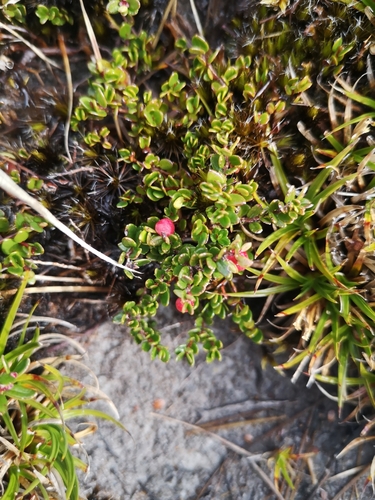
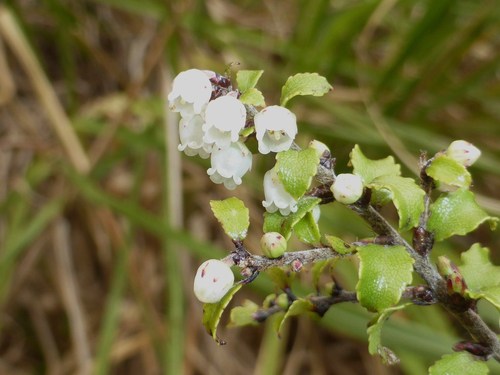
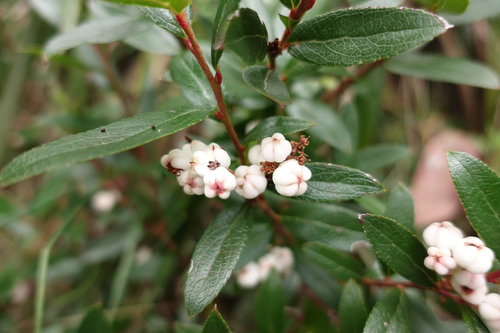
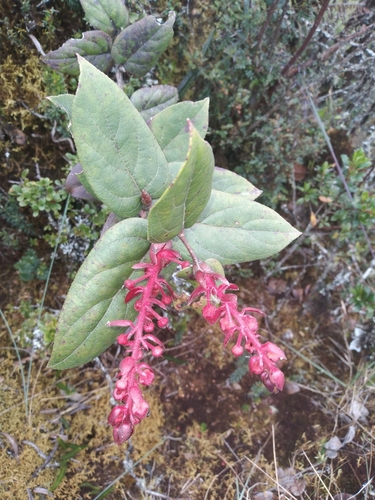
A small sprawling plant. It grows 20 cm high and spreads 1 m wide. The leaves are 2-5 cm long and glossy. They are pointed at the tips. The flowers are pink or greenish-white and have 5 lobes. They are 3-4 mm wide. The fruit are 6 mm across.
Edible Uses
The fruit is spicy and delicious eaten raw or cooked, and grows up to 6mm in diameter.
Traditional Uses
The fruit are eaten raw or cooked. They are spicy. They are also stewed and made into a sauce.
This uses section is brief — help expand it
Medicinal Uses
None known.
Distribution
It is a temperate plant. It does best in sheltered and shady places. It is cold hardy and grows in cool places.
Where It Grows
Canada, North America, USA,
Cultivation
Prefers a moist but not boggy humus rich soil in shade or semi-shade. This species prefers considerable shade. A peat and moisture loving species, it requires a lime-free soil. Closely related to G. humifusa. Reputed to be rather difficult in cultivation, it does not grow well in S. England. The plant can make a good nesting place for mice, these mice then eat the bark of the stems in winter causing die-back. Plants in this genus are notably resistant to honey fungus.
Propagation
Seed requires cold stratification — pre-chill for 4–10 weeks, then surface sow in lime-free compost in a shady part of the greenhouse and keep the compost moist. Germination is usually good, typically within 1–2 months at 20°C, but seedlings are prone to damping off. Water carefully, ensure good ventilation, and watering with a garlic infusion can also help prevent damping off. Prick out seedlings into individual pots when about 25mm tall and grow on in light shade in the greenhouse for at least their first winter. Plant out in late spring or early summer; seedlings are susceptible to spring frosts and may need protection for their first few years outdoors. Note that leaves remain very small for the first few years. Take cuttings of half-ripe wood, 7cm with a heel, in July/August in a shaded frame — rooting is rather slow and typically takes 12 months. Divide in early spring; larger clumps can go directly into permanent positions, but smaller clumps are best potted up and grown on in a cold frame until rooting well, then planted out in spring. Layering in September/October takes 12 months.
Other Uses
A useful ground cover for shady places.
Notes
There are about 170 Gaultheria species.
Also Known As
Salal
References (9)
- Elias, T.S. & Dykeman P.A., 1990, Edible Wild Plants. A North American Field guide. Sterling, New York p 153
- Facciola, S., 1998, Cornucopia 2: a Source Book of Edible Plants. Kampong Publications, p 95
- Glowinski, L., 1999, The Complete Book of Fruit Growing in Australia. Lothian. p 181
- Kermath, B. M., et al, 2014, Food Plants in the Americas: A survey of the domesticated, cultivated and wild plants used for Human food in North, Central and South America and the Caribbean. On line draft. p 384
- MacKinnon, A., et al, 2009, Edible & Medicinal Plants of Canada. Lone Pine. p 118
Show all 9 references Hide references
- Moerman, D. F., 2010, Native American Ethnobotany. Timber Press. p 241
- Plants for a Future database, The Field, Penpol, Lostwithiel, Cornwall, PL22 0NG, UK. http://www.scs.leeds.ac.uk/pfaf/
- Proc. Amer. Acad. Arts 19:85. 1884
- www.desert-tropicals.com