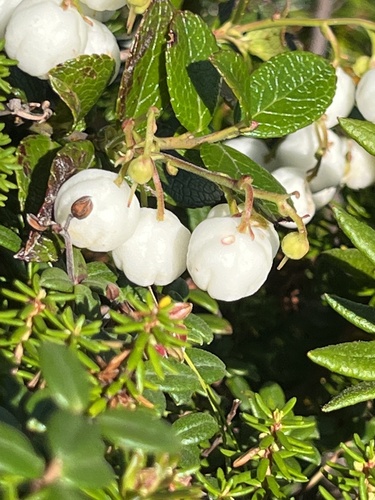
Gaultheria myrsinoides
Kunth
Manzana
iNaturalist· cc-by-nc
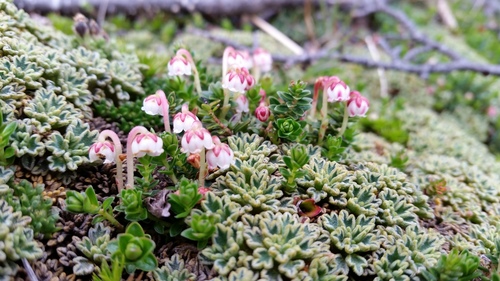
(c) David Monroy R, some rights reserved (CC BY-NC)
iNaturalist· cc-by-nc
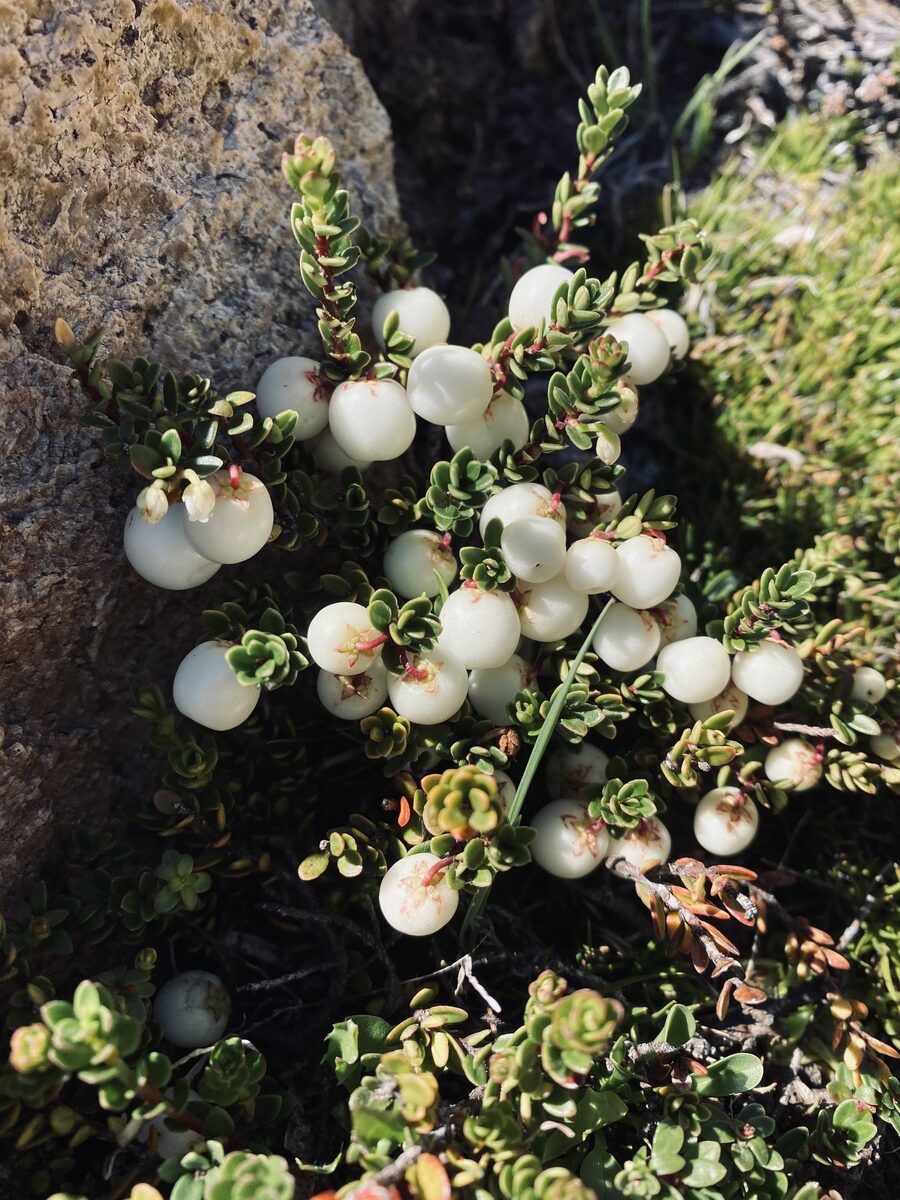
(c) Shelley Silva, some rights reserved (CC BY-NC)
iNaturalist· cc-by-nc-sa
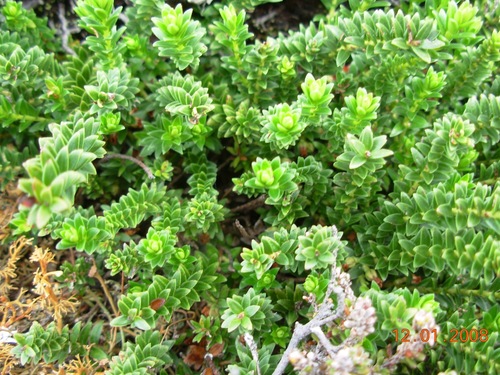
(c) Cristina Sánchez, some rights reserved (CC BY-NC-SA)
Summary
Evergreen shrub reaching 0.2m tall and 0.3m wide. Hardy to UK zone 9. Evergreen with flowers from May to July. Dioecious with insect pollination—both male and female plants needed for seed. Suitable for light sandy or medium loamy soil with mildly to very acid pH. Grows in semi-shade or full sun; prefers moist soil.
Description
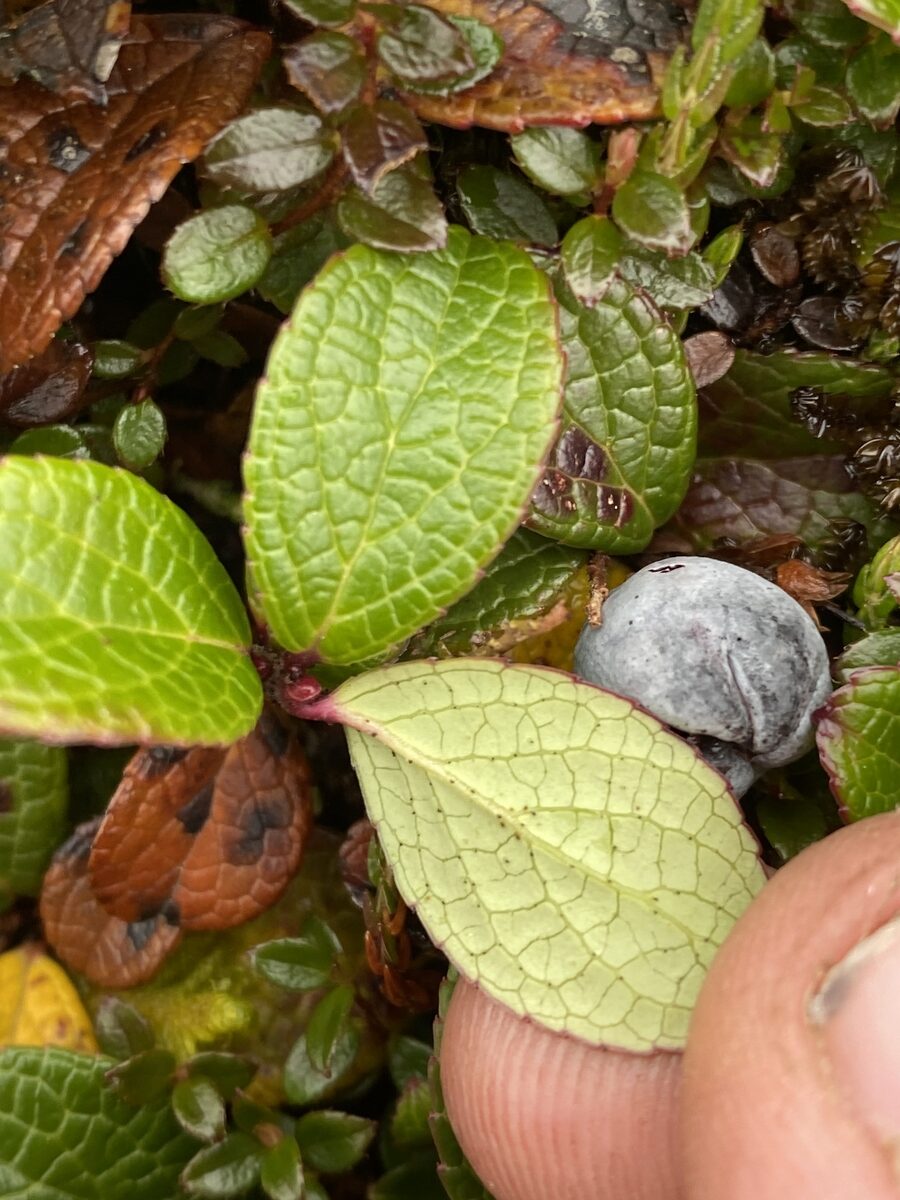
A small creeping shrub. It grows 15 cm high and spreads 45 cm wide. The leaves are very small and have sharp tips. The flowers are white. The fruit is blue-black and 12 mm wide.
Edible Uses
The fruit can be eaten raw or cooked and grows up to 15mm in diameter.
Traditional Uses
The fruit should probably not be eaten in large amounts.
This uses section is brief — help expand it
Medicinal Uses
None known.
Known Hazards
One report says that the fruit is poisonous. This is somewhat surprising in what is normally seen as a toxin-free genus.
Distribution
It is a warm temperate plant. It grows at high altitudes in the tropics. It suits hardiness zones 9-10.
Where It Grows
Andes, Argentina, Australia, Bolivia, Central America, Chile, Colombia, Costa Rica, Ecuador, Honduras, Mexico, Nicaragua, Panama, Peru, South America, Venezuela,
Cultivation
Prefers a cool moist but not boggy humus rich soil in shade or semi-shade. A peat and moisture loving species, it requires a lime-free soil. Prefers a position in full sun, but it also tolerates light shade. This species only tolerates light and short-lived frosts so it is not very hardy in Britain. It can, however, be grown in a sheltered position outdoors in the mildest areas of the country. Some forms have proved to be fairly hardy, surviving even cold winters in southern Britain and producing fruit. There is some confusion over the naming of this species, the reports on the plants uses were listed under Pernettya prostrata and we are not sure that G. myrsinoides is the correct current name for the species. Closely related to G. pumila leucocarpa. This is an interesting plant for the rock garden. Dioecious. Male and female plants must usually be grown if seed is required. This species, however, does not need a male pollinator in order to fruit well. Plants in this genus are notably resistant to honey fungus.
Propagation
Seed requires cold stratification — pre-chill for 4–10 weeks, then surface sow in lime-free compost in a shady part of the greenhouse and keep moist. Germination is usually good, typically within 1–2 months at 20°C, but seedlings are prone to damping off. Water carefully, ensure good ventilation, and consider watering with a garlic infusion to reduce this risk. Prick out seedlings into individual pots when about 25mm tall and grow on in light shade in the greenhouse for at least their first winter. Plant out in late spring or early summer, providing frost protection in the first spring or two outdoors. Take cuttings of half-ripe wood 3–6cm long in July/August in a shaded frame; roots form in late summer or spring with a good success rate. For division, do so in spring just before new growth begins. 'Drop' plants 12 months earlier by digging them up and replanting deeper so that branches are buried and can root — this works best in sandy soil. Pot up divisions and grow on in a lightly shaded greenhouse until established, then plant out in summer. Layering in September/October takes 12 months.
Other Uses
Makes a good ground cover plant for a sunny position or light shade, forming dense thickets. Space plants about 1 metre apart each way.
Notes
There are about 170 Gaultheria species.
Synonyms
References (10)
- Cundall, P., (ed.), 2004, Gardening Australia: flora: the gardener's bible. ABC Books. p 626
- Joyal, E., 1987, Ethnobotanical Field Notes from Ecuador: Camp, Prieto, Jorgensen, and Giler. Economic Botany 41(2): 163-189 (As Pernettya prostrata)
- Kermath, B. M., et al, 2014, Food Plants in the Americas: A survey of the domesticated, cultivated and wild plants used for Human food in North, Central and South America and the Caribbean. On line draft. p 632 (As Pernettya prostrata)
- Kew Plants of the World Online
- Plants for a Future database, The Field, Penpol, Lostwithiel, Cornwall, PL22 0NG, UK. http://www.scs.leeds.ac.uk/pfaf/
Show all 10 references Hide references
- Reis, S. V. and Lipp, F. L., 1982, New Plant Sources for Drugs and Foods from the New York Botanical Garden herbarium. Harvard. p 228 (As Pernettya prostrata var. purpurea)
- Roa, J. A. G. & Boada, D. S. G., 2018, Fundación para el Fortalecimiento de la Fruticultura y Plantas Alimenticias no Convencionales en Colombia. (Also as Pernettya prostrata)
- Segura, S., et al, 2018, The edible fruit species in Mexico. Genet Resour Crop Evol (2018) 65:1767–1793 (As Pernettya prostrata)
- Torre, de la, L., et al, 2008, Enciclopedia de las Plantas Útiles del Ecuador. Herbario QCA. Pontificia Universidad Católica del Ecuador. p 314 (As Pernettya prostrata)
- Van den Eynden, V., et al, 2003, Wild Foods from South Ecuador. Economic Botany 57(4): 576-603 (As Pernettya prostrata)