Menziesia ferruginea
Sm.
False Huckleberry, Rusty menziesia
gbif· cc-by
Royal Botanic Gardens, Kew
gbif· cc-by
Royal Botanic Gardens, Kew
gbif· cc-by
Royal Botanic Gardens, Kew
Description
Menziesia ferruginea is a deciduous Shrub growing to 1.8 m (6ft). See above for USDA hardiness. It is hardy to UK zone 6 and is not frost tender. It is in flower from May to June. The species is hermaphrodite (has both male and female organs). Suitable for: light (sandy) and medium (loamy) soils and prefers well-drained soil. Suitable pH: mildly acid soils and can grow in very acid soils. It can grow in semi-shade (light woodland) or no shade. It prefers moist soil.
Edible Uses
Fruit - fresh or dried. The fruit is about 5 - 7mm in diameter. The nectar has been sucked from the flowers to sweeten the mouth.
Medicinal Uses
Cardiac Poultice Stomachic. The leaves are cardiac. They have been chewed to relieve heart pain and treat stomach problems. A poultice of the heated leaves has been applied to sores and swellings.
Distribution
Western N. America.
Where It Grows
NORTHERN AMERICA: Canada (Yukon (s.?), British Columbia (west)), United States (Alaska (south), Oregon (west), Washington (west), California (north))
Cultivation
Requires a lime-free humus-rich moist soil in sun or light shade. Prefers moderate shade, especially on the roots, but it can also succeed in full sun. Grows well in a woodland garden. Dormant plants are hardy to about -20°c. The young growth in spring is susceptible to damage by late frosts but the plants are otherwise of easy cultivation. Flowers are produced on the previous years wood. Plants in this genus are notably resistant to honey fungus.
Propagation
Seed - best sown in a shady position in a cold frame in the autumn but it can also be sown in late winter. Surface sow and do not allow the compost to become dry. Germination is variable and can take 1 - 2 months at 15°c. Keep the seedlings heavily shaded and prick them out into individual pots when they are 12 months old. Plant them out into their permanent positions in the summer once they are more than 15cm tall. Cuttings of semi-ripe wood, 2 - 5cm with a heel, May/June in a frame. Keep them shaded. The cuttings are very slow to root but usually a good percentage will succeed. Division in early spring just before active growth begins. Layering.
More from Ericaceae
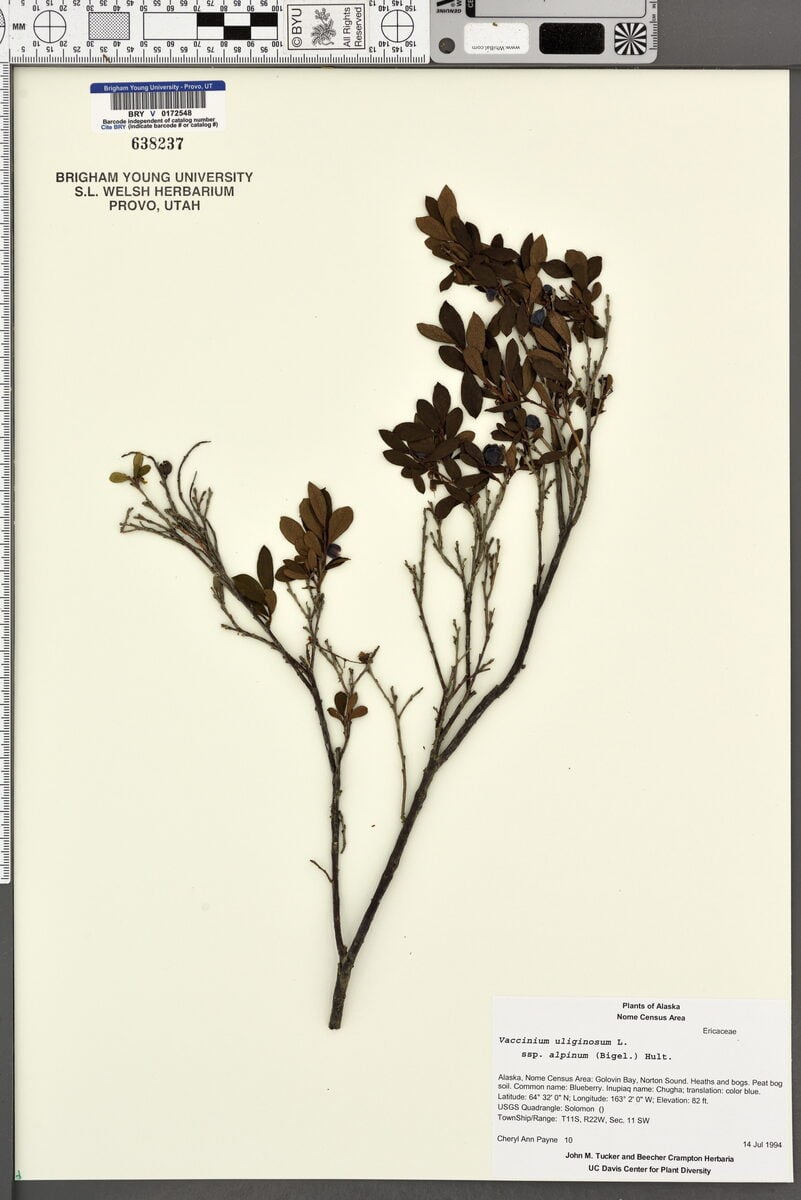
Vaccinium uliginosum subsp. alpinum
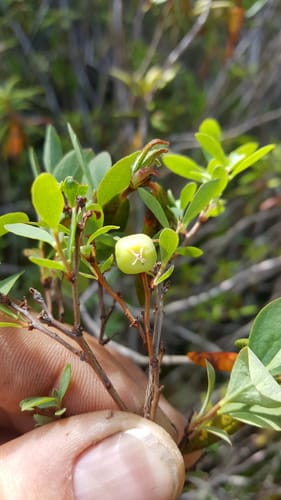
Vaccinium uliginosum var. salicinum
Alpine Blueberry
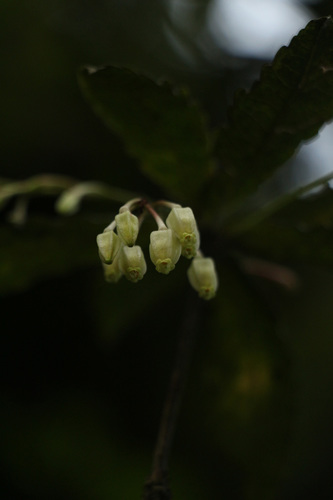
Vaccinium vacciniaceum
Tibetan blueberry
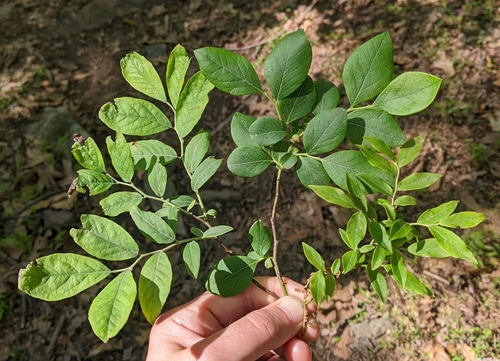
Vaccinium vacillans
Dryland blueberry, Low Blueberry, Late low blueberry
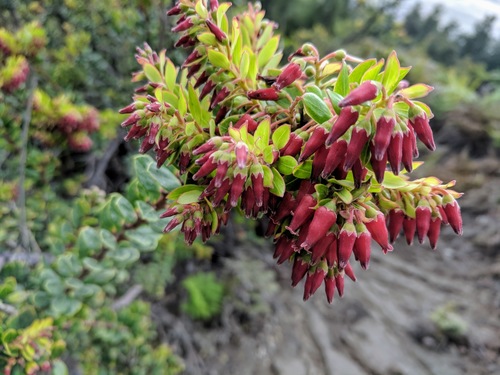
Vaccinium varingiifolium
Javan blueberry
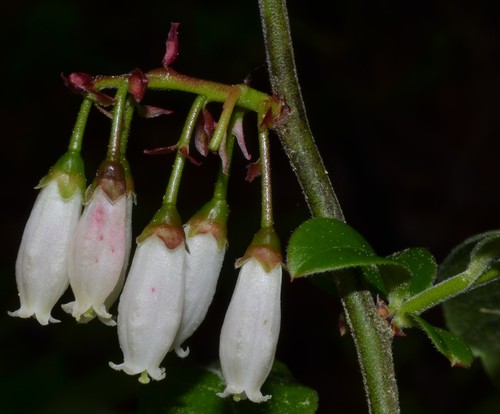
Vaccinium virgatum
Rabbit-eye blueberry, Southern black blueberry