Gaultheria pyroloides
Hook.f. & Thomson
Miquel's Spicy-wintergreen, Miquel berry
iNaturalist· cc-by-nc
(c) wiggs66, some rights reserved (CC BY-NC)
iNaturalist· cc-by-nc
(c) wiggs66, some rights reserved (CC BY-NC)
iNaturalist· cc-by-nc
(c) Matvey Kolesnik, some rights reserved (CC BY-NC), uploaded by Matvey Kolesnik
Summary
Evergreen shrub 30cm tall and wide. Hardy to UK zone 6. Year-round foliage, flowering May–June. Hermaphrodite, insect-pollinated. Suits light sandy and medium loamy soils. Grows in semi-shade, thriving in mildly acid, neutral, and very acid soils. Prefers moist soil.
Description
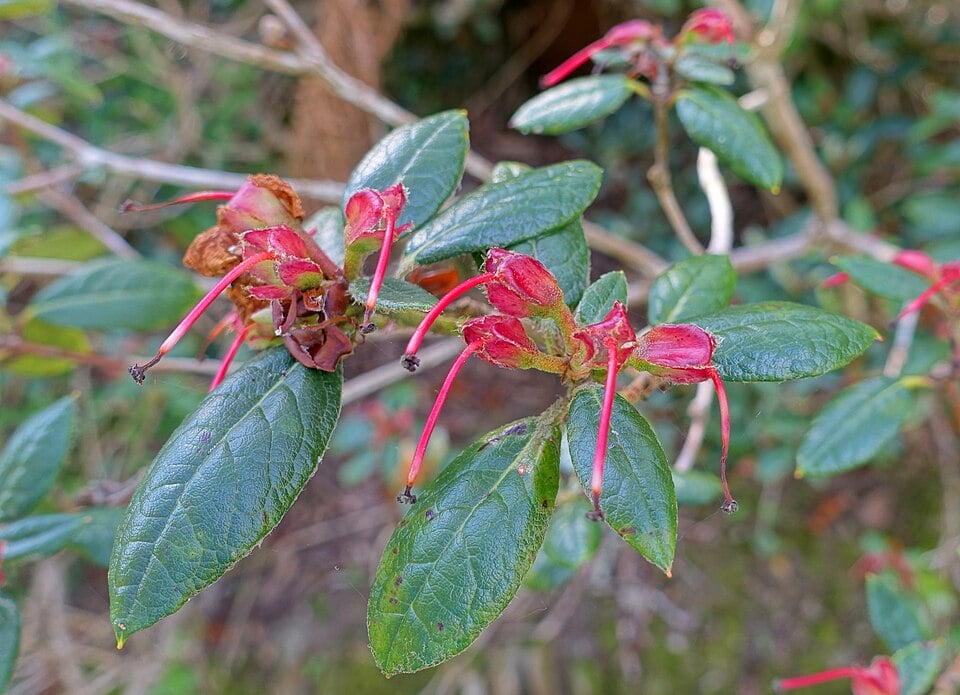
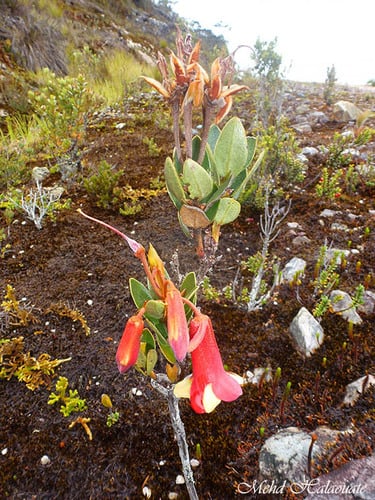
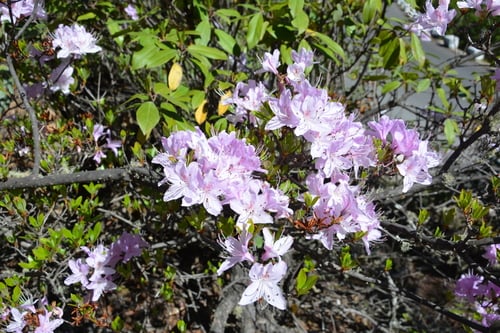
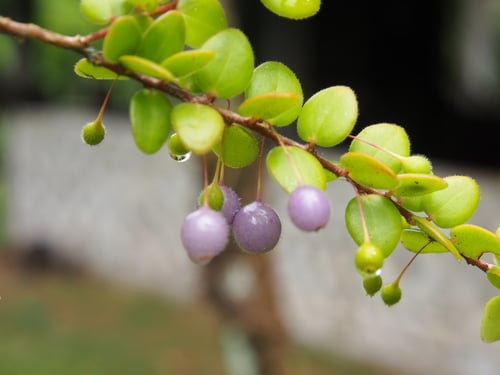
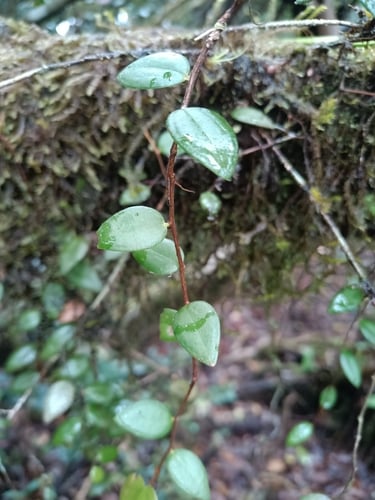
An evergreen shrub. It grows 30 cm high. The leaves are small and rounded. They have pointed tips. The flowers are small and white and in long clusters. The fruit are white or pale pink.
Edible Uses
The fruit has a sweet flavour and can be eaten raw or cooked. It is about 10mm in diameter.
Traditional Uses
The fruit are eaten preserved in sugar.
This uses section is brief — help expand it
Medicinal Uses
None known.
Distribution
It is a temperate plant. It suits hardiness zones 6-9.
Where It Grows
Asia, Britain, Europe, Himalayas, India, Japan*, Myanmar, SE Asia,
Cultivation
Prefers a moist but not boggy humus rich soil in shade or semi-shade. A peat and moisture loving species, it requires a lime-free soil. An easily grown plant, it succeeds in most situations. This species is often confused with G. pyroloides and G. pyroliifolia. It was mistakenly originally included in G. pyroloides though it is in fact quite distinct and is closely related to G. cuneata. Further evidence has shown that the original description of Gaultheria pyroloides refers to the Japanese species, whilst Gaultheria pyroliifolia is a distinct Himalayan species. Gaultheria miqueliana is thus a synonym of G. pyroloides. A very ornamental plant. The flowers are scented. Plants in this genus are notably resistant to honey fungus.
Propagation
Seed requires cold stratification — pre-chill for 4–10 weeks, then surface sow in lime-free compost in a shady part of the greenhouse and keep the compost moist. Germination is usually good, typically within 1–2 months at 20°C, but seedlings are prone to damping off. Water carefully, ensure good ventilation, and watering with a garlic infusion can also help prevent damping off. Prick out seedlings into individual pots when about 25mm tall and grow on in light shade in the greenhouse for at least their first winter. Plant out in late spring or early summer; seedlings are susceptible to spring frosts and may need protection for their first few years outdoors. Leaves remain very small for the first few years. Take cuttings of half-ripe wood 3–6cm long in July/August in a shaded frame; roots form in late summer or spring with a good success rate. Division can be done at almost any time of year but is best in spring just before new growth begins. Larger clumps can go directly into permanent positions, though smaller clumps are best potted up and grown on in a cold frame until rooting well, then planted out in spring.
Other Uses
None known.
Notes
There are about 170 Gaultheria species.
Synonyms
Also Known As
Shiratama-no-ki
References (8)
- Ann. Mus. Bot. Lugduno-Batavum 1:30. 1863
- Bot. Mag. (Tokyo) 32:195. 1918 (As Gaultheria miqueliana)
- Etherington, K., & Imwold, D., (Eds), 2001, Botanica's Trees & Shrubs. The illustrated A-Z of over 8500 trees and shrubs. Random House, Australia. p 343 (As Gaultheria miqueliana)
- Facciola, S., 1998, Cornucopia 2: a Source Book of Edible Plants. Kampong Publications, p 95 (As Gaultheria miqueliana)
- Glowinski, L., 1999, The Complete Book of Fruit Growing in Australia. Lothian. p 181 (As Gaultheria miqueliana)
Show all 8 references Hide references
- Lyle, S., 2006, Discovering fruit and nuts. Land Links. p 221 (As Gaultheria miqueliana)
- Plants for a Future database, The Field, Penpol, Lostwithiel, Cornwall, PL22 0NG, UK. http://www.scs.leeds.ac.uk/pfaf/ (Also as Gaultheria miqueliana)
- Tanaka, (As Gaultheria miqueliana)