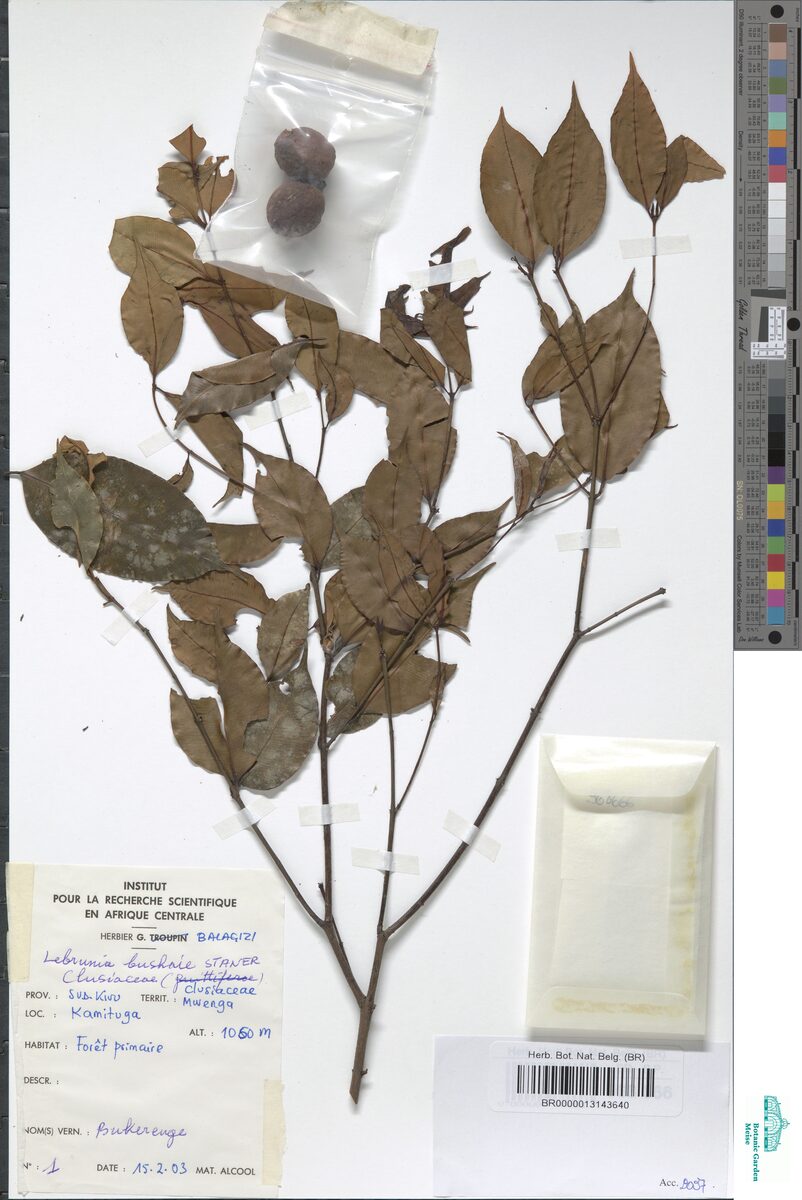
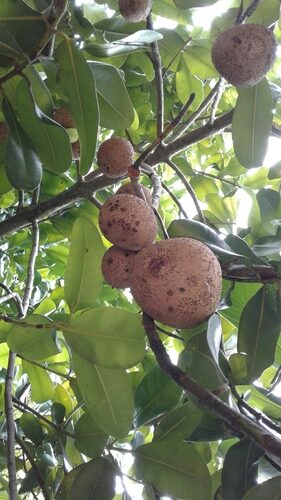
Garcinia xanthochymus
Hook. f. ex T. Anderson
Gamboge, Himalayan garcinia
iNaturalist· cc-by-nc
(c) Geovane Siqueira, some rights reserved (CC BY-NC), uploaded by Geovane Siqueira
iNaturalist· cc-by
(c) jayeshpatil912, some rights reserved (CC BY)
iNaturalist· cc-by-nc-sa
(c) Ahmad Fuad Morad, some rights reserved (CC BY-NC-SA)
Summary
Source: WikipediaGarcinia xanthochymus, the false mangosteen, gamboge, yellow mangosteen, Himalayan Garcinia, or sour mangosteen is a species of mangosteens found from India, southern China, and Japan through Indochina to Peninsular Malaysia at elevations of 0 - 1400 meters. Plants are found growing in humid forests of valleys or on hills. It is locally known as defol (ডেফল) in Bengal, tepor tenga (টেপৰ টেঙা) in Assam, and heirangoi (হৈরাংগোই) in Manipur.
Description
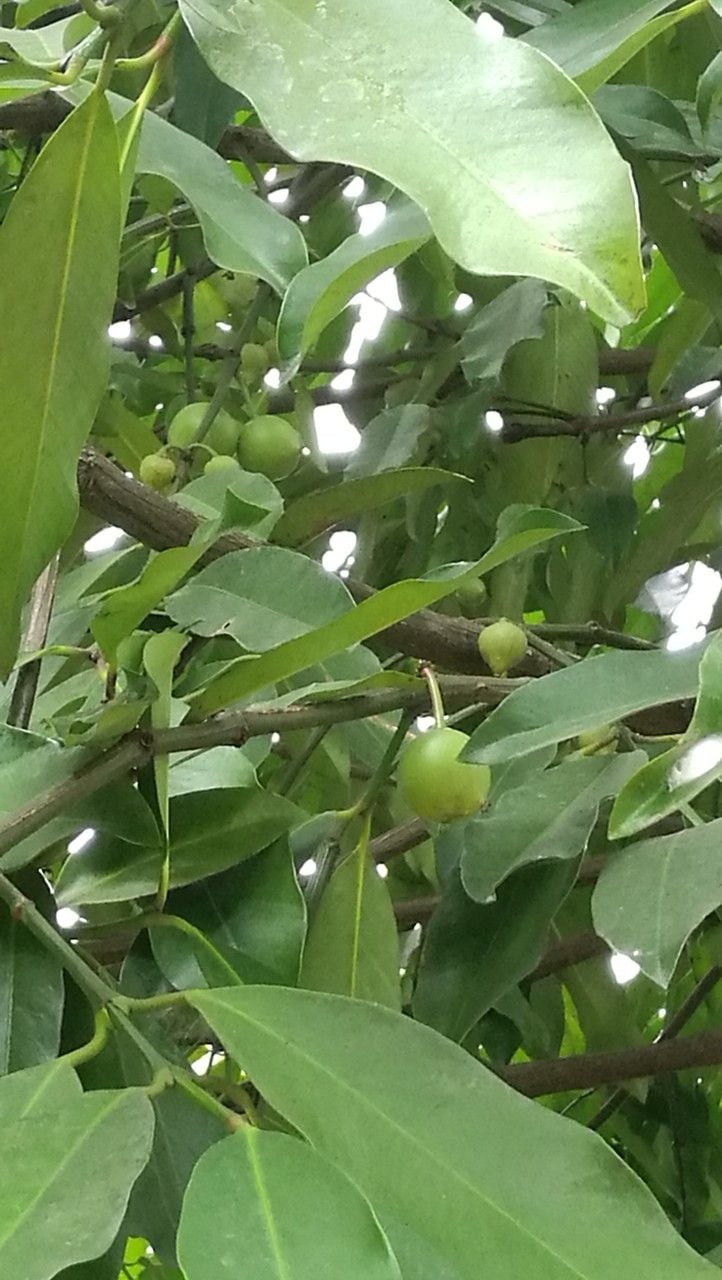
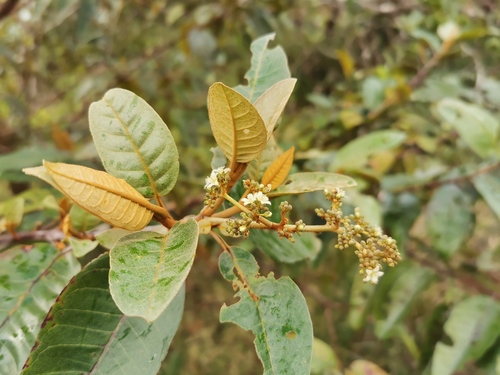
A tree. It grows 8-15 m tall. The trunk is short and straight. The trunk is 40-50 cm thick. The crown is dense and shaped like a pyramid. The bark is grey-brown. The latex is white and sticky. The branches and leaves often droop. The twigs are angular. The leaves are large. They are 12-24 cm long by 4-7 cm wide. They are shiny above and rough underneath. They are pale green when young. The leaf stalk is 1-2.5 cm long. The male and female flowers are separate. The flowers occur in tufts of 4-10. These are white and about 1 cm across. The fruit is a golden yellow berry. They are 6-9 cm across. The skin is smooth and pale orange to dark yellow. The pulp is yellow, juicy and acidic. It usually contains 1-5 seeds. These are brown and 2.5 cm long.
Edible Uses
The fruit can be eaten raw or cooked, though it is rather sour. It has an aromatic, pleasantly acid taste and is mainly used as a breakfast fruit. It can be enjoyed fresh, used in sherbets, jams, curries, and vinegars, or as a flavouring in other foods, and is a rich source of citric acid. The mature berry is yellow, globose or ovoid, sometimes oblique, and 3–5cm in diameter.
Traditional Uses
The ripe fruit can be eaten raw. They are acidic and are often cooked with other vegetables. The fruit can be used for making jams, curries, and vinegar. It can be used as a substitute for tamarind in cooking. The fruit can be eaten roasted or boiling.
Medicinal Uses
None known.
Distribution
A tropical plant. It suits the hot humid tropical lowlands. It grows in dense humid forests of valleys or on hills; (100-(600)-1000(-1400) m altitude in China. It grows in seasonal rainforest and monsoonal rainforest. It suits humid locations. The tree will grow in cooler regions but fruit are not produced. It can tolerate shade and grow in poor soils including a high pH. It suits hardiness zones 11-12. In the Cairns Botanical Gardens. In XTBG Yunnan.
Where It Grows
Africa, Andamans, Asia, Australia, Bangladesh, Bhutan, Brazil, Cambodia, Cameroon, Central Africa, China, Cook Islands, Cuba, East Africa, Fiji, Ghana, Hawaii, Himalayas, India*, Indochina, Indonesia, Japan, Laos, Madagascar, Malaysia, Myanmar, Nepal, Northeastern India, Pacific, Philippines, Pohnpei, Rotuma, SE Asia, Sikkim, Singapore, South America, Sri Lanka, Taiwan, Thailand, USA, Vietnam, West Africa, West Indies, Zambia,
Cultivation
It grows best in areas where annual daytime temperatures are within the range 22 - 28°c, but can tolerate 16 - 36°c. Plants are tolerant of occasional light frosts. It prefers a mean annual rainfall in the range 1,500 - 2,000mm, but tolerates 1,200 - 2,500mm. Tolerant of shade. Succeeds in most well-drained soils including poor soils and soils with a high pH. Prefers a pH in the range 6 - 7.5, tolerating 5.5 - 8. Seedling trees can commence fruit production when 7 - 8 years old. Flowering usually occurs after a spell of pronounced dry weather and can occur twice a year.
Propagation
No specific propagation information is available for this species. Seed of most members of the genus can be slow to germinate even when sown fresh, often taking 6 months or more.
Other Uses
The seeds yield up to 17% oil. The fruit juice is used as a dye. Gamboge, a gum-resin obtained from the plant, is used as a yellow dye, as an illuminant, and in varnishes and watercolours. It is commonly used to dye the robes of Buddhist priests. Young plants are used as rootstocks for mangosteen, Garcinia mangostana.
Production
Fruit are produced after 7-8 years. Fruit matures in 120-150 days. In NE India fruit are available May to July. In southern India February to May.
Other Information
It is a cultivated food plant.
Notes
There are about 300 Garcinia species.
Synonyms
Also Known As
Asam gelugur, Asam kandis, Chakhasa, Chiuri, Cochin-goraka, Da ye teng huang, Dampal, Daungyan, Dawyan-ban, Dem-gola, Dephal, Demphal, Dharamba, Dieng-soh-rynsan, Dongbei, False mangosteen, Gavei, Guomanda, Heirangkhoi, Hmandaw, Hong Phap, Jevra memadie, Jharamb, Jhrambi, Mada-luang, Mada, Madaw, Mysore gamboge, Ota, Pinar, Pohon manggis asam, Sitambu, Suagke, Tamal, Tamala, Tempwr, Tepor tenga, Thesampreng, Tinctoria, Tuai-ha-bet, Yellow mangosteen
References (72)
- Abbiw, D.K., 1990, Useful Plants of Ghana. West African uses of wild and cultivated plants. Intermediate Technology Publications and the Royal Botanic Gardens, Kew. p 46
- Altschul, S.V.R., 1973, Drugs and Foods from Little-known Plants. Notes in Harvard University Herbaria. Harvard Univ. Press. Massachusetts. no. 2873
- Ambasta, S.P. (Ed.), 2000, The Useful Plants of India. CSIR India. p 231
- Arora, K., Indigenous Forest Management in the Andaman and Nicobar Islands, India.
- Arora, R. K., 2014, Diversity in Underutilized Plant Species - An Asia-Pacific Perspective. Bioversity International. p 73 (As Garcinia tinctoria)
Show all 72 references Hide references
- Baishya, S. Kr., et al, 2013, Survey of Wild Edible Fruits of Dhubri District, Assam, India. Plant Archives Vol 13 (1): 155-158
- BARC, 2016, State of Biodiversity for Food and Agriculture in Bangladesh. Bangladesh Agricultural Research Council.
- Barwick, M., 2004, Tropical and Subtropical Trees. A Worldwide Encyclopedic Guide. Thames and Hudson p 196
- Brahma, S., et al, 2013, Wild edible fruits of Kokrajhar district of Assam, North-East India, Asian Journal of Plant Science and Research 3(6):95-100
- Burkill, I.H., 1966, A Dictionary of the Economic Products of the Malay Peninsula. Ministry of Agriculture and Cooperatives, Kuala Lumpur, Malaysia. Vol 1 (A-H) p 1074
- Chandrashekara, U. M., 2009, Tree species yielding edible fruit in the coffee-based homegardens of Kerala, India: their diversity, uses and management. Food Sec. 1:361-370
- Coronel, R.E., 1982, Fruit Collections in the Philippines. IBPGR Newsletter p 7
- Darley, J.J., 1993, Know and Enjoy Tropical Fruit. P & S Publishers. p 45
- Dobriyal, M. J. R. & Dobriyal, R., 2014, Non Wood Forest Produce an Option for Ethnic Food and Nutritional Security in India. Int. J. of Usuf. Mngt. 15(1):17-37
- Etherington, K., & Imwold, D., (Eds), 2001, Botanica's Trees & Shrubs. The illustrated A-Z of over 8500 trees and shrubs. Random House, Australia. p 341
- Facciola, S., 1998, Cornucopia 2: a Source Book of Edible Plants. Kampong Publications, p 79 (As Garcinia pictorius)
- Flora of China. www.eFloras.org
- Fl. Brit. India 1:269. 1874
- Forest Inventory and Planning Institute, 1996, Vietnam Forest Trees. Agriculture Publishing House p 101 (As Garcinia tinctoria)
- Fowler, D. G., 2007, Zambian Plants: Their Vernacular Names and Uses. Kew. p 79
- Gardner, S., et al, 2000, A Field Guide to Forest Trees of Northern Thailand, Kobfai Publishing Project. p 50
- Hazarika, B. et al. (2020). An overview of the unexplored underutilized fruit crops of Assam, India. Journal of Applied and Natural Science, 12(3): 442 - 453.
- Hazarika, B. et al. (2020). An overview of the unexplored underutilized fruit crops of Assam, India. Journal of Applied and Natural Science, 12(3): 442 - 453
- Hearne, D.A., & Rance, S.J., 1975, Trees for Darwin and Northern Australia. AGPS, Canberra p 72, Pl 20
- Hedrick, U.P., 1919, (Ed.), Sturtevant's edible plants of the world. p 325
- Hibbert, M., 2002, The Aussie Plant Finder 2002, Florilegium. p 108
- http://www.ntbg.org/plants/plant details.php
- Hu, Shiu-ying, 2005, Food Plants of China. The Chinese University Press. p 560
- Jadhav, R., et al, 2015, Forest Foods of Northern Western Ghats: Mode of Consumption, Nutrition and Availability. Asian Agri-History Vol. 19, No. 4: 293-317
- Jardin, C., 1970, List of Foods Used In Africa, FAO Nutrition Information Document Series No 2.p 139
- Jeeva, S., 2009, Horticultural potential of wild edible fruits used by the Khasi tribes of Meghalaya. Journal or Horticulture and Forestry Vol. 1(9) pp. 182-192 (Also as Garcinia tinctoria)
- John, L., & Stevenson, V., 1979, The Complete Book of Fruit. Angus & Robertson p 187
- Kar, A., et al, 2013, Wild Edible Plant Resources used by the Mizos of Mizoram, India. Kathmandu University Journal of Science, Engineering and Technology. Vol. 9, No. 1, July, 2013, 106-126
- Li Xi-wen & Li Jie; Peter F. Stevens, Clusiaceae [Draft], Flora of China
- Lorenzi, H., Bacher, L., Lacerda, M. & Sartori, S., 2006, Brazilian Fruits & Cultivated Exotics. Sao Paulo, Instituto Plantarum de Estuados da Flora Ltda. p 379
- Luo, B., et al, 2019, Wild edible plants collected by Hani from terraced rice paddy agroecosystem in Honghe Prefecture, Yunnan, China. Journal of Ethnobiology and Ethnomedicine 15:56
- Macmillan, H.F. (Revised Barlow, H.S., et al) 1991, Tropical Planting and Gardening. Sixth edition. Malayan Nature Society. Kuala Lumpur. p 301
- Majumdar, K and Datta, N., 2009, Traditional wild edible fruits for the forest dwellers of Tripura, India. Pleione 3(2) 167-178
- Martin, F. W., et al, 1987, Perennial Edible Fruits of the Tropics. USDA Handbook 642 p 30 (As Garcinia tinctoria)
- Meitei, L. R., et al, 2022, An ethnobotanical study on the wild edible plants used by forest dwellers in Yangoupokpi Lokchao Wildlife Sanctuary, Manipur, India. Ethnobotany Research and Application 23:15
- Miguel, E., et al, 1989, A checklist of the cultivated plants of Cuba. Kulturpflanze 37. 1989, 211-357 (As Garcinia tinctoria)
- Misra S. & Misra M., 2016, Ethnobotanical and Nutritional Evaluation of Some Edible Fruit Plants of Southern Odisha, India. International Journal of Advances in Agricultural Science and Technology, Vol.3 Issue.1, March- 2016, pg. 1-30
- Mozhui, R., et al, 2011, Wild edible fruits used by the tribals of Dimapur district of Nagaland, India. Pleione 5(1): 56 - 64.
- Pasha, M. K. & Uddin, S. B., 2019, Minor Edible Fruits of Bangladesh. Bangladesh J. Plant Taxon. 26(2): 299–313
- Patiri, B. & Borah, A., 2007, Wild Edible Plants of Assam. Geethaki Publishers. p 12
- Pham-Hoang Ho, 1999, An Illustrated Flora of Vietnam. Nha Xuat Ban Tre. p 457. p 451 (As Garcinia tinctoria)
- Phangchopi, U., et al, 2015, Diversity of wild edible plants in Marat Longri Wildlife Sanctuary, Assam. Indian Journal of Natural Products and Resources Vol. 6(4), December 2015 pp. 305-313
- Pl. Coromandel 2:51, t. 196. 1798 - non Garcinia pictoria Roxb. (1832) (As Xanthochymus pictorius)
- PROSEA (Plant Resources of South East Asia) handbook, Volume 2, 1991, Edible fruits and nut. p 175
- Purseglove, J.W., 1968, Tropical Crops Dicotyledons, Longmans. p 634
- Ravikrishna, S., 2011, Ethno-medico-botanical survey on Wild Edible fruits of Udupi Taluq, Udupi p 78
- Recher, P, 2001, Fruit Spirit Botanical Gardens Plant Index. www.nrg.com.au/~recher/ seedlist.html p 2
- Sarma, H., et al, 2010, Updated Estimates of Wild Edible and Threatened Plants of Assam: A Meta-analysis. International Journal of Botany 6(4): 414-423
- Savita, et al, 2006, Studies on wild edible plants of ethnic people in east Sikkim. Asian J. of Bio Sci. (2006) Vol. 1 No. 2 : 117-125 (As Garcinia tinctoria)
- Sawian, J. T., et al, 2007, Wild edible plants of Meghalaya, North-east India. Natural Product Radiance Vol. 6(5): p 417 (As Garcinia tinctoria)
- Seidemann J., 2005, World Spice Plants. Economic Usage, Botany, Taxonomy. Springer. p 162
- SHORTT (As Xanthochymus pictorius)
- Singh, H.B., Arora R.K.,1978, Wild edible Plants of India. Indian Council of Agricultural Research, New Delhi. p 61, 76 (As Garcinia tinctoria)
- Smith, A.C., 1981, Flora Vitiensis Nova, Lawaii, Kuai, Hawaii, Volume 2 p 347
- Sukarya, D. G., (Ed.) 2013, 3,500 Plant Species of the Botanic Gardens of Indonesia. LIPI p 302
- Suwardi, A. B., et al, 2020, Wild edible fruits generate substantial income for local people of the Gunung Leuser National Park, Aceh Tamiang Region. Ethnobotany Research & Applications 20:11
- Suwardi, A. B., et al, 2020, Ethnobotany and conservation of indigenous edible fruit plants in South Aceh, Indonesia. Biodiversitas Vol. 21, No. 5, pp 1850-1860
- Thitiprasert, W., et al, 2007, Country report on the State of Plant Genetic Resources for Food and Agriculture in Thailand (1997-2004). FAO p 95
- Tyagi, R. K., et al, 2004, Conservation of Spices Germplasm in India. Indian J. Plant Genet. Resour. 17(3): 163-174
- Uji, T., 2007, Keanekaragaman, Persebaran dan Potensi Jenis-jenis Garcinia. Berk. Penel. Hayati: 12 (129–135), 2007
- U.S.D.A. Bur. Pl. Industr. Bull. 137:50. 1909 (As Garcinia tinctoria)
- USDA, ARS, National Genetic Resources Program. Germplasm Resources Information Network - (GRIN). [Online Database] National Germplasm Resources Laboratory, Beltsville, Maryland. Available: www.ars-grin.gov/cgi-bin/npgs/html/econ.pl (10 April 2000)
- Vivien, J., & Faure, J.J., 1996, Fruitiers Sauvages d'Afrique. Especes du Cameroun. CTA p 131
- WATT,
- Wiersema, J. H. & Leon, B., 2013, World Economic Plants. A Standard Reference CRC Press. 2nd Ed. p 317
- World Checklist of Useful Plant Species 2020. Royal Botanic Gardens, Kew
- Zeven, A. C. & de West, J. M. J., 1982, Dictionary of cultivated plants and their regions of diversity. Wageningen. p 56