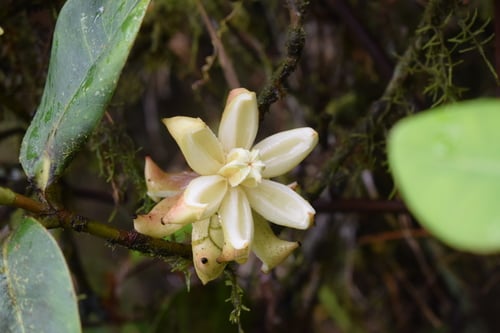
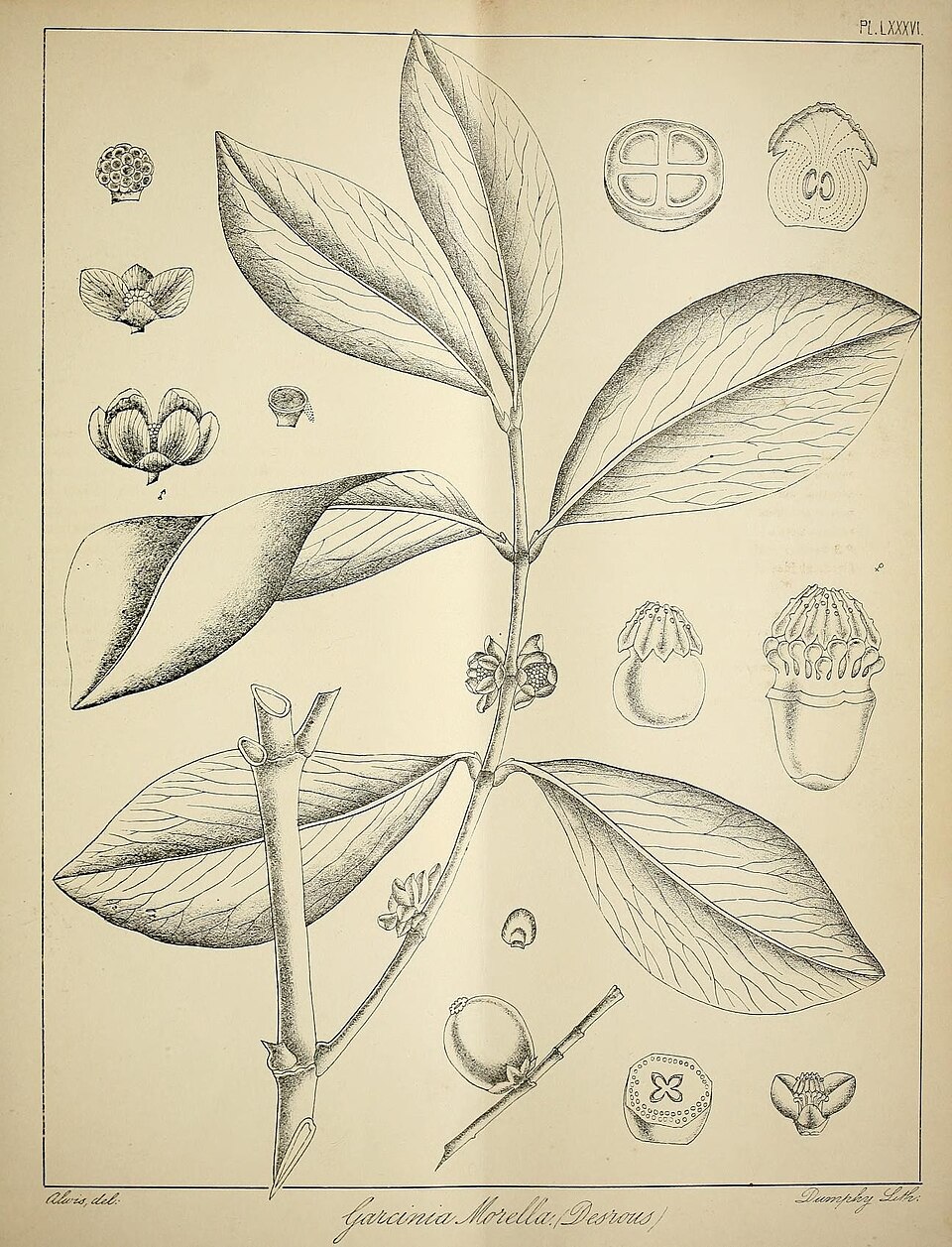
Garcinia gerrardii
Harv. ex Sim
Forest mangosteen, Forest garcinia
iNaturalist· cc-by-nc
(c) Troos van der Merwe, some rights reserved (CC BY-NC), uploaded by Troos van der Merwe
iNaturalist· cc-by-nc
(c) magdastlucia, some rights reserved (CC BY-NC)
iNaturalist· cc-by-nc
(c) magdastlucia, some rights reserved (CC BY-NC)
Description
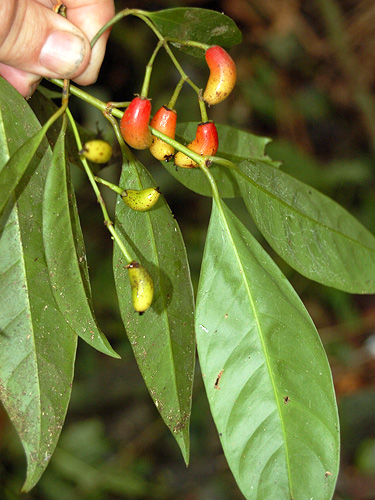
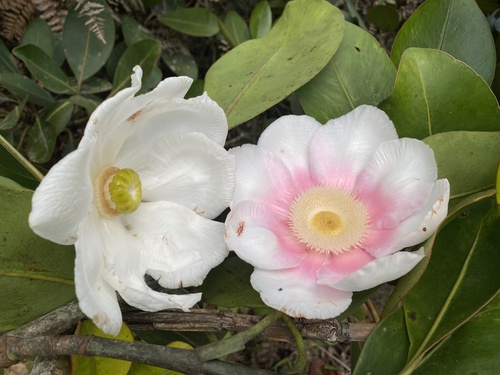
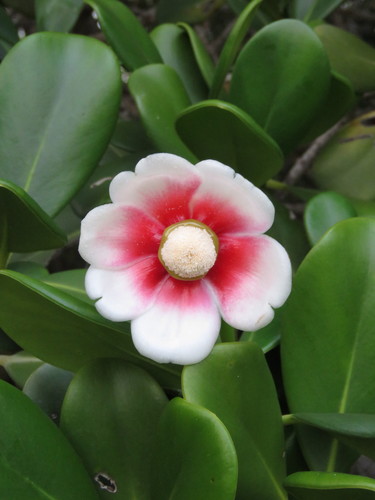
A medium sized tree. It grows to 13 m high but may grow higher in tropical places. The crown is glossy green. The branches and twigs have grooves. The sap is brownish yellow and sticky. The leaves are simple and opposite. They are leathery. They are 2.5-13 cm long by 1.3-6 cm wide. They are egg shaped. The tip is pointed. The edges of the leaves often roll inwards. The leaves are dark glossy green on top and paler underneath. The flowers are male and female on separate trees. They occur in bunches at the ends of branches. The flowers have 4 white petals and sepals which are green with brown marks. The fruit is a round berry 2.5 cm long. It is orange when ripe and edible.
Edible Uses
The orange berries are eaten raw and used to make alcoholic drinks.
Traditional Uses
The fruit are eaten raw. They are also used for alcoholic drinks. Caution: Alcohol is a cause of cancer.
This uses section is brief — help expand it
Known Hazards
Alcoholic beverages made from the fruit are a cause of cancer.
Distribution
A subtropical plant. It grows in forests and at the edges of forests from sea level to 600 m altitude.
Where It Grows
Africa, East Africa, Eswatini, Malawi, Mozambique, South Africa, Southern Africa, Swaziland,
Notes
There are about 300 Garcinia species.
Synonyms
Also Known As
Sikhelamfene
References (9)
- Forest fl. Cape 141, t. 13. 14 May 1907
- Fox, F. W. & Young, M. E. N., 1982, Food from the Veld. Delta Books. p 156
- Jardin, C., 1970, List of Foods Used In Africa, FAO Nutrition Information Document Series No 2.p 139 (As Garcinia natalensis)
- Palgrave, K.C., 1996, Trees of Southern Africa. Struik Publishers. p 613
- Palmer, E and Pitman, N., 1972, Trees of Southern Africa. Vol. 3. A.A. Balkema, Cape Town p 1517
Show all 9 references Hide references
- Peters, C. R., O'Brien, E. M., and Drummond, R.B., 1992, Edible Wild plants of Sub-saharan Africa. Kew. p 83
- Ruiters-Welcome, A. K., 2019, Food plants of southern Africa. Ph.D. thesis. Univ. of Johannesburg p 44
- Swaziland's Flora Database http://www.sntc.org.sz/flora
- Welcome, A. K. & Van Wyk, B.-E., 2019, An inventory and analysis of the food plants of southern Africa. South African Journal of Botany 122 (2019) 136–179