Aletris farinosa
L.
Unicorn root, Blazing Star, Star Grass, Ague-root, Colic-root, Crow-corn
iNaturalist· cc-by-nc-sa
(c) Tom Potterfield, some rights reserved (CC BY-NC-SA)
iNaturalist· cc-by-nc-sa
(c) BlueRidgeKitties, some rights reserved (CC BY-NC-SA)
iNaturalist· cc-by-sa
(c) Douglas Goldman, some rights reserved (CC BY-SA), uploaded by Douglas Goldman
Summary
Source: WikipediaAletris farinosa, called the unicorn root, true unicorn, crow-corn, white colic-root or white stargrass, is a plant species found across much of the eastern United States. It has also been reported from the southern part of Ontario, Canada. It is known from every state east of the Mississippi River except Vermont, as well as Texas, Oklahoma, Arkansas and Louisiana. Its native habitats include moist peaty, sandy or gravelly areas. Aletris farinosa is a perennial herb spreading by means of underground rhizomes and forming rosettes of leaves. Leaves are narrow, up to 20 cm long, bright yellowish-green. Flowering stalks can be as much as 100 cm tall. Flowers are white, up to 10 mm long. Fruit is a dry capsule tapering at the tip.
Description
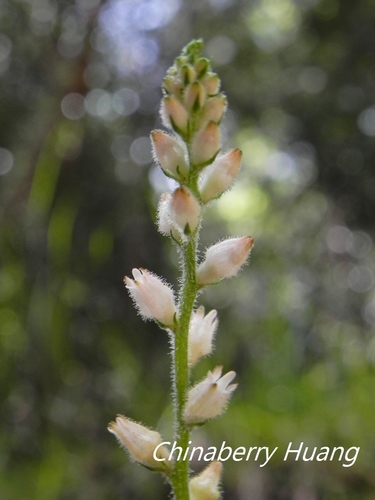
A perennial plant which grows up to 60 cm high and 15 cm across. The leaves are narrow and sword shaped. The rootstock is horizontal and thick and fibrous. The flowers are white and bell shaped. They occur as several together in a spike at the top of the plant. The fruit are oval capsules.
Edible Uses
The root (bulb) can be cooked but is intensely bitter with a bitter-sweet, soapy taste.
Traditional Uses
The bulb is eaten cooked and has a bitter taste. It needs to be dried first.
This uses section is brief — help expand it
Medicinal Uses
Unicorn root's greatest value lies in its tonic effect on the female reproductive organs, particularly in cases of habitual miscarriage. It is used for gynaecological complaints including dysmenorrhoea, amenorrhoea and prolapsed vagina. It also stimulates the appetite and is used to treat diarrhoea, rheumatism and jaundice. The root is bitter, diuretic, narcotic and tonic. Only the dried rootstock should be used — in large doses the fresh root is narcotic, emetic and cathartic. A decoction of the root serves as a bitter tonic for expelling flatulence and treating uterine disorders. It is used for colic, though small doses, especially of the fresh root, can themselves provoke hypogastric colic. The root is harvested in late summer after flowering and dried for later use. It contains diosgenin, which has both anti-inflammatory and oestrogenic properties. A tea made from the leaves has been used to treat colic, stomach disorders, dysentery and bloody dysentery.
Known Hazards
The fresh root is mildly poisonous causing abdominal discomfort (hypogastric). May lead to colic, diarrhoea and vomiting. As used to treat amenorrhoea avoid during pregnancy.
Distribution
It grows naturally in South-eastern North America especially on sands and gravels near the seashore. It prefers a damp sunny position with leaf mould. Plants are hardy to -15°C.
Where It Grows
Australia, Europe, France, Germany, Netherlands, North America*, USA,
Cultivation
Plants can be grown from seed or by division of the clump.
Propagation
No specific germination details are available for this species, but sowing seed thinly in a greenhouse in early spring is recommended. Thin sowing allows seedlings to remain in their original containers for the first year; feed periodically with a liquid fertiliser to prevent nutrient deficiency. The following spring, prick young plants into individual pots and grow them on under glass for another winter before planting out into permanent positions in early summer. Division can also be carried out in spring.
Other Uses
None known Special Uses
Notes
There are 10-21 Aletris species. It is used in medicine. They are also put in the family Haeodoraceae and Melanthiaceae.
Synonyms
References (6)
- Beckstrom-Sternberg, Stephen M., and James A. Duke. "The Foodplant Database." http://probe.nalusda.gov:8300/cgi-bin/browse/foodplantdb.(ACEDB version 4.0 - data version July 1994)
- Bodkin, F., 1991, Encyclopedia Botanica. Cornstalk publishing, p 64
- Hedrick, U.P., 1919, (Ed.), Sturtevant's edible plants of the world. p 32
- Heywood, V.H., Brummitt, R.K., Culham, A., and Seberg, O., 2007, Flowering Plant Families of the World. Royal Botanical Gardens, Kew. p 383 (Family)
- Plants for a Future database, The Field, Penpol, Lostwithiel, Cornwall, PL22 0NG, UK. http://www.scs.leeds.ac.uk/pfaf/
Show all 6 references Hide references
- Sp. pl. 1:319. 1753