Galium verum
L.
Lady’s Bedstraw, Yellow bedstraw, Yellow cleavers
iNaturalist· cc-by-nc-sa
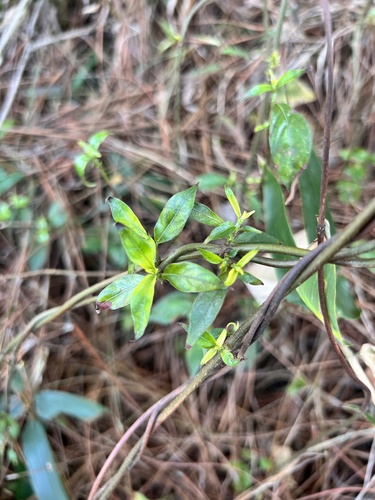
(c) Pekka Malinen, some rights reserved (CC BY-NC-SA), uploaded by Pekka Malinen
iNaturalist· cc-by-nc
(c) florisb, some rights reserved (CC BY-NC)
iNaturalist· cc-by-nc
(c) Vitalii Kolomiichuk, some rights reserved (CC BY-NC), uploaded by Vitalii Kolomiichuk
Summary
Source: WikipediaGalium verum (lady's bedstraw or yellow bedstraw) is a herbaceous perennial flowering plant in the family Rubiaceae. It is widespread across most of Europe, North Africa, and temperate Asia from Israel, Lebanon and Turkey to Japan and Kamchatka. It is naturalized in Tasmania, New Zealand, Canada, and the northern half of the United States. Galium verum is an upright plant, with stiff stems growing to 15–120 centimetres (5.9–47.2 in) tall. The leaves are 1–3 cm (0.39–1.18 in) long and 2 millimetres (0.079 in) broad, shiny dark green, hairy underneath, borne in whorls of 8–12. The flowers are 2–3 mm (0.079–0.118 in) in diameter, yellow, and produced in dense clusters. This species is sometimes confused with Galium odoratum, a species with traditional culinary uses.
Description
A herb or small plant. It grows 0.9-1.2 m tall and spreads 0.9 m wide. It keeps growing from year to year and forms clumps. The stems are square and can become woody near the base. The leaves are small and narrow. They are 30 mm long. They occur in rings of 6 to 8 and have rough edges. These are rolled under and have bristles at the tips. The flowers occur in dense spikes. They are star shaped and yellow.
Edible Uses
The leaves can be eaten raw or cooked. A yellow dye extracted from the flowering stems is used as a food colouring. The roasted seed makes a coffee substitute, and the seed is also said to be edible on its own. The chopped plant can be used as a rennet substitute to coagulate plant milks. The flowering tops are distilled in water to make a refreshing, acidic beverage.
Traditional Uses
The seeds are used as a coffee substitute. The yellow colouring was used for colouring cheese and butter. The flowering tops are used to curdle milk for cheese and yoghurt. The flowering tops in water are used as a drink.
Medicinal Uses
Lady's bedstraw has a long history of herbal use, though it features little in modern medicine. Its main applications are as a diuretic and treatment for skin complaints. The leaves, stems, and flowering shoots are antispasmodic, astringent, diuretic, lithontripic, and vulnerary, and the plant is also used for foot care. It is used as a remedy for gravel, kidney stones, and urinary disorders, and is believed to help with epilepsy. A powder made from the fresh plant soothes reddened skin and reduces inflammation, and the plant is used as a poultice on cuts, skin infections, and slow-healing wounds. It is harvested as it comes into flower and dried for later use. Both Asperuloside (a terpenoid) and Coumarin (a benzopyrone) occur in some species of Galium. Asperuloside can be converted into prostaglandins, which stimulate the uterus and affect blood vessels, making the genus of significant interest to the pharmaceutical industry.
Distribution
It is a temperate plant. It grows in open woodland and grassland. Hobart Botanical Gardens. It suits hardiness zones 2-10. Tasmania Herbarium.
Where It Grows
Afghanistan, Africa, Albania, Argentina, Asia, Australia, Austria, Balkans, Belgium, Bosnia, Britain, Bulgaria, Canada, Central Asia, China, Czech Republic, Europe, France, Hungary, Iceland, India, Iran, Iraq, Ireland, Japan, Kazakhstan, Korea, Kyrgyzstan, Lithuania, Luxembourg, Mediterranean, Middle East, Moldova, Mongolia, New Zealand, North Africa, North America, Norway, Pakistan, Romania, Russia, Scandinavia, Slovenia, South America, Spain, Tajikistan, Tasmania, Tibet, Turkey, Türkiye, Turkmenistan, USA, Uzbekistan,
Cultivation
Prefers a loose moist leafy soil in some shade, but it tolerates a position in full sun. Plants are tolerant of dry soils, but do not thrive in a hot climate. They dislike very acid soils. A very invasive plant, though it is low-growing and mixes without harm with any plants at least 60cm tall. It grows well in the summer meadow and is a food plant for the larvae of several species of butterflies.
Propagation
Seed is best sown in situ as soon as it is ripe in late summer, though spring sowing is possible and germination may be very slow. Divide in spring or throughout the growing season, keeping divisions moist until established. Larger clumps can be replanted directly into permanent positions; smaller clumps are best potted and grown on in a cold frame until rooting well before planting out in spring.
Other Uses
A red dye is obtained from the root, though it is rather fiddly to utilize. A yellow dye is obtained from the flowering tops by boiling the foliage with alum. The dried plant has the scent of newly mown hay and was formerly used as a strewing herb and for stuffing mattresses. It is said to repel fleas, and a sprig placed in a shoe is said to prevent blisters.
Other Information
It is sold in local markets.
Notes
There are about 300 Galium species. There are 60 species in tropical America. Chemical composition: citric and glallotanic acids; asperulosid glucoside = 0.21%; minute quantity of a fragrant oil. There are about 300 Galium species. There are 60 species in tropical America.
Synonyms
Also Known As
Cheese rennet, Cuajaleches, Gulmaure, Hundred fold, Prava lakota, Sanziene, Sari yogurtotu, Tejolto galaj
References (28)
- Blamey, M and Grey-Wilson, C., 2005, Wild flowers of the Mediterranean. A & C Black London. p 180
- Bodkin, F., 1991, Encyclopedia Botanica. Cornstalk publishing, p 485
- Bremness, L., 1994, Herbs. Collins Eyewitness Handbooks. Harper Collins. p 173
- Brown, D., 2002, The Royal Horticultural Society encyclopedia of Herbs and their uses. DK Books. p 219
- Cerne, M., 1992, Wild Plants from Slovenia used as Vegetables. Acta Horticulturae 318
Show all 28 references Hide references
- Ciocarlan, N. & Ghendov, V., 2015, Ethnobotanical and Ecological Studies of Wild Edible Plants from Bugeac Steppe, Republic of Moldova. Journal of EcoAgriTourism. Cailta terra Vol. 11(2):
- Cundall, P., (ed.), 2004, Gardening Australia: flora: the gardener's bible. ABC Books. p 624
- Dogan, Y., & Nedelcheva, A., 2015, Wild plants from open markets on both sides of the Bulgarian-Turkish border. Indian Journal of Traditional Knowledge. Vol. 14(3): 351-358
- Facciola, S., 1998, Cornucopia 2: a Source Book of Edible Plants. Kampong Publications, p 212
- Flora of Pakistan. www.eFloras.org
- Girard, N. J., 2020, Sustainable Foraging of Wild Edible Plants in Norway. A Biocultural Approach. M. Sc. thesis Norwegian University. p 135
- Hedrick, U.P., 1919, (Ed.), Sturtevant's edible plants of the world. p 322
- Heywood, V.H., Brummitt, R.K., Culham, A., and Seberg, O. 2007, Flowering Plant Families of the World. Royal Botanical Gardens, Kew. p 286
- Hibbert, M., 2002, The Aussie Plant Finder 2002, Florilegium. p 108
- Irving, M., 2009, The Forager Handbook, A Guide to the Edible Plants of Britain. Ebury Press p 53
- Jack, M., Wild Foods and Medicines of Forest Garden Transylvania. http://www.forestgardentransylvania.org/ p10
- Kiple, K.F. & Ornelas, K.C., (eds), 2000, The Cambridge World History of Food. CUP p 1798
- Mabey, R., 1973, Food for Free. A Guide to the edible wild plants of Britain, Collins. p 141
- Plants for a Future database, The Field, Penpol, Lostwithiel, Cornwall, PL22 0NG, UK. http://www.scs.leeds.ac.uk/pfaf/
- READ, (As Galium verum var. lacteum)
- Redzic, S. J., 2006, Wild Edible Plants and their Traditional Use in the Human Nutrition in Bosnia-Herzegovina. Ecology of Food and Nutrition, 45:189-232
- Redzic, S., 2010, Use of Wild and Semi-Wild Edible Plants in Nutrition and Survival of People in 1430 Days of Siege of Sarajevo during the War in Bosnia and Herzegovina (1992–1995). Coll. Antropol 34 (2010) 2:551-570
- Simkova, K. et al, 2014, Ethnobotanical review of wild edible plants used in the Czech Republic. Journal of Applied Botany and Food Quality 88, 49-67
- Sp. pl. 1:107. 1753
- Tasmanian Herbarium Vascular Plants list p 51
- Tardio, J., et al, Ethnobotanical review of wild edible plants in Spain. Botanical J. Linnean Soc. 152 (2006), 27-71
- UPHOF, (As Galium verum var. lacteum)
- Urgamal, M., Oyuntsetseg, B., Nyambayar, D. & Dulamsuren, Ch. 2014. Conspectus of the vascular plants of Mongolia. (Editors: Sanchir, Ch. & Jamsran, Ts.). Ulaanbaatar, Mongolia. “Admon“ Press. 334pp. (p. 79-90).