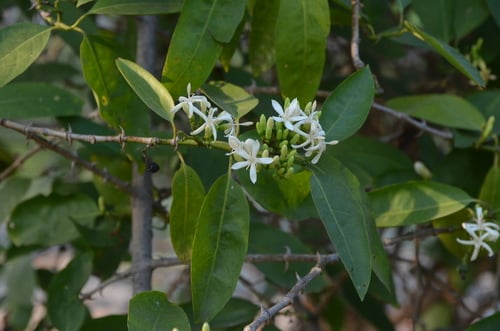
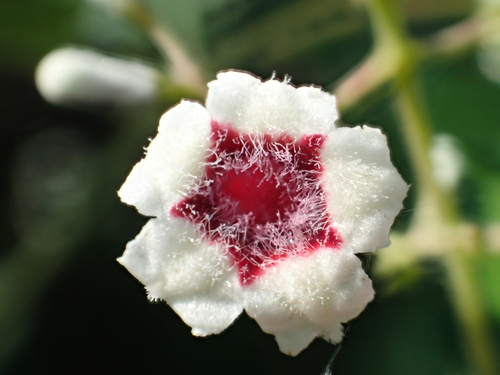
Galium spurium
L.
Cleavers Goosegrass
iNaturalist· cc-by-nc
(c) Keita Watanabe, some rights reserved (CC BY-NC), uploaded by Keita Watanabe
iNaturalist· cc-by-nc
(c) Keita Watanabe, some rights reserved (CC BY-NC), uploaded by Keita Watanabe
iNaturalist· cc-by-sa
(c) Stefan.lefnaer, some rights reserved (CC BY-SA)
Summary
Source: WikipediaGalium spurium, the stickwilly or false cleavers, is a plant species of the Rubiaceae. It is widespread across Europe, Asia, Africa and Canada, and is naturalized in Australia. It is considered a noxious weed in many places. Galium spurium is an erect or reclining herb up to 50 cm tall. Stems are square in cross-section. Leaves are in whorls of 6–8, narrowly lanceolate. Flowers are in multi-flowered cymes or panicles, white or yellow-green.
Description
An annual herb. It is weak and the stem are angular. The leaves are in rings of 4-6. They are sword shaped. They are 1-3 cm long by about 1 cm wide. The flowers are in groups of 1-7 in the axils of leaves or at the ends of the stem.
Edible Uses
The leaves can be eaten raw or cooked, though this is considered a famine food, used only as a last resort.
Traditional Uses
The leaves are cooked and eaten.
This uses section is brief — help expand it
Medicinal Uses
Both Asperuloside (a terpenoid) and Coumarin (a benzopyrone) occur in some species of Galium. Asperuloside can be converted into prostaglandins, which stimulate the uterus and affect blood vessels, making the genus of significant interest to the pharmaceutical industry.
Distribution
It is a temperate plant.
Where It Grows
Afghanistan, Africa, Asia, Australia, Britain, Central America, Central Asia, China, Europe, France, Iraq, Korea, Kurdistan, Luxembourg, Mexico, Middle East, Mongolia, North America, Pakistan, South Africa, Southern Africa, Spain, Tajikistan, Turkey, Türkiye,
Cultivation
Prefers a loose moist leafy soil in some shade. Tolerates dry soils but the leaves quickly become scorched when growing in full sun. This species does not thrive in a hot climate.
Propagation
Seed is best sown in situ as soon as it is ripe in late summer. It can also be sown in situ in spring, though germination may be very slow.
Other Uses
A red dye is obtained from the root.
Notes
There are about 300 Galium species. There are 60 species in tropical America.
Synonyms
References (7)
- Flora of Pakistan. www.eFloras.org
- Hwang, H., et al, 2013, A Study on the Flora of 15 Islands in the Western Sea of Jeollanamdo Province, Korea. Journal of Asia-Pacific Biodiversity Vol. 6, No. 2 281-310 (As Galium spurium var. echinospermum)
- Plants for a Future database, The Field, Penpol, Lostwithiel, Cornwall, PL22 0NG, UK. http://www.scs.leeds.ac.uk/pfaf/
- Plowes, N. J. & Taylor, F. W., 1997, The Processing of Indigenous Fruits and other Wildfoods of Southern Africa. in Smartt, L. & Haq. (Eds) Domestication, Production and Utilization of New Crops. ICUC p 191
- Sp. pl. 1:106. 1753
Show all 7 references Hide references
- Urgamal, M., Oyuntsetseg, B., Nyambayar, D. & Dulamsuren, Ch. 2014. Conspectus of the vascular plants of Mongolia. (Editors: Sanchir, Ch. & Jamsran, Ts.). Ulaanbaatar, Mongolia. “Admon“ Press. 334pp. (p. 79-90).
- World Checklist of Useful Plant Species 2020. Royal Botanic Gardens, Kew