Alectryon macrococcum
Radlk.
Mahoe
Sapindaceae Edible: Kernel, Nuts, Fruit
wikimedia· cc0
Wikimedia Commons
Description
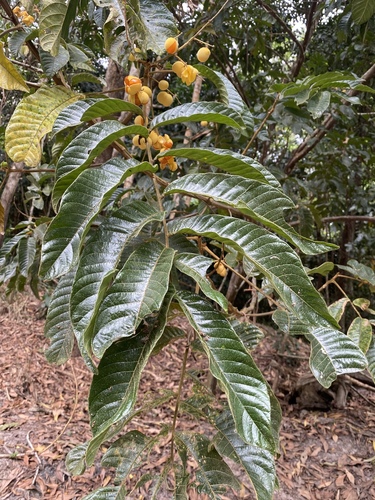
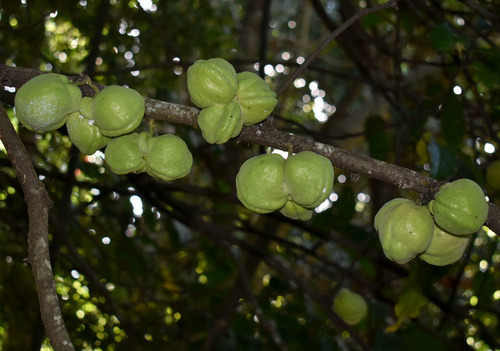
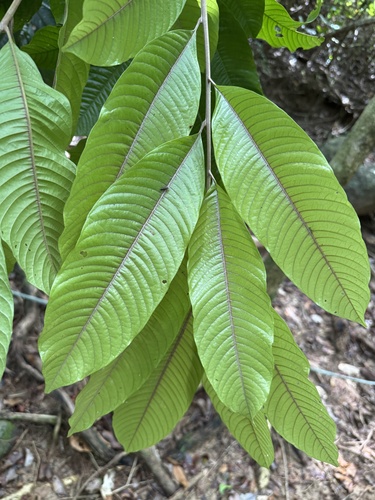
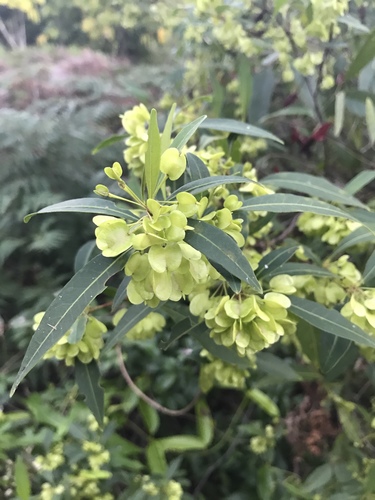
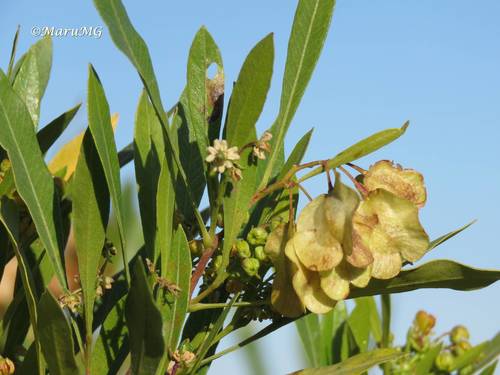
A small tree. The leaves have leaflets along the stalk and one at the end. The flowers are in groups. They have yellowish hairs. The fruit is round and 2.5-5 cm across. They are brown. The seed has a bright red aril or layer around it.
Edible Uses
The fruit flesh and especially the red aril (seed coating) are eaten fresh. The fruits have also been used to prepare liqueur.
Traditional Uses
The flesh of the fruit is eaten. It is the aril or layer around the seed that is eaten. The fruit have also been used to prepare a liqueur.
This uses section is brief — help expand it
Distribution
A tropical plant.
Where It Grows
Asia, Hawaii, Malaysia, New Zealand, Pacific, SE Asia,
Notes
There are 15-34 Electryon species.
References (5)
- Bircher, A. G. & Bircher, W. H., 2000, Encyclopedia of Fruit Trees and Edible Flowering Plants in Egypt and the Subtropics. AUC Press. p 17
- Crowe, A., 1997, A Field Guide to the Native Edible Plants of New Zealand. Penguin. p 59
- Menninger, E.A., 1977, Edible Nuts of the World. Horticultural Books. Florida p 69
- Sitzungsber. Math.-Phys. Cl. Kounigl. Bayer. Akad. Wiss. Muunchen 20:255. 1890
- Wickens, G.E., 1995, Edible Nuts. FAO Non-wood forest products. FAO, Rome. p149