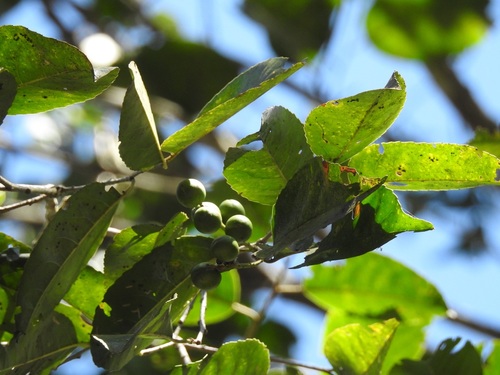
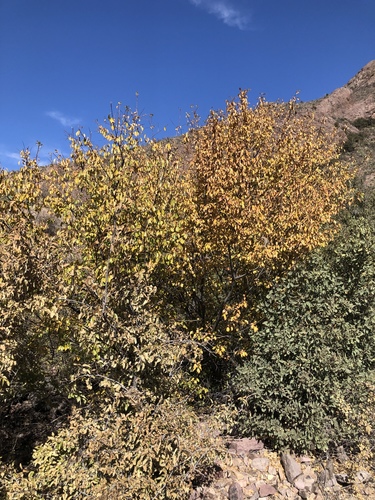
Fragaria viridis
Weston
Green strawberry, Hill strawberry
iNaturalist· cc-by-nc
(c) Евгений Софронов, some rights reserved (CC BY-NC), uploaded by Евгений Софронов
iNaturalist· cc0
no rights reserved
iNaturalist· cc-by-nc
(c) Alexey Zyryanov, some rights reserved (CC BY-NC)
Summary
Source: WikipediaFragaria viridis, commonly called creamy strawberry or green strawberry is a species of strawberry native to Europe and central Asia. It has fruits with fine flavour. They have surprisingly little of the usual strawberry aroma, but a refreshing acidity, and sometimes ripen without becoming red. When they are plucked from the plant, the calyx will usually adhere and they will detach with a noticeable snapping sound. All strawberries have a base haploid count of 7 chromosomes. Fragaria viridis is diploid, having 2 pairs of these chromosomes for a total of 14 chromosomes. Fragaria viridis is approximately 6.24 million years old.
Description
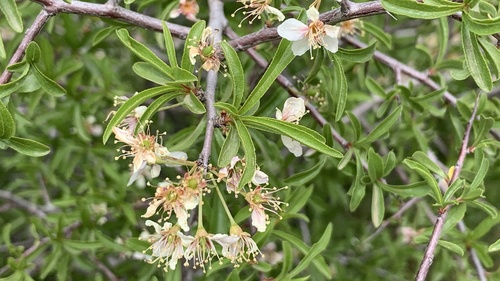
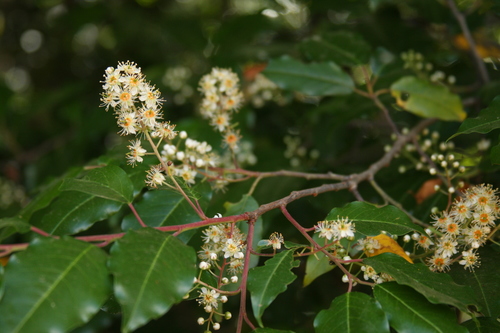
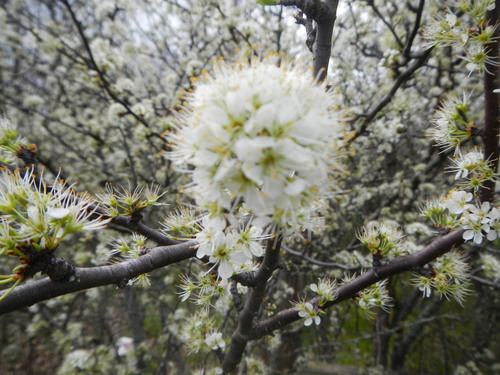
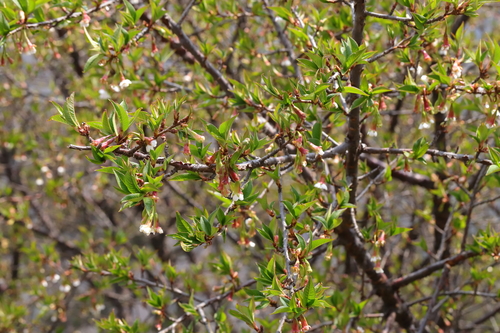
A herb. It keeps growing from year to year. It grows 25 cm high. The stem is upright and hairy. The fruit are greenish, tinged with red. The leaves are compound and have 3 leaflets. They have teeth around the edge. The end leaflet is small. The flowers are white and in groups 2.5 cm across.
Edible Uses
The fruit is eaten raw or cooked. It has a greenish tinge with red colouring and is sweet and succulent with a rich, musky, pineapple-like flavour — absolutely delicious, though not produced in large quantities.
Traditional Uses
The fruit are eaten fresh. They are also used in jams and desserts.
This uses section is brief — help expand it
Medicinal Uses
None known.
Distribution
It is a temperate plant. In Kazakhstan it grows on open grassy mountain slopes.
Where It Grows
Asia, Balkans, Bulgaria, Central Asia, Estonia, Europe, Hungary, Kazakhstan, Lithuania, Luxembourg, Moldova, Mongolia, Slovakia, Slovenia, Spain,
Cultivation
Prefers a fertile, well-drained, moisture retentive soil in a sunny position. Tolerates semi-shade though fruit production will be reduced when plants grow in such a position. This species is closely related to F. vesca. Plants are sometimes dioecious. In this case, male and female plants will be needed if fruit and seed is required.
Propagation
Sow seed in early spring in a greenhouse; germination can take 4 weeks or more. Seedlings start very small and slow-growing before picking up pace. Prick out into individual pots when large enough and plant out during summer. Divide runners in July/August for best establishment before the following year's crop. They can be moved the following spring if needed, but should not be allowed to fruit in their first year. Runners can be planted directly into permanent positions.
Other Uses
An excellent ground cover plant that spreads vigorously via surface stolons, forming a dense carpet. It grows well among shrubs but can out-compete smaller plants.
Synonyms
Also Known As
Csattogo eper, Druzgavec, Fragi, Fresas, Muulukas, Mullikmaasikas, Planitsa, Szamoca, Truskavec, Zeleni jagodnjak
References (15)
- Aipeisova S.A., et al, 2019, Wild useful herbs of Aktobe Region (Western Kazakhstan). Ukrainian Journal of Ecology, 9(3), 329-331
- Bot. univ. 2:327. 1771 (A. N. Duchesne, Hist. nat. frais. 135. 1766, as "races principales") - Duchesne's (1766) usage of binary names for "races principales" do not qualify as species names
- Ciocarlan, N. & Ghendov, V., 2015, Ethnobotanical and Ecological Studies of Wild Edible Plants from Bugeac Steppe, Republic of Moldova. Journal of EcoAgriTourism. Cailta terra Vol. 11(2):
- Denes, A., et al, 2012, Wild plants used for food by Hungarian ethnic groups living in the Carpathian Basin. Acta Societatis Botanicorum Poloniae 81 (4): 381-396
- Dzhangaliev, A. D., et al, 2003, The Wild Fruit and Nut Plants of Kazakhstan, Horticultural Reviews, Vol. 29. pp 305-371
Show all 15 references Hide references
- Facciola, S., 1998, Cornucopia 2: a Source Book of Edible Plants. Kampong Publications, p 199
- Hedrick, U.P., 1919, (Ed.), Sturtevant's edible plants of the world. p 316 (As Fragaria collina)
- Jones, J.K., 1979, Strawberry, in Simmonds, N.W., (ed), Crop Plant Evolution. Longmans. London. p 237
- Kalle, R. & Soukand, R., 2012, Historical ethnobotanical review of wild edible plants of Estonia (1770s-1960s) Acta Societatis Botanicorum Poloniae 81(4):271-281
- Luczaj, L., 2012, Ethnobotanical review of wild edible plants of Slovakia. Acta Societatis Botanicorum Poloniae 81(4):245-255
- Nedelcheva A., 2013, An ethnobotanical study of wild edible plants in Bulgaria. EurAsian Journal of BioSciences 7, 77-94
- Plants for a Future database, The Field, Penpol, Lostwithiel, Cornwall, PL22 0NG, UK. http://www.scs.leeds.ac.uk/pfaf/
- Tanaka,
- Tardio, J., et al, Ethnobotanical review of wild edible plants in Spain. Botanical J. Linnean Soc. 152 (2006), 27-71
- Urgamal, M., Oyuntsetseg, B., Nyambayar, D. & Dulamsuren, Ch. 2014. Conspectus of the vascular plants of Mongolia. (Editors: Sanchir, Ch. & Jamsran, Ts.). Ulaanbaatar, Mongolia. “Admon“ Press. 334pp. (p. 143-158).