Fragaria iinumae
Makino
iNaturalist· cc-by-nc
(c) Tatjana Koroteeva, some rights reserved (CC BY-NC)
iNaturalist· cc-by
(c) Marco Mussita, some rights reserved (CC BY)
iNaturalist· cc-by-nc
(c) igor_yatsenko, some rights reserved (CC BY-NC)
Summary
Source: WikipediaFragaria iinumae is a species of strawberry in the family Rosaceae. It is native to Japan and eastern Russia. In Japan it was first discovered on Mount Nōgōhaku (能郷白山, Nōgōhaku-san) and the name Nōgō Fragaria (ノウゴウイチゴ・能郷苺, Nōgō Ichigo) was given. All strawberries have a base haploid count of 7 chromosomes. Fragaria iinumae is diploid, having 2 pairs of these chromosomes for a total of 14 chromosomes. Fragaria iinumae is one of the diploid progenitors of the octoploid strawberry.
Description
A perennial groundcover reaching 0.3 m with hermaphroditic flowers from April to May; seeds mature June to July. Tolerates sandy, loamy, and clay soils with good drainage, moist conditions, and pH from mildly acid to mildly alkaline. Adapts to semi-shade or full sun environments.
Edible Uses
The fruit can be eaten raw. Young plants are edible when cooked and can be added to soups or used as a potherb.
Medicinal Uses
None known
Distribution
It is a temperate plant.
Where It Grows
Asia, Japan,
Cultivation
We have very little information on this species but, judging by its native range, it should be perfectly hardy in Britain. Other members of this genus prefer a fertile, well-drained, moisture retentive soil in a sunny position and tolerate semi-shade though fruit production will be reduced in such a situation. Likes a mulch of pine or spruce leaves.
Propagation
Sow seed in early spring in a greenhouse; germination can take four weeks or more. Seedlings are small and slow-growing initially but then develop quickly. Prick out into individual pots when large enough and plant out during summer. Divide runners preferably in July or August to allow plants to establish before the following year's crop, or transplant the following spring — plants should not be allowed to fruit in their first year after a spring move. Runners can be planted directly into permanent positions.
Other Uses
None known Special Uses
Synonyms
Also Known As
Furep
References (3)
- Bot. Mag. (Tokyo) 21:156. 1907
- Plants for a Future database, The Field, Penpol, Lostwithiel, Cornwall, PL22 0NG, UK. http://www.scs.leeds.ac.uk/pfaf/
- Williams, D., 2017, Ainu Ethnobiology. Contributions in Ethnobiology. Society of Ethnobiology. p 128
More from Rosaceae
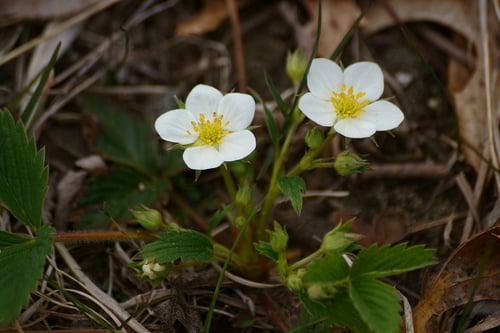
Fragaria virginiana
Scarlet strawberry, North American strawberry, Virginian strawberry
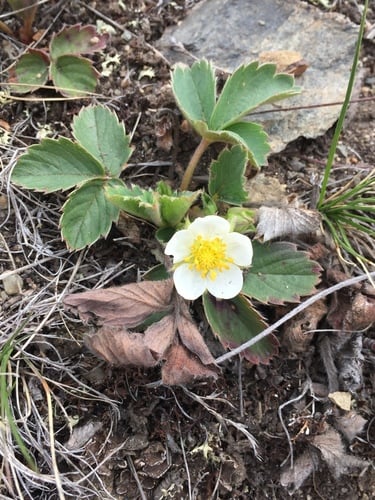
Fragaria virginiana subsp. platysepala
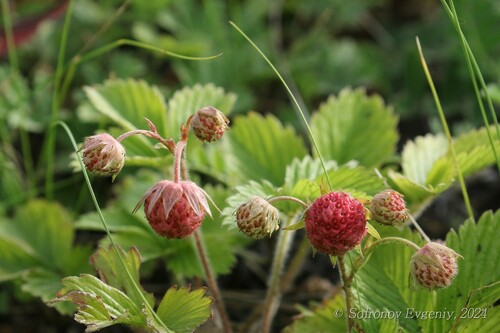
Fragaria viridis
Green strawberry, Hill strawberry
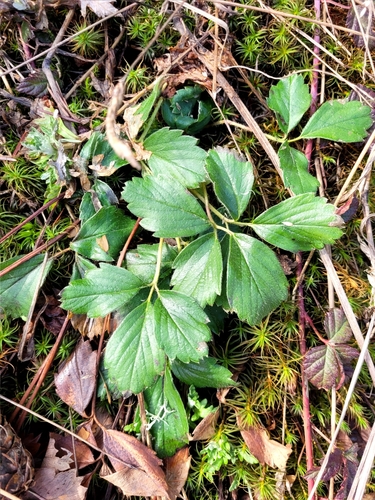
Fragaria x ananassa
Garden strawberry, European strawberry, Strawberry
Fragaria x vescana
Geum aleppicum
Yellow avens, Aleppo avens