Flacourtia rukam
Zoll. & Moritzi
Rukam
iNaturalist· cc-by-nc
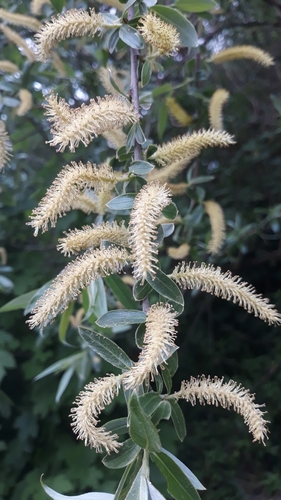
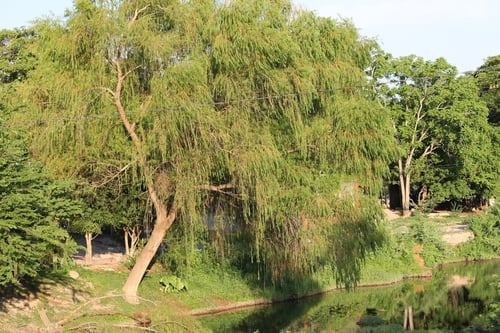
(c) tavita_togia2016, some rights reserved (CC BY-NC), uploaded by tavita_togia2016
iNaturalist· cc-by-nc
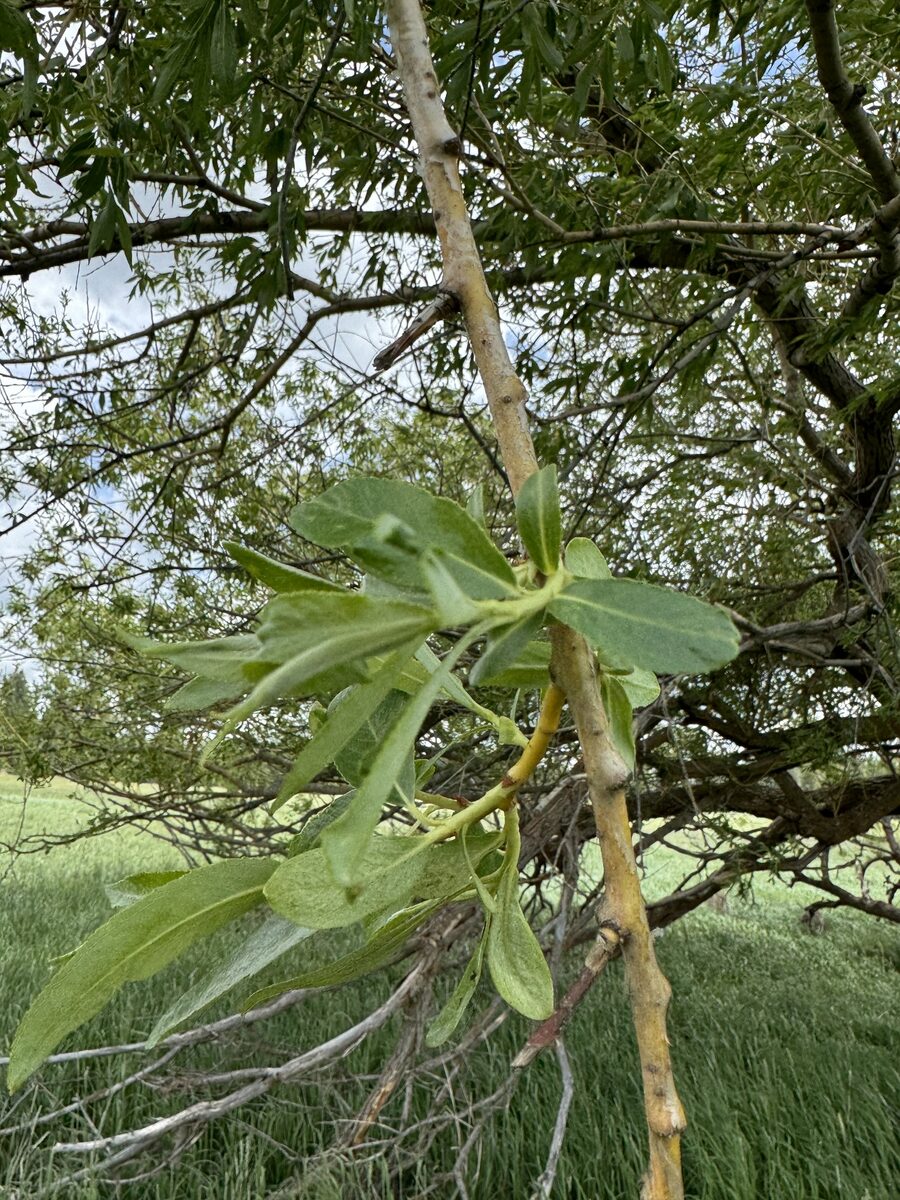
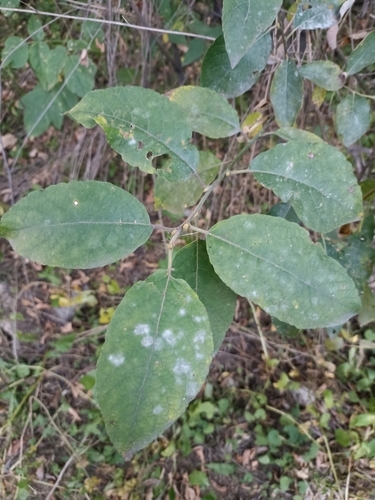
(c) Dailun Shi, some rights reserved (CC BY-NC)
iNaturalist· cc-by-nc
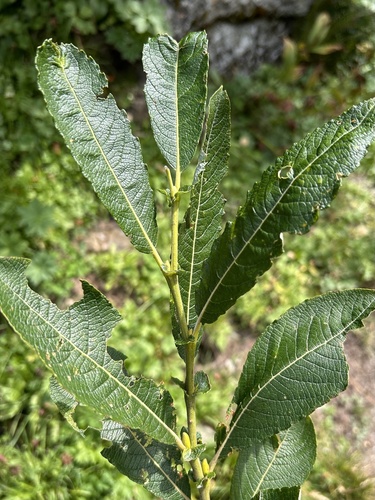
(c) Dailun Shi, some rights reserved (CC BY-NC)
Summary
Source: WikipediaFlacourtia rukam is a species of flowering plant in the family Salicaceae. It is native to Island Southeast Asia and Melanesia, but has spread into Mainland Southeast Asia, India, and Polynesia. It is also cultivated for its edible fruit. Common names include rukam, governor's plum, Indian plum, and Indian prune. This species is a tree growing 5 to 15 meters tall. The trunk is lined with thorns up to 10 centimeters long; some cultivated varieties lack thorns. New leaves are red to brown in color. Mature leaves are somewhat oval in shape with toothed edges and up to 16 centimeters long by 7 wide. Racemes of yellow-green male and female flowers occur in the leaf axils. The rounded fruit is about 2 centimeters long and is green, red, or purple in color.
Description
A tree reaching a height of 5-20 m and about 30 cm across the trunk. It can be 40 m tall with a trunk 1 m across. The old branches are usually crooked with furrows along them. The leaves are 5 to 15 cm long and 4-7 cm wide and pointed at the tip. Young leaves are reddish brown and leaves are shiny on top. The young stems are very rough. The flowers are very small and occur in greenish yellow clusters in axils of leaves. They occur with separate sexes in separate flowers. The fruit is a flattened berry with soft juicy flesh and a red colour. The trunk in young trees has many simple spines. The leaf size and shape varies a lot.
Edible Uses
The ripe fruit is eaten raw or rolled between the hands to reduce astringency; it can be sour and is used for jam, sauce, or pickles. Young leaves, shoots, and young roots are also edible.
Traditional Uses
The fruit are eaten raw when ripe. The fruit are rolled between the hands to reduce the astringency. It can be sour and is used for jam, sauce or pickles. The young leaves and shoots are edible. The young roots are edible.
Medicinal Uses
None mentioned.
Known Hazards
None mentioned.
Distribution
A tropical plant. It grows in humid tropical conditions. It can grow in shade as well as full sun. They occur in Benguet to the southern parts of the islands of the Philippines. Trees occur in tall lowland rainforest. They probably grow from sea level up to about 1600 m in Papua New Guinea. In Samoa it grows from 50 to 550 m altitude. It suits hardiness zones 10-12. In Yunnan.
Where It Grows
Africa, American Samoa, Asia, Australia, Cambodia, China, Chuuk, Cook Islands, Cuba, East Africa, East Timor, Fiji, India, Indochina, Indonesia, Laos, Malaysia, Micronesia, Pacific, Palau, Papua New Guinea, PNG, Philippines, Pohnpei, Rotuma, Samoa, Sarawak, SE Asia*, Singapore, Solomon Islands, Taiwan, Thailand, Timor-Leste, Tonga, Vanuatu, Vietnam, Wallis and Futuna, West Indies,
Cultivation
Trees are mostly self sown. They grow from seed. Seed germinate quickly and easily. Trees can be grown from seed or root suckers. Root suckers are commonly produced. Fruit are made sweeter by rubbing them after harvest. Trees can also be budded or grafted. Trees are spaced 8-12 m apart.
Propagation
Seed - germionates readily and quickly. Grafting. Root suckers.
Other Uses
The wood is hard and strong and is used to make household utensils such as pestles and furniture.
Production
Fruiting is seasonal. There can be several flowering and fruiting flushes during the year. Fruit are often produced about September to November in the southern hemisphere. Fruit take 14 weeks to ripen.
Other Information
In Papua New Guinea, trees occur but are not very common in coastal areas. It is a cultivated food plant.
Notes
There are about 17 Flacourtia species. Also put in the Flacourtiaceae family.
Nutrition
| Part | Moisture | kJ | kcal | Protein | Vit A | Vit C | Iron | Zinc |
|---|---|---|---|---|---|---|---|---|
| Fruit | 77 | 345 | 83 | 1.7 | — | — | — | — |
Synonyms
Also Known As
Aganas, Amaiit, Bitongol, Chemechong, Filimoto, Firmoto, Ganda rukem, Hong quan, Indian prune, Kalominga, Kaluminga, Ken, Khrop-dong, Klang tatah kutang, Kupa landak, Meptengkek, Mung guan ru'ung, Pohon rukem jambon, Rokam, Rukam bubur, Rukam gajah, Rukam manis, Rukem, Ta khop thai, Takho-thai, Tepetatah, Ukam
References (66)
- Rukam references Flacourtia rukam
- Alegado, A. M. & De Guzman, R. B., 2014, Indigenous food crops of the Aetas tribe in the Philippines and their traditional methods of food preparation. in Promotion of Underutilized Indigenous Food Resources for Food Security and Nutrition in Asia and Pacific. FAO. Bangkok p 160
- Arora, R. K., 2014, Diversity in Underutilized Plant Species - An Asia-Pacific Perspective. Bioversity International. p 71
- Barcelo, R., 2015, Phytochemical Screening and Antioxidant Activity of Edible Wild Fruits in Benguet, Cordillera Administrative Region, Philippines. Electronic Journal of Biology, 2015, Vol.11(3): 80-89
- Blench, R., 2004, Fruits and Arboriculture in the Indo-Pacific Region. Indo-Pacific Prehistory Association Bulletin 24. (Taipei Papers Volume 2) p 37
Show all 66 references Hide references
- Brown, W.H., 1920, Wild Food Plants of the Philippines. Bureau of Forestry Bulletin No. 21 Manila. p 122
- Burkill, I.H., 1935, A Dictionary of the Economic Products of the Malay Peninsula. p 1040-1041.
- Chai, P. P. K. (Ed), et al, 2000, A checklist of Flora, Fauna, Food and Medicinal Plants. Lanjak Entimau Wildlife Sanctuary, Sarawak. Forestry Malaysia & ITTO. p 167
- Christopherson, E, .,1935, Flowering Plants of Samoa. Flacourtia rukam Bernice P. Bishop Museum Bulletin 128. pp. 151-152.
- Chua-Barcelo, R. T., 2014, Ethnobotanical survey of edible wild fruits in Benguet, Cordillera administrative region, the Philippines. Asian Pac. J. Trop. Biomed. 4(Suppl. 1):S525-S538
- Corner,
- Coronel, R.E., 1982, Fruit Collections in the Philippines. IBPGR Newsletter p 10
- Cowie, I, 2006, A Survey of Flora and vegetation of the proposed Jaco-Tutuala-Lore National Park. Timor-Lests (East Timor) www.territorystories.nt/gov.au p 48
- Cundall, P., (ed.), 2004, Gardening Australia: flora: the gardener's bible. ABC Books. p 606
- Darley, J.J., 1993, Know and Enjoy Tropical Fruit. P & S Publishers. p 132
- Delang, C. O., 2007, Ecological Succession of Usable Plants in an Eleven-Year Fallow Cycle in North Lao P.D.R., Ethnobotany Research and Applications. Vol. 5:331-350
- Etherington, K., & Imwold, D., (Eds), 2001, Botanica's Trees & Shrubs. The illustrated A-Z of over 8500 trees and shrubs. Random House, Australia. p 330
- Facciola, S., 1998, Cornucopia 2: a Source Book of Edible Plants. Kampong Publications, p 117
- Forest Inventory and Planning Institute, 1996, Vietnam Forest Trees. Agriculture Publishing House p 311
- French, B.R., 1986, Food Plants of Papua New Guinea. A Compendium. Asia Pacific Science Foundation. p 248
- French, B.R., 2010, Food Plants of Solomon Islands. A Compendium. Food Plants International Inc. p 242
- Gardner, S., et al, 2000, A Field Guide to Forest Trees of Northern Thailand, Kobfai Publishing Project. p 54
- Giesen, W., 2013, Paludiculture: sustainable alternatives on degraded peat land in Indonesia (revised draft)
- Hariyadi, B., 2008, The Entwined Tree: Traditional Natural Resource Management of Serampas, Jambi, Indonesia. Ph. D thesis. Univ. or Hawaii. p 402
- Hu, Shiu-ying, 2005, Food Plants of China. The Chinese University Press. p 564
- Jacquat, C., 1990, Plants from the Markets of Thailand. D.K. Book House p 52
- Jansen, A. A. J., et al, (Eds), 1990, Food and Nutrition in Fiji. Volume One. p 43
- Kitalong, A. H., DeMeo, R. A., & Holm, T., 2013, A Field Guide to the Native Trees of Palau. 2nd edition. USDA p76 (As var. micronesica)
- Kiple, K.F. & Ornelas, K.C., (eds), 2000, The Cambridge World History of Food. CUP p 1790
- Lembaga Biologi Nasional, 1977, Buah-Buahan, Balai Pustaka, Jakarta. p 110
- Liefting, A., et al, Samoan plant names. http://en.wikipedia.org
- Macmillan, H.F. (Revised Barlow, H.S., et al) 1991, Tropical Planting and Gardening. Sixth edition. Malayan Nature Society. Kuala Lumpur. p 300
- Martin, F.W. & Ruberte, R.M., 1979, Edible Leaves of the Tropics. Antillian College Press, Mayaguez, Puerto Rico. p 192
- Miguel, E., et al, 1989, A checklist of the cultivated plants of Cuba. Kulturpflanze 37. 1989, 211-357
- Molesworth, A.B., 1967, Malayan Fruits, Donald Moore Press, Singapore. p 59-62.
- Monsalud, M.R., Tongacan, A.L., Lopez, F.R., & Lagrimas, M.Q., 1966, Edible Wild Plants in Philippine Forests. Philippine Journal of Science. p 470
- A. Moritzi et al., Syst. Verz. 33. 1846
- Morton, J. F., 1987, Fruits of Warm Climates. Wipf & Stock Publishers p 318
- Ochse, J.J. et al, 1931, Vegetables of the Dutch East Indies. Asher reprint. p 292
- Parham, B. E. V., 1972, Plants of Samoa. New Zealand Department of Scientific and Industrial Research. Information Series. No. 85 p 32
- Pawera, L., et al, 2020, Wild Food Plants and Trends in Their Use: From Knowledge and Perceptions to Drivers of Change in West Sumatra, Indonesia, Foods. 2020, 9, 1240
- Peekel, P.G., 1984, (Translation E.E.Henty), Flora of the Bismarck Archipelago for Naturalists, Division of Botany, Lae, PNG. p 383, 380
- Pham-Hoang Ho, 1999, An Illustrated Flora of Vietnam. Nha Xuat Ban Tre. p 541
- Priyadi, H., et al, Five hundred plant species in Gunung Halimun Salak National Park West Java. A checklist including Sundanese names, distribution and use. CIFOR, FFPRI, SLU p 149
- PROSEA (Plant Resources of South East Asia) handbook, Volume 2, 1991, Edible fruits and nuts.
- Saw, L.G., LaFrankie, J. V. Kochummen, K. M., Yap S. K., 1991, Fruit Trees in a Malaysian Rain Forest. Economic Botany, Vol. 45, No. 1, pp. 120-136
- Setiyati Sastrapradja (Ed.), 1977, Buah-buahan [Fruits]. Lembogi Biologi Nasional LIPI, Bogor. p110-111.
- Sleumer, H., 1954, Flacourtiaceae. In van Steenis, C.G.G.J., (Ed.): Flora Malesiana, Series 1. Vol. 5 pp. 69-77.
- Slik, F., www.asianplant.net
- Smith, A.C., 1981, Flora Vitiensis Nova, Lawaii, Kuai, Hawaii, Volume 2 p 637
- Sunarjono, H.H., Flacourtia rukam in Verheij, E.W.M., and Coronel, R.E., 1991, Plant Resources of South-East Asia. PROSEA No 2 Edible fruits and nuts. p 168-169. PUDOC, Wageningen.
- Sukarya, D. G., (Ed.) 2013, 3,500 Plant Species of the Botanic Gardens of Indonesia. LIPI p 295
- Suwardi, A. B., et al, 2020, Wild edible fruits generate substantial income for local people of the Gunung Leuser National Park, Aceh Tamiang Region. Ethnobotany Research & Applications 20:11
- Suwardi, A. B., et al, 2020, Ethnobotany and conservation of indigenous edible fruit plants in South Aceh, Indonesia. Biodiversitas Vol. 21, No. 5, pp 1850-1860
- Terra, G.J.A., 1973, Tropical Vegetables. Communication 54e Royal Tropical Institute, Amsterdam, p 46
- Thitiprasert, W., et al, 2007, Country report on the State of Plant Genetic Resources for Food and Agriculture in Thailand (1997-2004). FAO p 95
- TodaFruta.com.br
- USDA, ARS, National Genetic Resources Program. Germplasm Resources Information Network - (GRIN). [Online Database] National Germplasm Resources Laboratory, Beltsville, Maryland. Available: www.ars-grin.gov/cgi-bin/npgs/html/econ.pl (10 April 2000)
- Walter, A. & Sam C., 2002, Fruits of Oceania. ACIAR Monograph No. 85. Canberra. p 173
- Whistler, W.A., 2004, Rainforest Trees of Samoa. Isle Botanica Honolulu, Hawaii. p 80
- Wiersema, J. H. & Leon, B., 2013, World Economic Plants. A Standard Reference CRC Press. 2nd Ed. p 307
- Wiriadinata, H., 1995, Ethnobotany of Economic Plants in the Baliem Valley, Jayawijaya, Irian Jaya, Indonesian Institute of Science, Bogor, Indonesia
- World Checklist of Useful Plant Species 2020. Royal Botanic Gardens, Kew
- Yuncker, T.G., 1959, Plants of Tonga, Bernice P. Bishop Museum, Hawaii, Bulletin 220. p 191
- Zawiah, N. & Othaman, H., 2012, 99 Spesies Buah di FRIM. Institut Penyelidikan Perhutanan Malaysia. p 122
- Zeven, A. C. & de West, J. M. J., 1982, Dictionary of cultivated plants and their regions of diversity. Wageningen. p 53