Finschia ferruginiflora
White
wikimedia· cc-by-sa
Stan Shebs (via Wikimedia Commons)
Description
A tree up to 30 m tall with adventitious roots up to 1.5 m above the ground. Leaves are long (25 cm) and narrow (5 cm) and without hairs. Flowers are rusty brown in long strings up to 20 cm long. Fruit are about 5 cm across. They have one seed inside. Possibly now Hakea ferruginiflora (C. T. White) Christenh. & Byng.
Edible Uses
Seed - cooked. The yellow, globose fruit is around 5cm in diameter containing one or more seeds 7 - 8mm in diameter.
Traditional Uses
The seeds are cooked and eaten.
This uses section is brief — help expand it
Distribution
A tropical plant. They occur in rainforest between 1500 and 1800 m altitude.
Where It Grows
Pacific, Papua New Guinea, PNG,
Cultivation
Trees grow from seed.
Propagation
Seed - it is often slow to germinate.
Other Information
In Papua New Guinea, the species has mostly been recorded in the Eastern Highlands near Aiyura and Okapa.
References (8)
- Bourke, M., 1995, Edible Indigenous Nuts in Papua New Guinea. In South Pacific Indigenous Nuts. ACIAR Proceedings No 69, Canberra. p 46
- French, B.R., 1986, Food Plants of Papua New Guinea, A Compendium. Asia Pacific Science Foundation p 178
- Menninger, E.A., 1977, Edible Nuts of the World. Horticultural Books. Florida p 21
- PROSEA (Plant Resources of South East Asia) handbook, Volume 2, 1991, Edible fruits and nut. p 167
- Sleumer, H., 1955, Proteaceae in Flora Malesiana, Ser 1 Vol 5(2) p 162
Show all 8 references Hide references
- White, C.T., 1949, Finschia - A Genus of "Nut" Trees of the Southwest Pacific. Pacific Science 3:187
- Wickens, G.E., 1995, Edible Nuts. FAO Non-wood forest products. FAO, Rome. p146
- World Checklist of Useful Plant Species 2020. Royal Botanic Gardens, Kew
More from Proteaceae
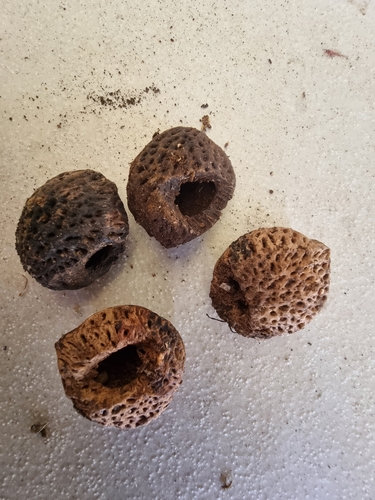
Athertonia diversifolia
Atherton oak, White Oak, Creamy silky oak, Atherton nut
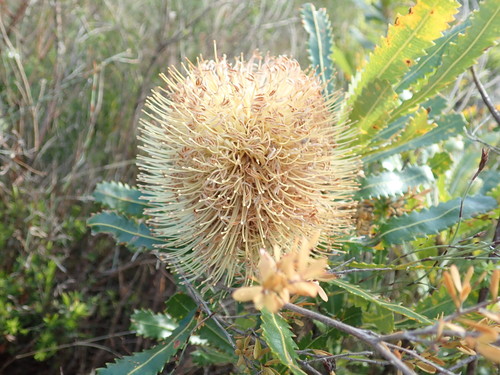
Banksia aemula
Wallum banksia
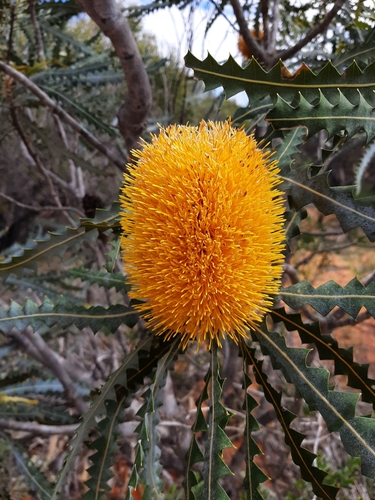
Banksia ashbyi
Ashby’s Banksia
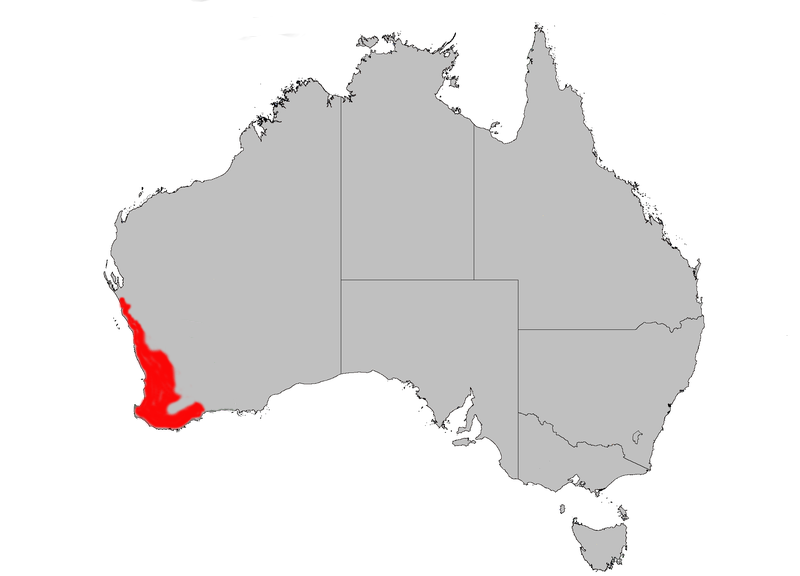
Banksia attenuata
Candlestick Banksia, Coast Banksia, Slender Banksia
Banksia candolleana
Propeller Banksia
Banksia dentata
Bottle brush, Swamp Banksia, Tropical Banksia, Northern Banksia