Ficus fulva
Reinw. ex Blume
iNaturalist· cc-by
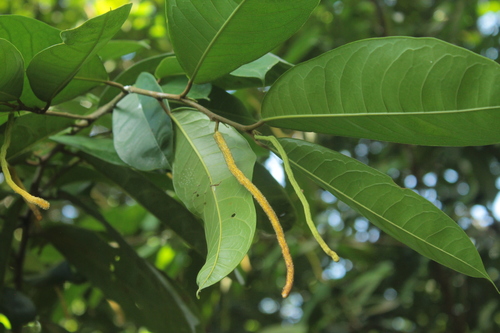
(c) Ganjar Cahyadi, some rights reserved (CC BY)
iNaturalist· cc-by-nc
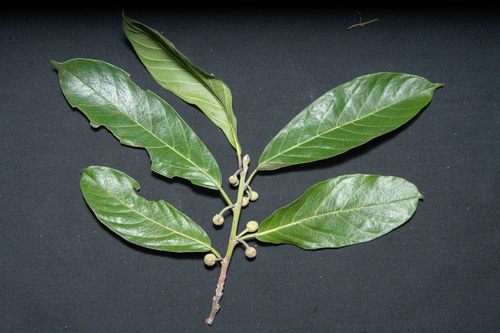
(c) Syahlan Kholiq, some rights reserved (CC BY-NC)
iNaturalist· cc-by-nc
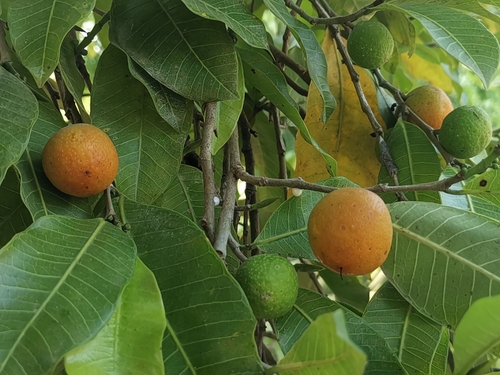
(c) Syahlan Kholiq, some rights reserved (CC BY-NC)
Summary
Source: WikipediaFicus fulva is a fig species in the family Moraceae. No subspecies are recorded and the native range of this species is from Bangladesh to Indo-China and throughout Malesia. The species can be found in Vietnam: where it may be called ngái vàng, ngái lông, or vả. Ficus fulva is dioecious, with male and female flowers produced on separate individuals.
Description
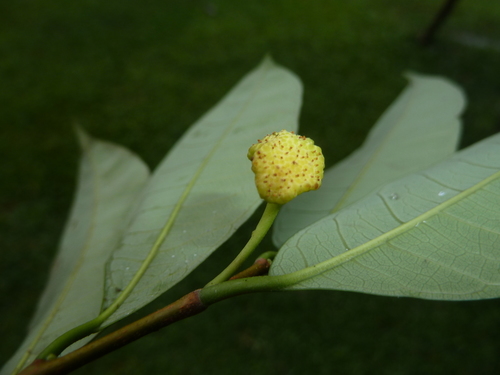
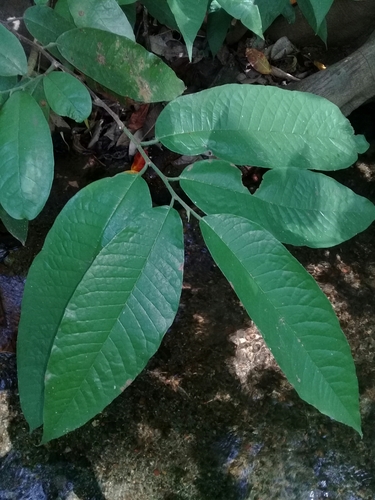
A fig. It is a small tree. It grows 6-10 m high. The young branches are stout. The small branches and young leaves are covered with rusty coloured hairs. The leaf stalk is 1 cm long. The leaf blade is oblong to sword shaped and 10-15 cm long by 5-8 cm wide. The base is wedge shaped and there are teeth along the edge. The figs are on leafy shoots in pairs. They are round and 1-1.5 cm across. They have a golden yellow covering.
Edible Uses
The fruit are eaten raw.
Traditional Uses
The fruit are eaten raw.
This uses section is brief — help expand it
Distribution
A tropical plant. It grows in low hills and valleys. It demands light. In Yunnan in China it grows below 1300 m altitude.
Where It Grows
Asia, Brunei, China, East Timor, India, Indochina, Indonesia, Laos, Malaysia, Myanmar, Nicobar Island, Northeastern India, SE Asia, Thailand, Timor-Leste, Vietnam,
Production
It is fast growing.
Notes
There are about 800-1000 Ficus species. They are mostly in the tropics. There are 120 Ficus species in tropical America.
Synonyms
Also Known As
Ara berteh, Bamang, Dok, Hamerang badak, Hamerang minyak, Kebeg abang, Kebeg lenga, Kebeg lisa, Kebeg, Koro, Kujang, Maimenmang, Ngoa khi, Va
References (7)
- Bijdr. 478. 1825
- Burkill, I.H., 1966, A Dictionary of the Economic Products of the Malay Peninsula. Ministry of Agriculture and Cooperatives, Kuala Lumpur, Malaysia. Vol 1 (A-H) p 1026
- Cowie, I, 2006, A Survey of Flora and vegetation of the proposed Jaco-Tutuala-Lore National Park. Timor-Lests (East Timor) www.territorystories.nt/gov.au p 51
- Forest Inventory and Planning Institute, 1996, Vietnam Forest Trees. Agriculture Publishing House p 543
- Jin, Chen et al, 1999, Ethnobotanical studies on Wild Edible Fruits in Southern Yunnan: Folk Names: Nutritional Value and Uses. Economic Botany 53(1) pp 2-14
Show all 7 references Hide references
- Sang, D. T., & Mizoue, K. O. N., 2012, Use of Edible Forest Plants among Indigenous Ethnic Minorities in Cat Tien Biosphere Reserve, Vietnam. Asian Journal of Biodiversity Vol. 3 (1), p 23-49
- www.eFloras.org Flora of China