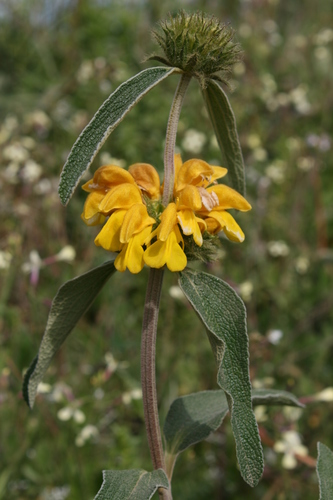
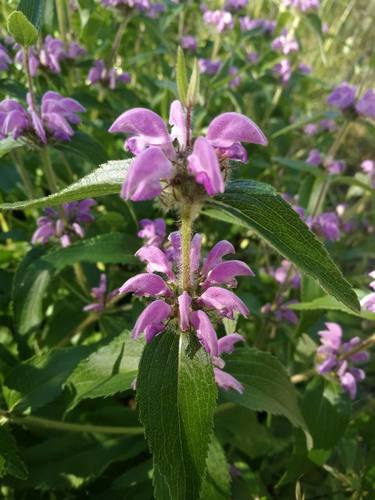
Salvia clevelandii - (A.Gray.)Greene.
(A.Gray.)Greene.
Blue Sage, Fragrant sage, Chaparral Sage
gbif· cc-by-nc
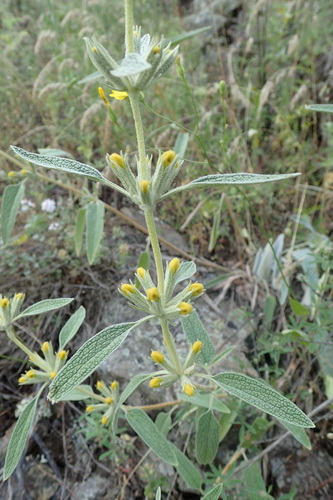
Jeff Steele
gbif· cc-by-nc
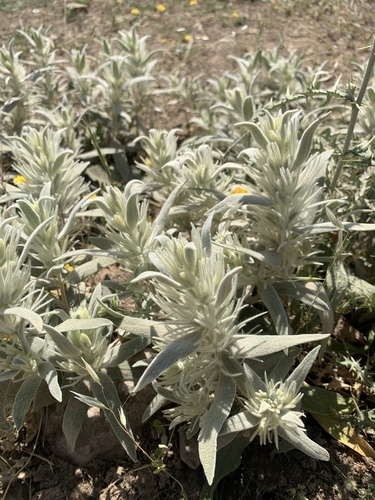
Jeff McLean
gbif· cc-by-nc
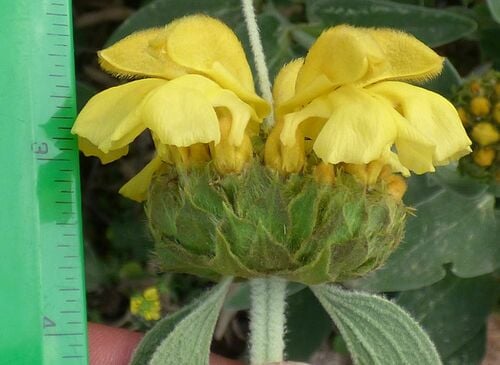
Jeff McLean
Description
Salvia clevelandii is an evergreen Shrub growing to 0.6 m (2ft) at a medium rate. See above for USDA hardiness. It is hardy to UK zone 8. It is in leaf all year. The species is hermaphrodite (has both male and female organs) and is pollinated by Bees. The plant is self-fertile. It is noted for attracting wildlife. Suitable for: light (sandy) and medium (loamy) soils and prefers well-drained soil. Suitable pH: mildly acid, neutral and basic (mildly alkaline) soils. It cannot grow in the shade. It prefers dry or moist soil.
Edible Uses
Condiment. The leaves have a pleasant flavour and fragrance, they are a good substitute for sage in cooking,
Distribution
South-western N. America - California.
Where It Grows
NORTHERN AMERICA: United States (California (San Diego Co.)), Mexico (Baja (north))
Cultivation
Requires a very well-drained light sandy soil in a sunny position. Prefers a rich soil. Soils rich in nitrogen encourage excessive leaf growth at the expense of flowering. This species is not hardy in the colder areas of the country, it tolerates temperatures down to between -5 and -10°c. Plants can be killed by excessive winter wet. There is at least one named variety. 'Aromas' is an improved selection that is very fragrant. Members of this genus are rarely if ever troubled by browsing deer. Sage leaves can be harvested throughout the growing season, with the best flavor typically from spring to early summer, just before flowering. Sage usually flowers in late spring to early summer, generally between May and June (Northern Hemisphere), depending on the specific species and growing conditions. Sage is a moderately fast-growing herb, often reaching maturity in about 1 to 2 years under optimal conditions. Many sage species are self-fertile.
Propagation
Seed - sow March/April in a greenhouse. Germination usually takes place within 2 weeks. Prick out the seedlings into individual pots when they are large enough to handle and plant them out in early summer. In areas where the plant is towards the limits of its hardiness, it is best to grow the plants on in a greenhouse for their first winter and plant them out in late spring of the following year. Cuttings of half-ripe wood succeed at almost any time in the growing season.
Other Uses
It is often planted as a companion plant to deter harmful pests.
Also Known As
Blue Sage, Fragrant sage, Chaparral Sage