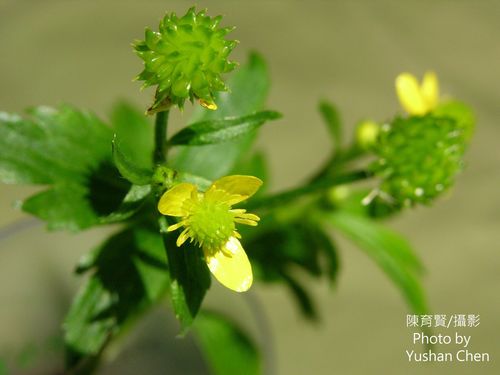
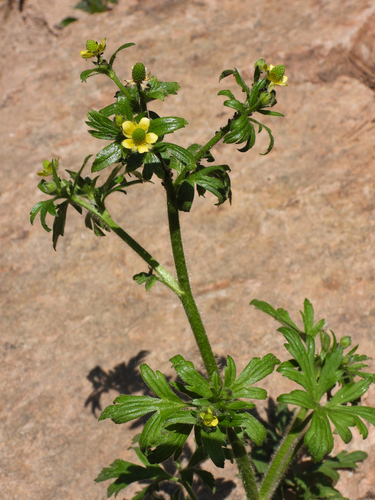
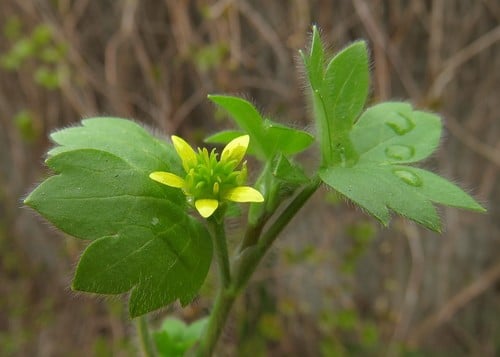
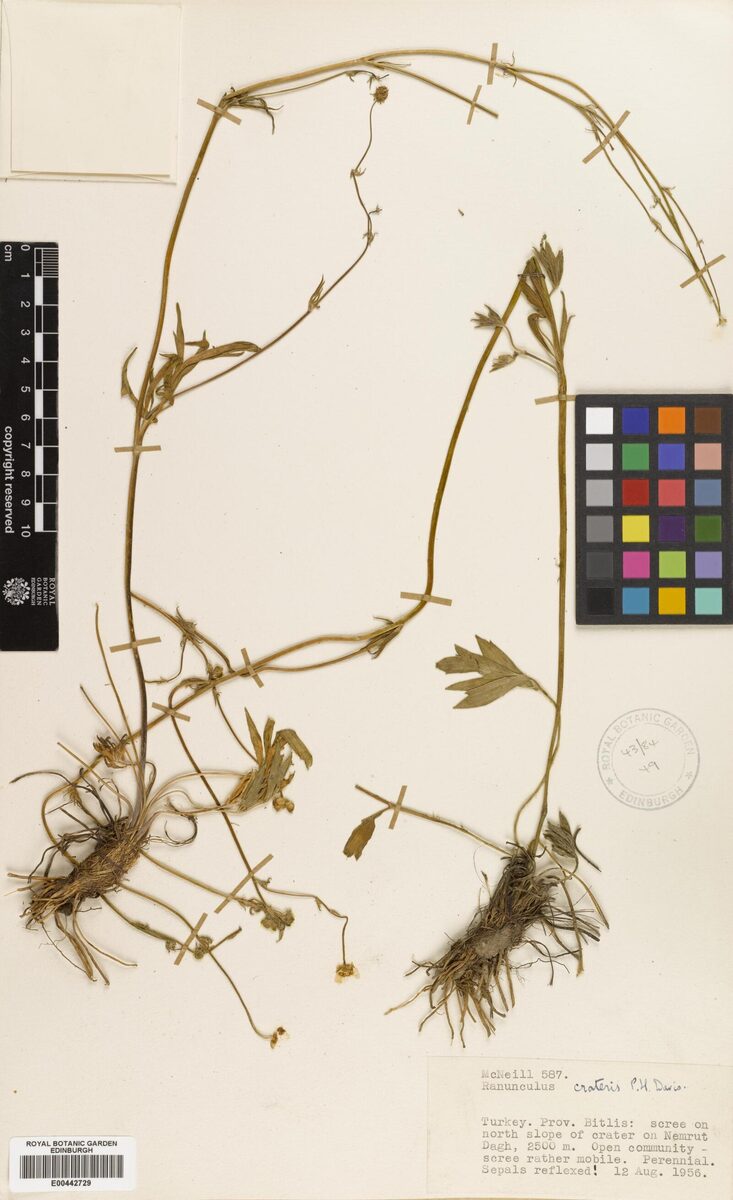
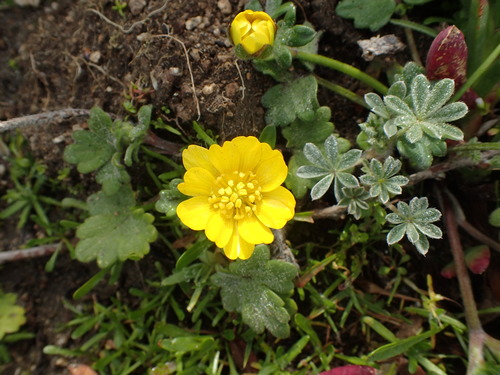
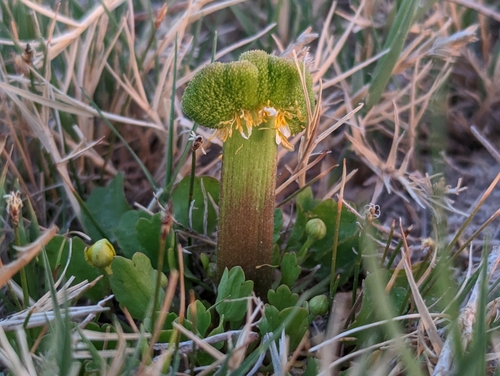
Ranunculus pennsylvanicus
L.f.
Pennsylvania Buttercup
gbif· cc-by-nc
Ashley Hillman
gbif· cc-by-nc
Ashley Hillman
gbif· cc-by-nc
Shaun Pogacnik
Description
Ranunculus pennsylvanicus is a ANNUAL/PERENNIAL growing to 1 m (3ft 3in). It is in flower from June to August. The species is hermaphrodite (has both male and female organs) and is pollinated by Insects. Suitable for: light (sandy), medium (loamy) and heavy (clay) soils. Suitable pH: mildly acid, neutral and basic (mildly alkaline) soils. It can grow in semi-shade (light woodland) or no shade. It prefers moist or wet soil.
Edible Uses
Leaves - cooked. The leaves contain toxins but in too low a concentration to be harmful.
Medicinal Uses
Rubefacient. The plant is rubefacient. It is used to raise blisters.
Known Hazards
Although no specific record of toxicity has been found for this plant, many if not all members of this genus are poisonous. These toxins can be destroyed by heat or by drying[4, 10, 13, 19, 62, 65]. Many if not all plants in this genus also have a strongly acrid juice that can cause blistering to the skin.
Distribution
Northern N. America - Labrador to Alaska and south to Colorado.
Where It Grows
Coming Soon
Cultivation
We have very little information on this species and do not know if it will be hardy in Britain, though judging by its native range it should succeed outdoors in most areas of the country. The following notes are based on the general needs of the genus. Prefers a moist loamy soil. A greedy plant, inhibiting the growth of nearby plants, especially legumes.
Propagation
Seed - sow spring in a cold frame. When they are large enough to handle, prick the seedlings out into individual pots and plant them out in the summer.
Other Uses
Dye. The entire plant can be boiled to yield a red dye. It is mixed with the bark of bur oak (Quercus macrocarpa) which acts to fix the colour. The entire plant can be boiled with rushes (Juncus spp) or flags (Iris spp and Acorus calamus) to colour them yellow for use in making mats, baskets etc.