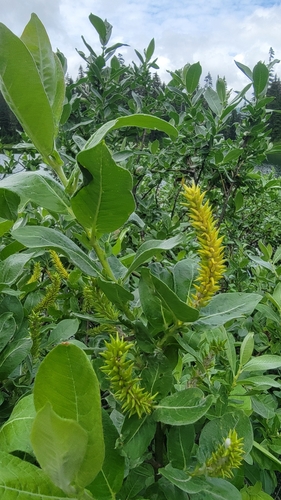
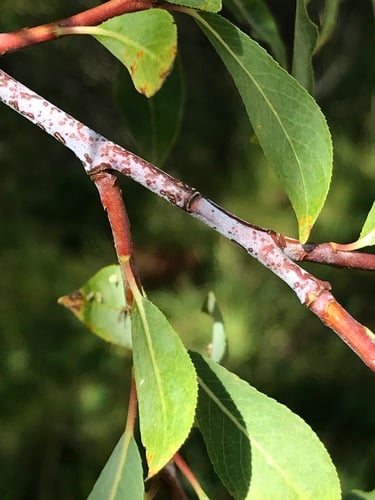
Populus trichocarpa
Torr.&A.Gray.
Western Balsam Poplar, Black cottonwood
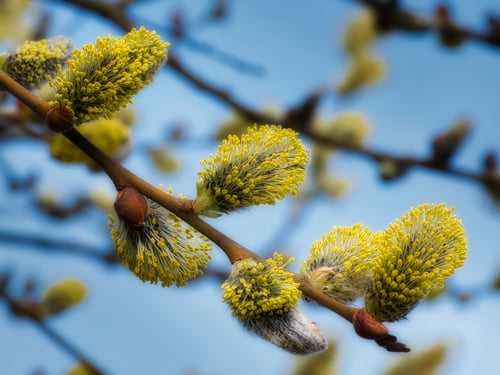
iNaturalist· cc-by-nc
(c) Thayne Tuason, some rights reserved (CC BY-NC)
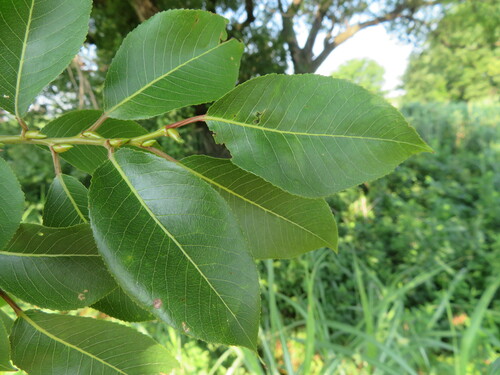
iNaturalist· cc-by-nc
(c) myrrhtle, some rights reserved (CC BY-NC)
iNaturalist· cc-by-nc
(c) Ashley Connors, some rights reserved (CC BY-NC), uploaded by Ashley Connors
Description
Populus trichocarpa is a deciduous Tree growing to 40 m (131ft) by 12 m (39ft) at a fast rate. See above for USDA hardiness. It is hardy to UK zone 5. It is in flower from April to May, and the seeds ripen from May to June. The species is dioecious (individual flowers are either male or female, but only one sex is to be found on any one plant so both male and female plants must be grown if seed is required). and is pollinated by Wind. The plant is not self-fertile. Suitable for: light (sandy), medium (loamy) and heavy (clay) soils, prefers well-drained soil and can grow in heavy clay soil. Suitable pH: mildly acid, neutral and basic (mildly alkaline) soils and can grow in very acid soils. It cannot grow in the shade. It prefers moist soil.
Edible Uses
Inner bark - raw or dried. It is usually ground into a powder and used as a flour, this is normally mixed with other flours for making bread etc. It is best used in the spring. The inner bark is mucilaginous and extremely sweet, but it sours or ferments rapidly and so, unlike most inner barks, it cannot be dried for winter use, though it can be sun-dried for more immediate use. Catkins - raw or cooked. A bitter flavour. Sap - used for food.
Medicinal Uses
Anodyne Antiinflammatory Antiscorbutic Antiseptic Balsamic Diuretic Expectorant Febrifuge Stimulant Tonic. Western balsam poplar has a long history of herbal use. It was commonly used by many native North American Indian tribes who valued it especially for its antiseptic and expectorant properties, using it to treat lung complaints, wounds, skin conditions etc. It is still commonly employed in modern herbalism with much the same uses. The leaf buds are covered with a resinous sap that has a strong turpentine odour and a bitter taste. They also contain salicin, a glycoside that probably decomposes into salicylic acid (aspirin) in the body. The buds are antiscorbutic, antiseptic, balsamic, diuretic, expectorant, stimulant and tonic. They are taken internally in the treatment of bronchitis and upper respiratory tract infections. They should not be prescribed to patients who are sensitive to aspirin. Externally, the buds are used to treat colds, sinusitis, arthritis, rheumatism, muscular pain and dry skin conditions. They can be put in hot water and used as an inhalant to relieve congested nasal passages. The buds are harvested in the spring before they open and are dried for later use. Although no specific mention has been seen for this species, the bark of most, if not all members of the genus contain salicin, a glycoside that probably decomposes into salicylic acid (aspirin) in the body. The bark is therefore anodyne, anti-inflammatory and febrifuge. It is used especially in treating rheumatism and fevers, and also to relieve the pain of menstrual cramps.
Distribution
Western N. America - Alaska to Oregon.
Where It Grows
NORTHERN AMERICA: United States (Alaska (south), North Dakota (west), Idaho, Montana (west), Oregon, Washington, Wyoming (northwest), California, Nevada, Utah (north)), Canada (Alberta (southwest), British Columbia), Mexico (Baja California (Norte) (north))
Cultivation
A very easily grown plant, it does well in a heavy cold damp soil. Prefers a deep rich well-drained circumneutral soil, growing best in the south and east of Britain. Growth is much less on wet soils, on poor acid soils and on thin dry soils but this species is more tolerant of acid soils than other members of the genus. It dislikes shade and is intolerant of root or branch competition. Plants are reasonably wind resistant, but they do not grow well in exposed upland sites. Many forms of this species are susceptible to bacterial canker, the female clone 'Fritzi Pauley' is resistant. A very fast growing and ornamental tree, it does well in western Britain where trees have reached 25 metres tall in 20 years. The leaf buds, as they swell in the spring, and the young leaves have a pleasing fragrance of balsam. The fragrance is especially pronounced as the leaves unfold. Poplars have very extensive and aggressive root systems that can invade and damage drainage systems. Especially when grown on clay soils, they should not be planted within 12 metres of buildings since the root system can damage the building's foundations by drying out the soil. Dioecious. Male and female plants must be grown if seed is required.
Propagation
Seed - must be sown as soon as it is ripe in spring. Poplar seed has an extremely short period of viability and needs to be sown within a few days of ripening. Surface sow or just lightly cover the seed in trays in a cold frame. Prick out the seedlings into individual pots when they are large enough to handle and grow them on in the old frame. If sufficient growth is made, it might be possible to plant them out in late summer into their permanent positions, otherwise keep them in the cold frame until the following late spring and then plant them out. Most poplar species hybridize freely with each other, so the seed may not come true unless it is collected from the wild in areas with no other poplar species growing. Cuttings of mature wood of the current season's growth, 20 - 40cm long, November/December in a sheltered outdoor bed or direct into their permanent positions. Very easy. Suckers in early spring.
Other Uses
Adhesive Basketry Containers Cork Dye Fuel Insulation Paint Rooting hormone Scourer Soap Soap making String Stuffing Waterproofing WoodAn extract of the shoots can be used as a rooting hormone for all types of cuttings. It is extracted by soaking the chopped up shoots in cold water for a day. A yellow dye is obtained from the leaf buds. The bark of large trees is thick and corky. It is made into containers for carrying and storing food, also as a lining for underground food stores. The inner bark has been shredded, spun together with red or yellow cedar inner bark (Thuja plicata, Juniperus spp and Chamaecyparis nootkatensis) and used as a twine. A glue is made from the aromatic gum on the spring buds. Very strong, it can also be used as a waterproofing for wood etc. When mixed with pigment it can be used as a paint. A string is made from the roots. The supple young branches have been used as lashings or tying thongs. The seed fluff is used as a stuffing material for pillows etc. The wood ashes are a soap substitute, they can also be mixed with oil to make a soap. The white inner bark is also a soap substitute, it can be dried and stored for later use. The inner bark has also been used as a scouring pad. The roots have been used for making baskets. Wood - soft, moderately strong, easily worked, rather woolly in texture, without smell or taste, of low flammability, not durable, very resistant to abrasion. Used in making crates, packing material the staves of barrels, woodenware and for pulp. It makes an excellent fuel.