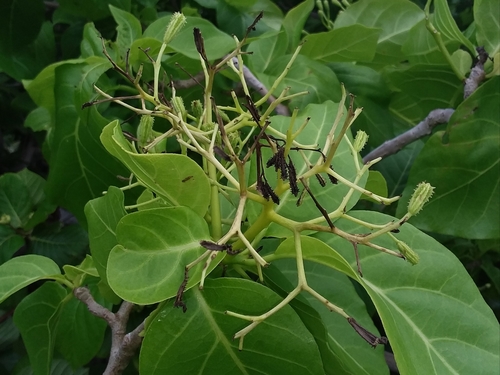
Mirabilis multiflora - (Torr.)A.Gray.
(Torr.)A.Gray.
Four O'clock Plant, Colorado four o'clock
gbif· cc-by-nc
quandary
gbif· cc-by-nc
Kevin Brandon
gbif· cc-by-nc
Kevin Brandon
Description
Mirabilis multiflora is a PERENNIAL growing to 1 m (3ft 3in). See above for USDA hardiness. It is hardy to UK zone 8 and is frost tender. It is in flower from July to August. The species is hermaphrodite (has both male and female organs). Suitable for: light (sandy), medium (loamy) and heavy (clay) soils and prefers well-drained soil. Suitable pH: mildly acid, neutral and basic (mildly alkaline) soils. It can grow in semi-shade (light woodland) or no shade. It prefers moist soil.
Edible Uses
The dried root can be ground into a powder, mixed with cereal flours and used to make a bread. This bread is eaten to reduce the appetite.
Medicinal Uses
Hallucinogenic Poultice Stomachic. The root is used in the treatment of stomach complaints. A pinch of the powdered root is said to relieve hunger, it can also be used after overeating to relieve the discomfort. A poultice of the powdered root can be applied to swellings. Large quantities of the root are said to cause intoxication. The root was chewed by native North American Medicine men to induce visions whilst making a diagnosis.
Distribution
Southern N. America - Texas to Colorado and Utah.
Where It Grows
NORTHERN AMERICA: United States (Oklahoma, Colorado (w. & s.), New Mexico, Texas, Arizona, California (south), Nevada (south & east), Utah (south)), Mexico (Baja (northeast), Chihuahua, Coahuila de Zaragoza, Nuevo León, San Luis Potosí)
Cultivation
Requires a fertile well-drained soil in full sun or part-day shade. Plants flower in their first year from seed and, although they are not very hardy in Britain, tolerating temperatures down to about -10°c when in a suitable situation, they can either be grown as half-hardy annuals or the tubers can be harvested in the autumn and stored overwinter in a cool frost-free place in much the same manner as dahlias. Members of this genus are rarely if ever troubled by browsing deer.
Propagation
Seed - sow spring in a greenhouse. When they are large enough to handle, prick the seedlings out into individual pots and plant them out in early summer, after the last expected frosts. The seed remains viable for several years. Division in spring as the plant comes into growth.