Euonymus atropurpureus
Jacq.
Burning-bush Euonymus, Spindle tree, Eastern wahoo, Indian arrow-wood
iNaturalist· cc-by-nc
(c) Nancy Scott, some rights reserved (CC BY-NC), uploaded by Nancy Scott
iNaturalist· cc-by
(c) gwt2102, some rights reserved (CC BY)
iNaturalist· cc-by-nc
(c) Jared Belsky, some rights reserved (CC BY-NC)
Summary
Source: WikipediaEuonymus atropurpureus is a species of shrub in the bittersweet family. It has the common names American wahoo, eastern wahoo, burningbush and hearts bursting with love. It is native to eastern North America.
Description
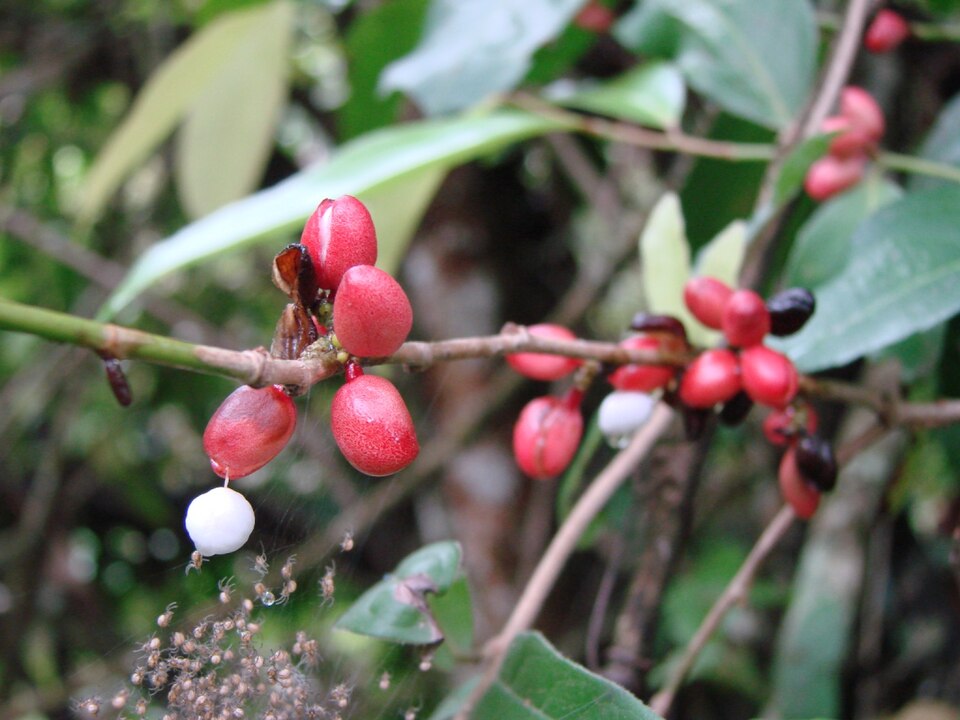
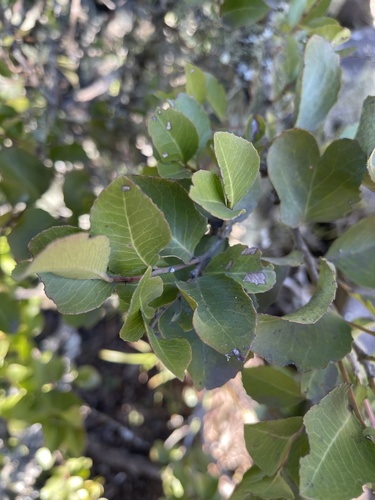
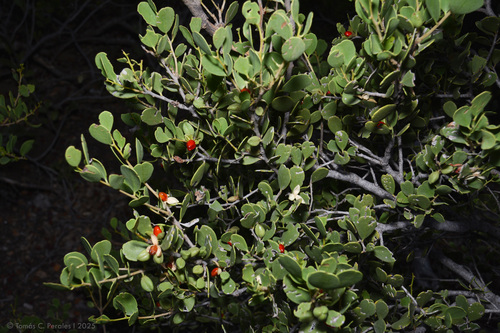
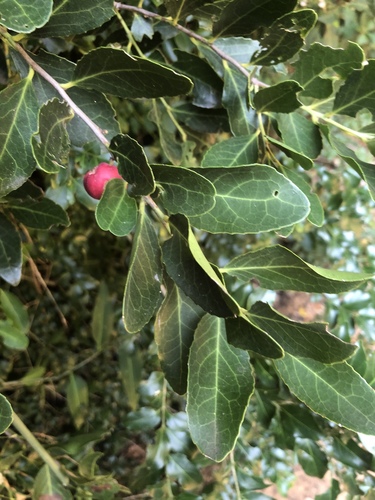
A small deciduous tree. It grows up to 2.4-6 m high. It spreads 1 m wide. The bark is greenish-grey streaked with reddish-brown. The leaves are 5-12 cm long and oval. They have a long point. The leaf stalk is about 1 cm long. They turn red in autumn. The flower are small and purplish. The fruit are capsules about 10-14 mm across. They have 4 prominent lobes. These split to reveal the seeds. There are 4 seeds. Each seed is enclosed in a bright orange-red fleshy aril or seed layer. The fruit turn pink when ripe.
Edible Uses
Although the fruit — about 15mm in diameter — has sometimes been eaten, it is considered poisonous by some writers and should definitely be avoided.
Traditional Uses
CAUTION: All parts are harmful if eaten.
This uses section is brief — help expand it
Medicinal Uses
Wahoo was used by North American Indians as an eye lotion, as a poultice for facial sores, and for gynaecological conditions. In current herbalism it is regarded as a gallbladder remedy with laxative and diuretic properties. The bark is toxic and should only be used under professional supervision; it should not be given to pregnant women or nursing mothers. The stem and root bark is alterative, cardiac, cathartic, cholagogue, diuretic, expectorant, hepatic, laxative, stimulant, and tonic. Root bark is normally used, though stem bark is sometimes employed as a substitute. In small doses it stimulates the appetite; in larger doses it irritates the intestines. The bark is especially useful for biliousness and liver disorders accompanying fevers, and for skin conditions such as eczema arising from poor liver and gallbladder function. It is also used as a tea for malaria, liver congestion, and constipation. Powdered bark applied to the scalp was believed to eliminate dandruff. The bark and root contain digitoxin and have a digitalis-like effect on the heart, and have been used to treat heart conditions. The bark has a sweetish taste and is gathered in autumn for drying and later use. A tea made from the roots is used for uterine prolapse, vomiting of blood, painful urination, and stomach-aches. The seed is emetic and strongly laxative.
Known Hazards
The fruits, seed and bark are considered to be poisonous. Adverse effects include diarrhoea, vomiting, chills, seizures, syncope and weakness. Toxic in excessive doses.
Distribution
It grows along streams and flood plains. It grows in moist woodlands. It suits hardiness zones 4-9.
Where It Grows
Asia, Canada, Europe, India, North America, USA,
Cultivation
Thrives in almost any soil, including chalk, it is particularly suited to dry shaded areas. Prefers a well-drained loamy soil. Requires shade from the midday sun. A moderately fast-growing but short-lived tree in the wild.
Propagation
Seed is best sown as soon as it is ripe in a cold frame. Stored seed requires 8–12 weeks of warm stratification followed by 8–16 weeks of cold stratification before sowing in a cold frame. When seedlings are large enough to handle, prick them out into individual pots and grow on in the greenhouse for at least their first winter. Plant out into permanent positions in late spring or early summer, after the last expected frosts. Cuttings of half-ripe wood, 5–8cm long, taken at a node or with a heel, can be rooted in July or August in a frame. Very easy.
Other Uses
The wood is heavy, hard, tough, and very close-grained, weighing 41lb per cubic foot, but is too small to be of commercial value.
Notes
There are about 175 Euonymus species. The bark is used in medicine.
Synonyms
Also Known As
Wahoo
References (8)
- Ambasta, S.P. (Ed.), 2000, The Useful Plants of India. CSIR India. p 212
- Brown, D., 2002, The Royal Horticultural Society encyclopedia of Herbs and their uses. DK Books. p 208
- Etherington, K., & Imwold, D., (Eds), 2001, Botanica's Trees & Shrubs. The illustrated A-Z of over 8500 trees and shrubs. Random House, Australia. p 312
- Farrar, J.L., 1995, Trees of the Northern United States and Canada. Iowa State University press/Ames p 191
- Hort. bot. vindob. 2:55, t. 120. 1772
Show all 8 references Hide references
- Little, E.L., 1980, National Audubon Society Field Guide to North American Trees. Alfred A. Knopf. p 566
- MacKinnon, A., et al, 2009, Edible & Medicinal Plants of Canada. Lone Pine. p 135
- Plants for a Future database, The Field, Penpol, Lostwithiel, Cornwall, PL22 0NG, UK. http://www.scs.leeds.ac.uk/pfaf/