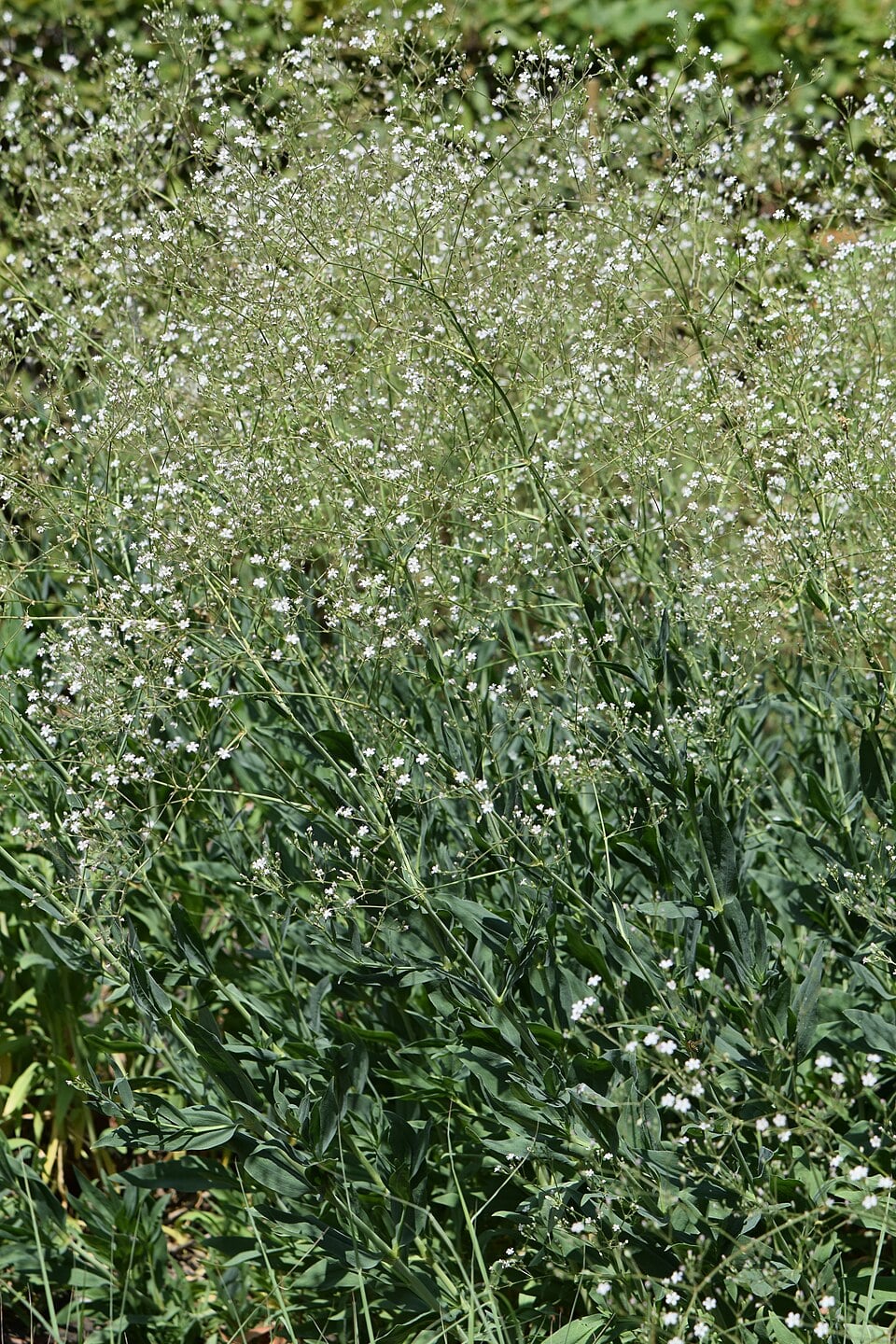
Agrostemma githago
L.
Corncockle
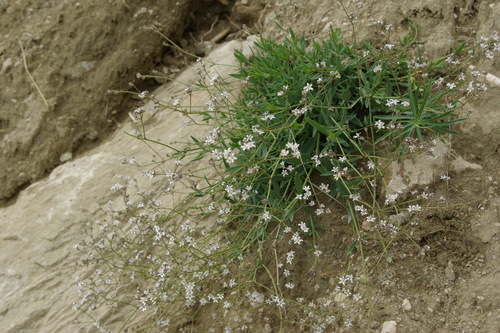
iNaturalist· cc-by-nc
(c) Alvin Diamond, some rights reserved (CC BY-NC), uploaded by Alvin Diamond
iNaturalist· cc-by-nc
(c) Sebastian J. Dunkl, some rights reserved (CC BY-NC), uploaded by Sebastian J. Dunkl
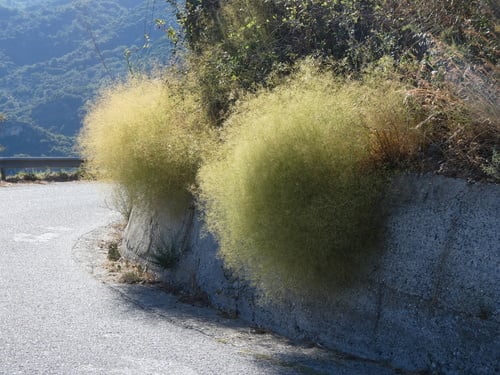
iNaturalist· cc-by-nc
(c) Alvin Diamond, some rights reserved (CC BY-NC), uploaded by Alvin Diamond
Summary
Source: WikipediaAgrostemma githago, the common corn-cockle (also written "corncockle"), is a herbaceous annual flowering plant a member of Caryophyllaceae, also called the pink family or the carnation family of plants. The name of this genus is derived from Greek: agros (ἀγρός) “field” and stemma (στέμμα) “garland, crown."
Description
An annual herb. It grows about 1 m high and spreads about 40-100 cm wide. There is a shallow taproot. The stem is slender, hairy and with few branches. The leaves are in opposite pairs. They are narrow and 12 cm long. They are covered with fine white silky hairs. Leaves are grey-green. The flowers are dull purple. They occur singly on long stalks in the axils of leaves. The flowers have 5 petals. These are 2.5-6 cm wide and have distinct veins. The sepals are long narrow and green. The fruit is a large oval capsule containing seeds.
Edible Uses
Leaves can be cooked and eaten, though this is a famine food used only as a last resort. Some caution is advised given the plant's toxicity.
Traditional Uses
CAUTION: The seeds are very poisonous. It contains githagin (agrostemine). The leaves are cooked and eaten as an emergency food. Because the plant contains saponins which although poisonous are poorly absorbed by the body, they should not be eaten in large amounts. The leaves are cooked with vinegar and bacon.
Medicinal Uses
The seed is diuretic, expectorant, and vermifuge, and only minute amounts are used medicinally. It has a folk history of use in treating cancer and warts. While not used in allopathic medicine, it has been found effective for dropsy and jaundice when used for a sufficient duration. Caution is advised due to toxicity. A homeopathic remedy prepared from the seeds has shown usefulness in treating paralysis and gastritis.
Known Hazards
The seed and leaves are poisonous, containing saponin-like substances. Although poisonous, saponins are poorly absorbed by the human body and so most pass through without harm. Saponins are quite bitter and can be found in many common foods such as some beans. They can be removed by carefully leaching the seed or flour in running water. Thorough cooking, and perhaps changing the cooking water once, will also normally remove most of them. However, it is not advisable to eat large quantities of food that contain saponins. Saponins are much more toxic to some creatures, such as fish, and hunting tribes have traditionally put large quantities of them in streams, lakes etc in order to stupefy or kill the fish.
Distribution
It is a temperate plant. It is drought and frost resistant. It adapts to most soils. It will grow best in soils that are not too fertile but are well drained and in a sunny position. Plants are hardy to -15°C. Tasmania Herbarium.
Where It Grows
Argentina, Australia, Balkans, Britain*, Bulgaria, Central Asia, Chile, China, Europe, France, Germany, Haiti, India, Italy, Korea, Luxembourg, Mediterranean, Netherlands, North America, Slovenia, South America, Tajikistan, Tasmania, Turkey, Türkiye, Uruguay, West Indies,
Cultivation
The plant grows from seed. They self seed easily. The seed usually germinates in 2-3 weeks.
Propagation
Seed can be sown in spring or autumn directly in situ, and typically germinates in 2–3 weeks. The seed has short viability, though eighteen-month-old seed has been observed to germinate freely.
Other Uses
None known.
Other Information
It is a famine food.
Notes
It is used in medicine.
Synonyms
Also Known As
Buğday karamuğu, Jerva de scitte, Kaklitsa, Navadni kokalj
References (19)
- Ambasta S.P. (Ed.), 2000, The Useful Plants of India. CSIR India. p 22
- Bircher, A. G. & Bircher, W. H., 2000, Encyclopedia of Fruit Trees and Edible Flowering Plants in Egypt and the Subtropics. AUC Press. p 15
- Biscotti, N. et al, 2018, The traditional food use of wild vegetables in Apulia (Italy) in the light of Italian ethnobotanical literature. Italian Botanist 5:1-24
- Blamey, M and Grey-Wilson, C., 2005, Wild flowers of the Mediterranean. A & C Black London. p 45
- Bodkin, F., 1991, Encyclopedia Botanica. Cornstalk publishing, p 55
Show all 19 references Hide references
- Burnie, G.(Ed.), 2003, Annuals and Bulbs. The Gardener's Handbooks. Fog City Press
- Ertug, F, Yenen Bitkiler. Resimli Türkiye Florası -I- Flora of Turkey - Ethnobotany supplement
- Facciola, S., 1998, Cornucopia 2: a Source Book of Edible Plants. Kampong Publications, p 74
- Flora of China @ efloras.org Volume 5
- Joyce, D., 1998, The Garden Plant Selector. Ryland, Peters and Small. p 312
- Nedelcheva A., 2013, An ethnobotanical study of wild edible plants in Bulgaria. EurAsian Journal of BioSciences 7, 77-94
- PARMENTIER, (As Lychnis segetum)
- Plants for a Future database, The Field, Penpol, Lostwithiel, Cornwall, PL22 0NG, UK. http://www.scs.leeds.ac.uk/pfaf/
- Plants of Haiti Smithsonian Institute http://botany.si.edu
- Sp. pl. 1:435. 1753
- Tasmanian Herbarium Vascular Plants list p 18
- Vermeulen, N, 1998, The Complete Encyclopedia of Herbs. Rebo Publishers. p 30
- Wilson, S., 1997, Some Plants are Poisonous. Reed. p 9
- www.efloras.org Flora of China Vol 6