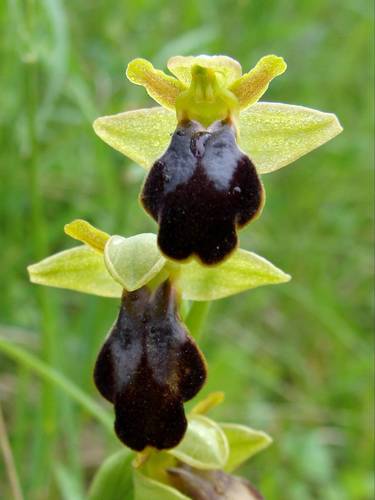
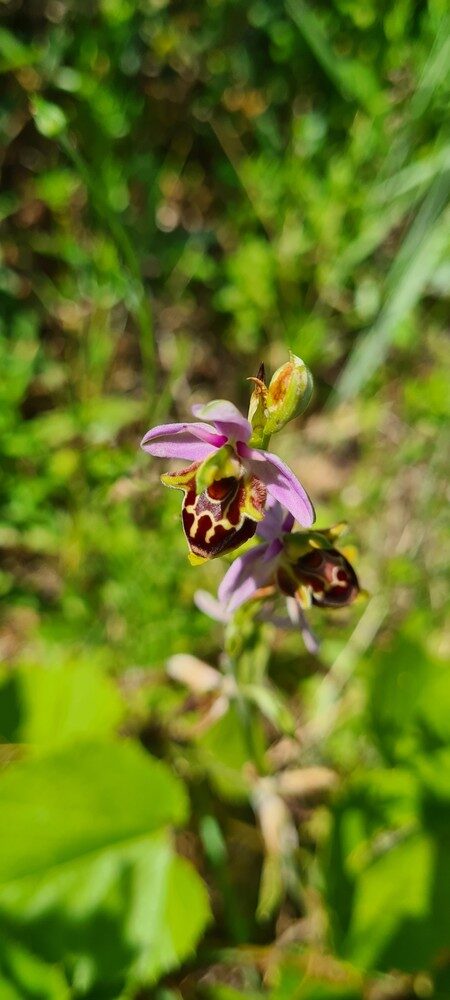
Eulophia speciosa
(R. Br. ex Lindl.) Bolus
iNaturalist· cc-by-nc
(c) Ricky Taylor, some rights reserved (CC BY-NC), uploaded by Ricky Taylor
iNaturalist· cc-by-nc
(c) Riaan Robbeson, some rights reserved (CC BY-NC)
Summary
Source: WikipediaEulophia speciosa is a species of terrestrial orchid found from Ethiopia to South Africa and in Yemen and Saudi Arabia. The plants usually grow in grasslands in sandy soils or in clay.
Description
A subtropical orchid of the family Orchidaceae.
This description is brief — help expand it
Edible Uses
Bulb - raw or cooked. Often eaten raw, sometimes with a little salt, as soon as it is harvested, the bulb is also mashed up and mixed with other raw food plants such as Talinum spp., Dipcadi glaucum and Kedrostis foetidissima. The pounded roots are also added to soups and sauces. The irregularly conical bulbs are 4 - 6 long and up to 4cm wide.
Traditional Uses
The pseudobulb is eaten as a snack.
This uses section is brief — help expand it
Distribution
It is a subtropical plant.
Where It Grows
Africa, South Africa, Southern Africa,
Cultivation
Succeeds in full sun or in light shade. Usually found in sandy soils in the wild, though it is also recorded in clays and can also grow in brackish soils. Plants must be kept fairly dry during the dormant season.
Propagation
Seed - propagation from seeds in possible, but since orchid seed germination can usually only take place on the surface of a sterile medium in flasks, this form of propagation requires considerable expertise and preferably access to a modern propagation lab. The development of the protocorms ('seedlings') is very slow in Eulophia and takes about 6 - 12 months. Plants flower about 2 - 4 years after sowing. Division of the bulbs during the dormant season. Since the plants are to some degree dependent on their mycorrhiza, the substrate should also contain a small quantity of the soil the plants were growing in before.
Notes
There are about 250 Eulophia species.
References (4)
- Ambe, G., 2001, Les fruits sauvages comestibles des savanes guinéennes de Côte-d’Ivoire : état de la connaissance par une population locale, les Malinké. Biotechnol. Agron. Soc. Environ. 5(1), 43-48 (As Eulophia sp.)
- Jardin, C., 1970, List of Foods Used In Africa, FAO Nutrition Information Document Series No 2.p 77
- Ruiters-Welcome, A. K., 2019, Food plants of southern Africa. Ph.D. thesis. Univ. of Johannesburg p 83
- Welcome, A. K. & Van Wyk, B.-E., 2019, An inventory and analysis of the food plants of southern Africa. South African Journal of Botany 122 (2019) 136–179