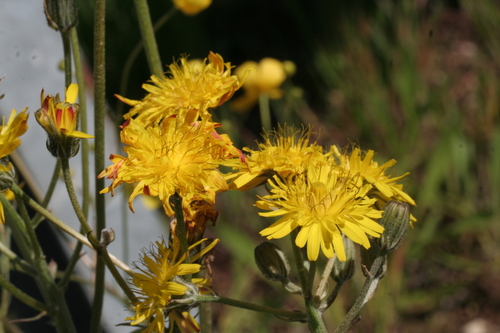
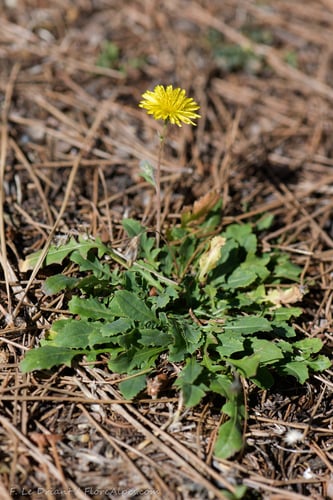
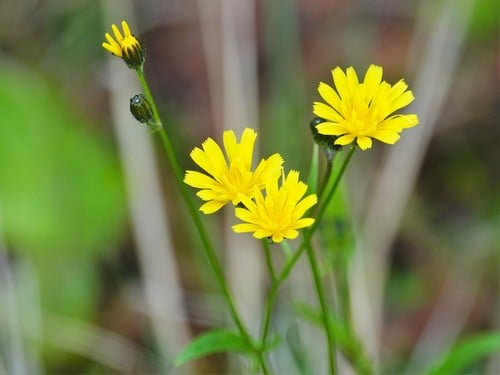
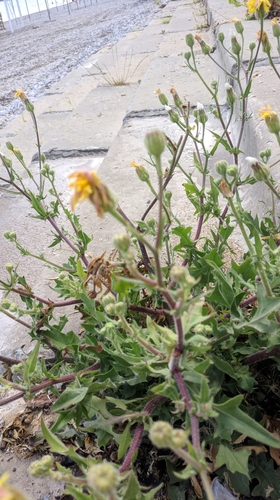
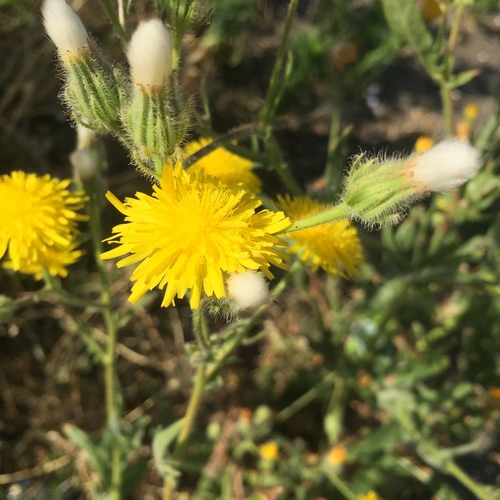
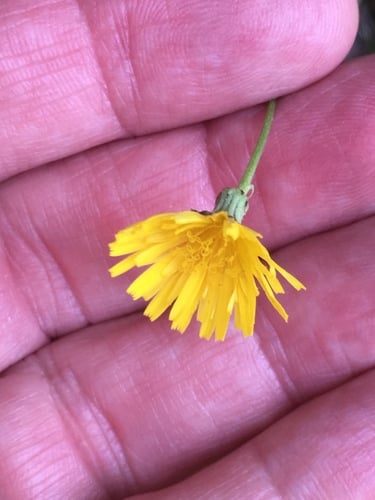
Ericameria nauseosa var. graveolens - (Nutt.)Reveal.&Schuyler.
(Nutt.)Reveal.&Schuyler.
Rubber Rabbitbrush
gbif· cc-by-nc
Anna Burack Wilson
gbif· cc-by-nc
kathycrmc-gmailcom
gbif· cc-by-nc
kathycrmc-gmailcom
Description
Ericameria nauseosa var. graveolens is an evergreen Shrub growing to 1.5 m (5ft) by 1 m (3ft 3in) at a medium rate. See above for USDA hardiness. It is hardy to UK zone 5 and is not frost tender. The flowers are pollinated by Insects. It is noted for attracting wildlife. Suitable for: light (sandy) and medium (loamy) soils, prefers well-drained soil and can grow in nutritionally poor soil. Suitable pH: neutral and basic (mildly alkaline) soils and can grow in very alkaline soils. It cannot grow in the shade. It prefers dry or moist soil and can tolerate drought.
Edible Uses
Gray rabbitbrush (Ericameria nauseosa var. graveolens), also called chamisa, belongs to the sunflower family and is widespread across the arid and semi-arid regions of the western United States. As a food source, it is of very limited value and should be approached with caution. The roots are unpalatable, with an acrid taste and no starch content, and are not recommended for consumption. The flowers are also acrid and unpleasant, though they can technically be steeped into a tea. Even when prepared this way, the taste and aroma are poor, and their safety is questionable due to the resins and other compounds present in the plant. The seeds, while too small and chaffy to be eaten directly, can be pounded, boiled, and filtered to produce a thin beverage. This drink is not considered enjoyable, but it may provide minimal food value in a survival context.
Distribution
The native range of this variety is Central Canada to W. & Central U.S.A.
Where It Grows
Native to: Arizona, Colorado, Idaho, Kansas, Montana, Nebraska, Nevada, New Mexico, North Dakota, Oklahoma, Saskatchewan, South Dakota, Texas, Utah, Wyoming
Cultivation
Requires a sunny position and prefers a well-drained sandy soil. Does not require rich soil. Tolerates alkaline soils. A very variable and ornamental species, it is not very hardy in Britain. It can succeed outdoors in the milder areas of the country but it requires the protection of a sunny wall at Kew. The leaves and stems are pleasantly aromatic when crushed. This species is considered by some botanists to be no more than a form of C. nauseosus. Best suited to USDA Zones 4–9; not invasive but can spread readily in disturbed soils.
Propagation
Seed - we have no information for this species but suggest sowing the seed in spring in a greenhouse and only just covering the seed. When they are large enough to handle, prick the seedlings out into individual pots and grow them on in a greenhouse for at least their first winter. Plant them out into their permanent positions in late spring or early summer, after the last expected frosts. Cuttings of half-ripe wood, mid-summer in sand in a frame.
Other Uses
The plant is a source of latex, used in making rubber. Unfortunately, the latex is not produced in sufficient quantity to make commercial utilization practical. A green dye is obtained from the bark. A yellow-gold dye is obtained from the flowers. The stems are used in making wicker plaques. Traditionally, the plant had greater importance as a source of chamisa ash, an alkaline substance produced from burning the shrub. This ash was used by Native American peoples as an early form of baking soda or pearl ash, serving as a leavening agent in cooking and providing additional dietary minerals.
Also Known As
Gray rabbitbrush, Chamisa