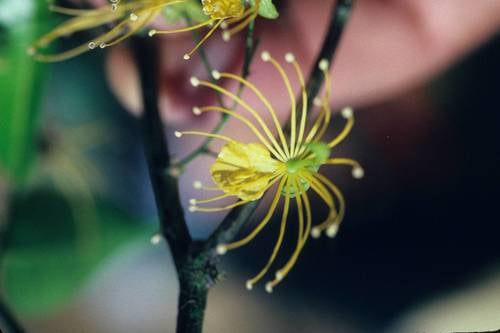
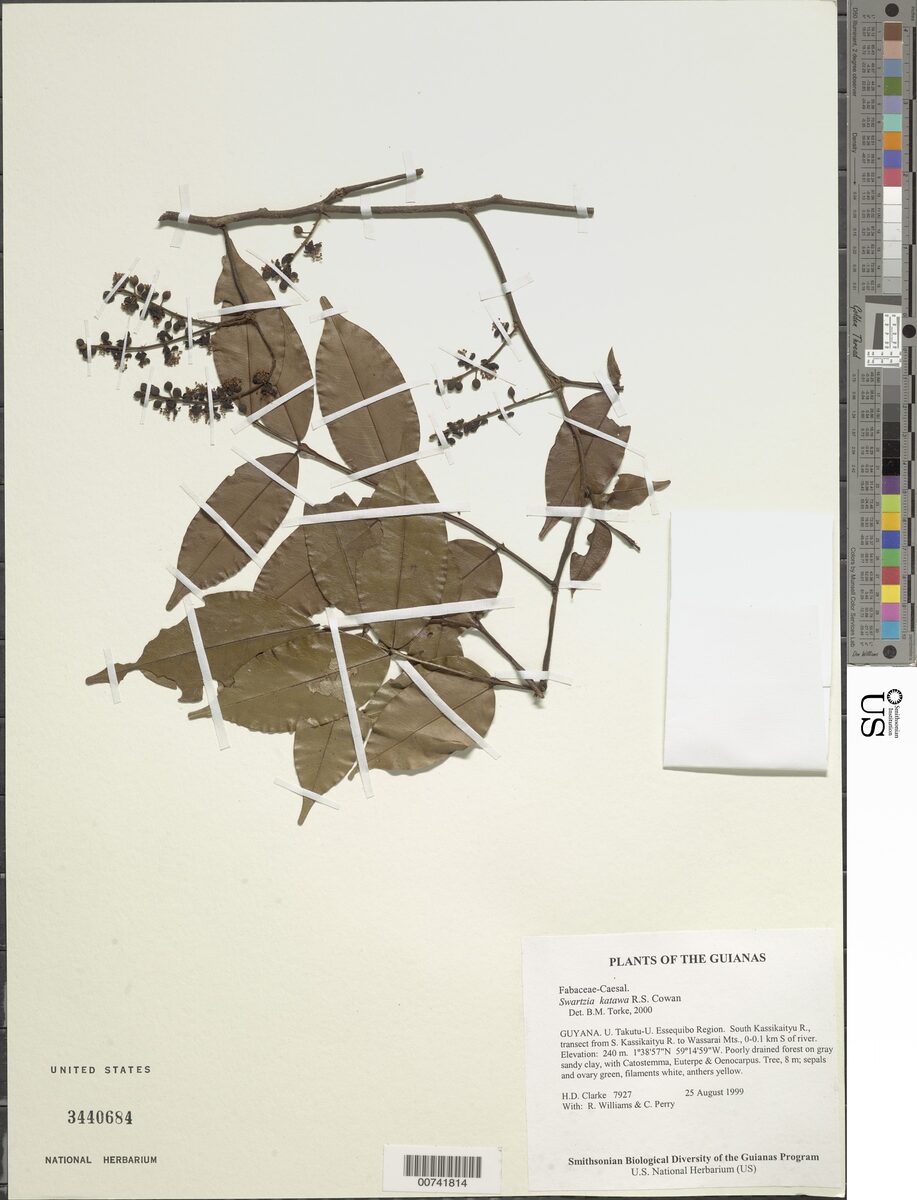
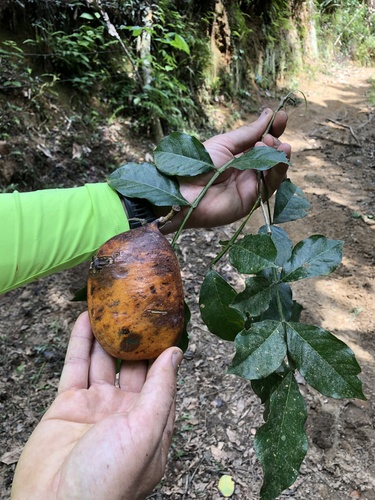
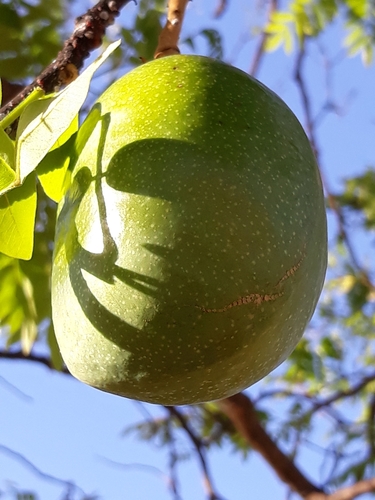
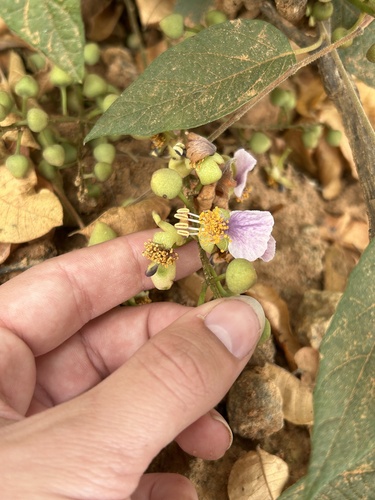
Caesalpinia sappan
L.
Sappanwood. Rainbow wood
No photos yet for Caesalpinia sappan
Sign in to contribute a photoDescription
Caesalpinia sappan is an evergreen Tree growing to 7 m (23ft) by 7 m (23ft) at a fast rate. See above for USDA hardiness. It is hardy to UK zone 10. It can fix Nitrogen. Suitable for: light (sandy), medium (loamy) and heavy (clay) soils and prefers well-drained soil. Suitable pH: mildly acid, neutral and basic (mildly alkaline) soils. It cannot grow in the shade. It prefers dry or moist soil.
Edible Uses
A few drops of wood extract in drinking water is considered refreshing, due to the fragrance and colour it imparts. The dye obtained from the wood is sometimes used to colour food.
Medicinal Uses
Dysentery. Sappanwood is used in the traditional medicines of various Asiatic countries. Modern research has identified various medically active compounds in the plant, particularly brazilin, which is found in the heartwood. Brazilin has been shown to have a positive effect on the immune functions; plus a hypoglycaemic action and increased glucose metabolism. A decoction of the wood has shown antibiotic activity against Staphylococcus, Salmonella typhi, Shigella flexneri, Shigella dysenteriae and Bacillus subtilis. An extract of Caesalpinia sappan was found to be a potent agent for inactivating human sperm in vitro; about 2.5 mg/ml is required to reduce motility to 50%. A decoction or infusion of the heartwood is generally considered a strong emmenagogue and astringent. It is also used to cure wounds (also with a plaster of macerated leaves and bark), tuberculosis, diarrhoea and dysentery and is reported as having antioxidant, anti-inflammatory, hepatoprotective, cytotoxic, hypoglycaemic and xanthine oxidase-inhibitory activities. The seeds serve as a sedative.
Distribution
E. Asia - China, southern India, Myanmar, Thailand, Malaysia, Cambodia, Laos, Vietnam.
Where It Grows
TEMPERATE ASIA: China (Fujian Sheng, Guangdong Sheng, Guangxi Zhuangzu Zizhiqu, Guizhou Sheng, Sichuan Sheng, Yunnan Sheng) TROPICAL ASIA: India, Sri Lanka, Cambodia, Laos, Myanmar, Thailand, Vietnam, Indonesia, Malaysia
Cultivation
It tolerates an annual precipitation in the range 700 - 4,300 mm and a mean annual temperature of 24 - 28c. Succeeds in any moderately fertile, well-drained soil. Young plants are best grown in the shade of trees in the forest or in forest borders, but older trees require a position in full sun. Succeeds in a pH of 5 - 7.5. Flowering can occur after 1 year of growth and usually during the rainy season, fruiting about 6 months later. Plants respond well to coppicing. The tree is cut about 1 metre above the ground to allow sprouts to grow from the stump. Harvesting is done manually with a machete; prickles are easily removed by brushing with the blunt edge of the machete. For use as a dyewood the tree must be harvested every 6 - 8 years, to allow the heartwood to become fully developed; for firewood it may be harvested every 3 - 4 years when the trunk has attained a diameter of 5 - 6 cm. Plants in this genus are notably resistant to honey fungus. This species has a symbiotic relationship with certain soil bacteria, these bacteria form nodules on the roots and fix atmospheric nitrogen. Some of this nitrogen is utilized by the growing plant but some can also be used by other plants growing nearby.
Propagation
Seed - pre-soak for 12 - 24 hours in warm water prior to sowing. The seed usually germinates within a few days. When large enough to handle, prick the seedlings out into individual pots and grow them on until large enough to plant out. Softwood cuttings in sand in a frame.
Other Uses
The tree is often planted as a living fence. Owing to its easy growth and dense growth habit, it is used for defining the boundaries of land and for protecting plantations against grazing animals. Other Uses A red dye is obtained from the wood. Silk, wool, cotton, matting and basket fibres can be dyed with it. The wood is ground into a coarse powder, moistened with water and allowed to ferment for a few weeks to increase the colouring power of the dye. It is then boiled in water and the liquid can either be used immediately or evaporated and stored as a dry soluble extract for future use. The mordants used (e.g. aluminium acetate, stannic salts, oxalic acid) determine the final colour of the cloth, which can vary from shades of red to pink, violet and brown. A yellow dye is obtained from the bark. The fruits contain tannin and were used in the past to prepare a black dye in combination with an iron mordant. The seedpods are used, like those of several other related species, together with protosulphate of iron, to make an ink or black dye. The leaves can be used to hasten ripening of fruits such as bananas and mangoes. A gum is obtained from the stem. The leaves contain a pleasant smelling volatile oil. The wood is straight grained with a fine to moderately fine texture, fairly heavy, hard and lustrous. It is difficult to dry and is susceptible to warping and collapse, but moderately easy to work; it takes a high finish, and is tough and resistant to termite attack. It has been used in cabinet-making since mediaeval times, especially for inlay decoration. It is often used for carving. The wood is also is a good source of firewood.
Synonyms
Also Known As
Bakam, Pattangi, Beys fathangu, Maikpan, Pohon secang, Pohon soga jawa, Sunthe, Teinnyet, Tomoc, Vang, Vang nhuom