Agapanthus praecox minimus - (Lindl.)F.M.Leight.
(Lindl.)F.M.Leight.
gbif· cc-by-nc
Ellie Goossens
gbif· cc-by-nc
Ellie Goossens
gbif· cc-by-nc
Ellie Goossens
Description
Agapanthus praecox minimus is an evergreen Bulb growing to 0.9 m (3ft) by 0.6 m (2ft in). See above for USDA hardiness. It is hardy to UK zone 9 and is not frost tender. It is in leaf all year, in flower from July to September. The species is hermaphrodite (has both male and female organs) and is pollinated by Bees. Suitable for: light (sandy) and medium (loamy) soils and prefers well-drained soil. Suitable pH: mildly acid, neutral and basic (mildly alkaline) soils. It can grow in semi-shade (light woodland) or no shade. It prefers moist soil. The plant can tolerate maritime exposure.
Edible Uses
Root. No further details.
Medicinal Uses
Cardiac Stomachic. Cardiac, stomachic.
Distribution
S. Africa.
Where It Grows
Coming Soon
Cultivation
Succeeds in most soils but it prefers a light very well-drained porous soil with plenty of leaf-mould. Requires plenty of moisture during the growing season but it needs to be kept dry in the winter. Another report says that it is drought resistant once established. It only flowers freely if it is in a very sunny position. Plants succeed in maritime gardens. The rhizomes are best planted only just below soil level - a mulch of gravel or stone chips will help to keep the crown of the plant free from excess moisture. Plants flower more freely in nature in the year following a bush fire. Probably not quite hardy outside the mildest areas of Britain, it is best if given a good mulch in the winter. Hybridizes very freely with other members of this genus - some botanists say there is only one very variable species of Agapanthus. Plants seem to be immune to the predations of rabbits. The flowering stems lean towards the sun.
Propagation
Seed - best sown in a greenhouse as soon as it is ripe, it can also be sown in a greenhouse in March/April. The seed usually germinates in 1 - 3 months at 18°c, do not sow it too thickly so that it is possible to grow the seedlings on in their pot without disturbing them for their first year of growth. Give occasional liquid feeds to make sure they do not become nutrient deficient. Divide the seedlings up into individual pots in the spring following germination, grow them on for a further year in the greenhouse and then plant them out into their permanent positions in late spring or early summer. Seedlings take 2 - 3 years to flower. Division of offsets in April/May. Do not move plants between October and March. Division is very easy in the growing season, the divisions can be planed straight out into their permanent positions if required.
Synonyms
More from Amaryllidaceae
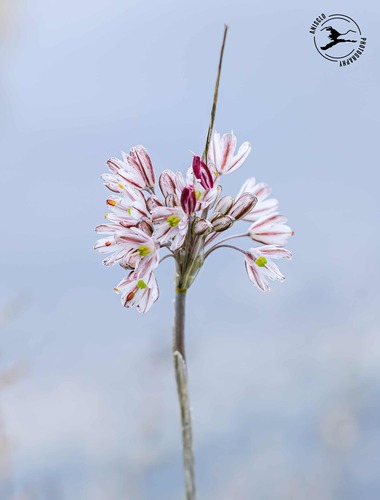
Allium callimischon
Autumn flowered onion
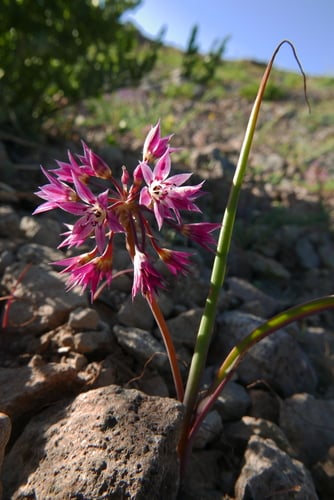
Allium campanulatum
Dusky onion
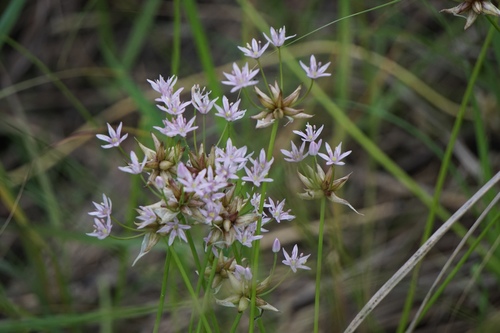
Allium canadense
Wild garlic, Canadian garlic, Meadow Garlic, Olympic Onion, American wild garlic, Rose garlic, Tree onion
Allium canadense mobilense - (Regel.)F.M.Ownb.
Canadian Garlic
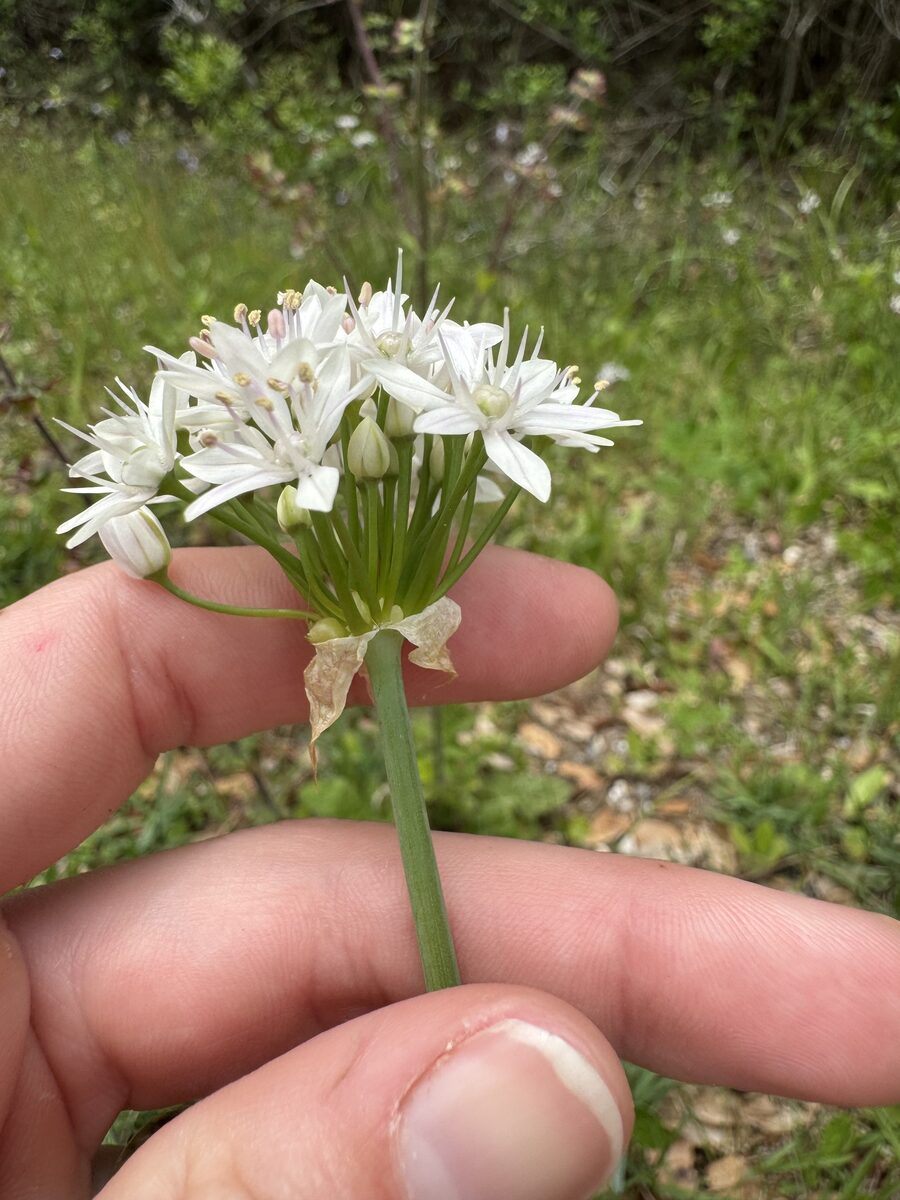
Allium canadense var. mobilense
Canadian garlic, Meadow Garlic
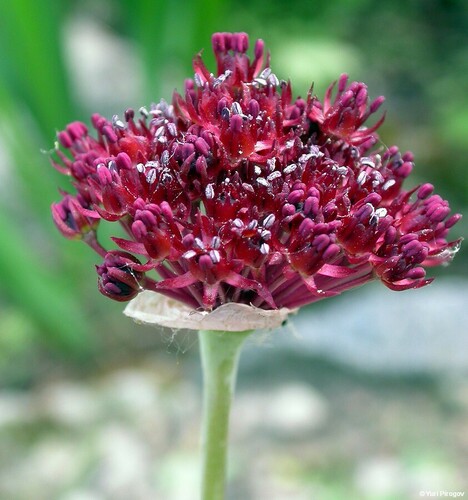
Allium cardiostemon
Purple gem ornamental onion