Tagetes minuta
L.
Muster-John-Henry
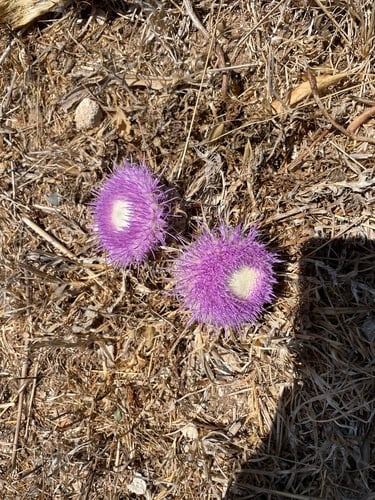
iNaturalist· cc-by-nc
(c) tlit46, some rights reserved (CC BY-NC), uploaded by tlit46
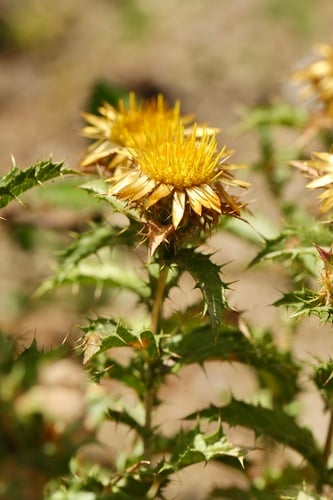
iNaturalist· cc-by-nc
(c) Carlos Ivovich O., some rights reserved (CC BY-NC), uploaded by Carlos Ivovich O.
iNaturalist· cc-by
(c) Romi Galeota Lencina, some rights reserved (CC BY), uploaded by Romi Galeota Lencina
Description
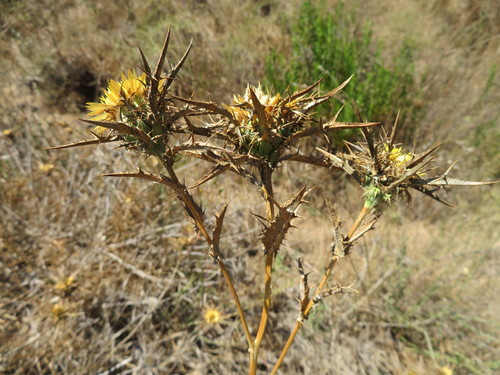
Tagetes minuta is a ANNUAL growing to 1.2 m (4ft) by 0.6 m (2ft in). See above for USDA hardiness. It is hardy to UK zone 9 and is frost tender. It is in leaf from April to November, in flower in October, and the seeds ripen in November. The species is hermaphrodite (has both male and female organs) and is pollinated by Insects. Suitable for: light (sandy), medium (loamy) and heavy (clay) soils, prefers well-drained soil and can grow in heavy clay soil. Suitable pH: mildly acid, neutral and basic (mildly alkaline) soils. It cannot grow in the shade. It prefers dry or moist soil.
Edible Uses
Condiment. The dried leaves are used as an aromatic seasoning for soups and vegetables. They give an apple-like flavour. An essential oil obtained from the distilled plant, harvested when in flower, is used as a flavouring in ice cream, baked goods, soft drinks etc.
Medicinal Uses
Anthelmintic Antispasmodic Aromatic Diaphoretic Digestive Diuretic Purgative Stomachic. The whole plant is anthelmintic, antispasmodic, aromatic, diaphoretic, diuretic, purgative and stomachic. It is used internally in the treatment of gastritis, indigestion and internal worms. Externally, it is used to treat haemorrhoids and skin infections. The plant is harvested when in flower and dried for later use.
Known Hazards
This species has an irritant sap that can cause dermatitis in sensitive people.
Distribution
S. America. Naturalized in S. Europe.
Where It Grows
SOUTHERN AMERICA: Brazil, Bolivia, Ecuador (Loja), Argentina (Buenos Aires, Catamarca, Chaco, Córdoba, Corrientes, Entre Ríos, Formosa, Jujuy, La Pampa, La Rioja, Mendoza, Misiones, Salta, San Juan, San Luis, Santa Fe, Santiago del Estero, Tucumán), Chile, Paraguay, Uruguay
Cultivation
Requires a well-drained moderately fertile soil in a sunny position. Grows well in heavy clay soils and in sandy soils. Plants are not very resistant to frosts and need to be grown as half hardy annuals. They also need a long growing season, usually flowering too late in the autumn to set seed in Britain. Removing dead flowers before the seed is formed will extend the flowering season. A very good companion plant, see 'Other Uses' below for more details. Plants are prone to slugs, snails and botrytis.
Propagation
Seed - sow March in a greenhouse. Only just cover the seed. Germination usually takes place within 2 weeks. When they are large enough to handle, prick the seedlings out into individual pots and plant them out after the last expected frosts.
Other Uses
Companion Dye Essential Herbicide Insecticide Repellent. This plant is widely used in companion planting schemes. Secretions from the roots of growing plants have an insecticidal effect on the soil, effective against nematodes and to some extent against keeled slugs. These secretions are produced about 3 - 4 months after sowing. These root secretions also have a herbicidal effect, inhibiting the growth of certain plants growing nearby. It has been found effective against perennial weeds such as Ranunculus ficaria (Celandine), Aegopodium podagraria Ground elder), Glechoma hederacea (Ground ivy), Agropyron repens (Couch grass) and Convolvulus arvensis (Field bindweed). An essential oil distilled from the leaves and flowering stems, harvested when the plant is forming seeds, is used as an insect repellent. It is also used in perfumery. Dried plants can be hung indoors as an insect repellent. Dynamic accumulator.